

Nuno Miguel Lara Cintra Martins
Department of Electrical and Computer Engineering 
Institute for Systems Research
Applied Mathematics & Statistics, and Scientific Computation (AMSC)
About
Nuno Miguel Lara Cintra Martins (aka in papers as Nuno C. Martins and otherwise Nuno M. Martins) graduated with a M.S. degree in Electrical Engineering from I.S.T., Portugal, in 1997, and a Ph.D. degree in Electrical Engineering and Computer Science with a minor in Mathematics from Massachusetts Institute of Technology (MIT), Cambridge, in 2004. He has also concluded a Financial Technology Option program at Sloan School of Management (MIT) in 2004.
He is Professor of Electrical Engineering in the Electrical and Computer Engineering Department of the University of Maryland at College Park, where he also holds joint appointments with the Institute for Systems Research and the Applied Mathematics & Statistics, and Scientific Computation graduate program. He was Director of the Maryland Robotics Center from 2012 until 2014.
Prof. Martins received the 2006 American Automatic Control Council O. Hugo Schuck Award, a National Science Foundation CAREER Award in 2007, a 2010 IEEE CSS Axelby Award for an outstanding paper in the IEEE Transactions on Automatic Control, the 2010 Outstanding ISR Faculty Award, the 2010 George Corcoran Award from the ECE Department / UMD and he was an UMD/ADVANCE Leadership Fellow in 2013.
He is currently Associate Editor for the IEEE Transactions on Control of Network Systems, Program Vice-Chair for the IEEE CDC'27 and a TPC member for the IEEE CDC'26. He served as Associate Editor for Systems and Control Letters (Elsevier), Automatica and the IEEE Control Systems Society Conference Editorial Board. He was also a program Vice-Chair for the IEEE Conference on Decision and Control in 2013 and 2014.
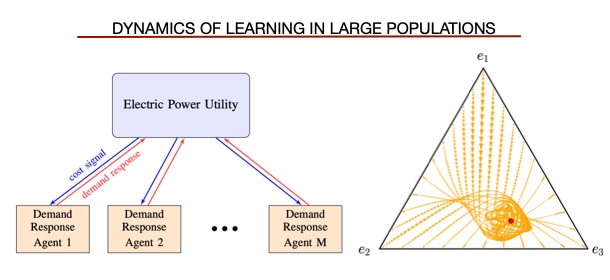
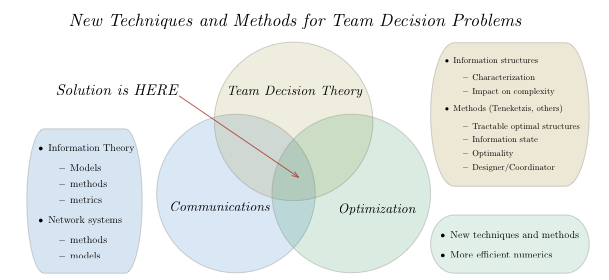
His research interests span control-theoretic incentive design in large learning-agent populations, system-theoretic analysis of evolutionary dynamics in population games, convex methods for distributed control, and multidisciplinary studies of optimal design and fundamental limits in networked control, estimation, and queueing systems.