Selale Atalar
Erin Haslinger
Steve Jack
Jothi Narayanan
Emily Ward
Team 3: Homework Assignment #6
Conceptual Design of a Water Pump
Introduction
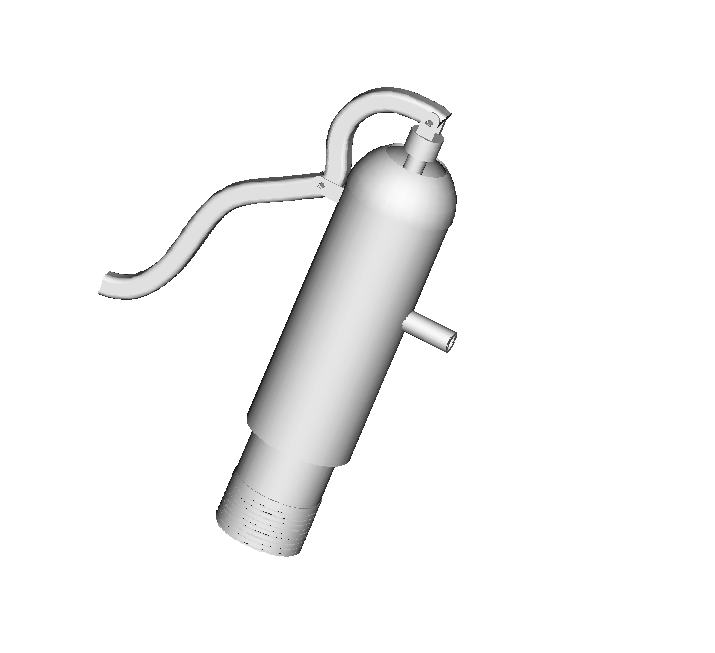
The design project for the fall 1999 ENES 100 class at the University of Maryland is a water pump. The ENES 100 students need a teaching tool to aid their design of a water pump. The pump needs to use basic engineering ideas and principles of physics to move water from a large reservoir out of a spout. The many different applications a pump is used for include mining, irrigation, boilers, atomic engines, air conditioners, automobiles, wells, and home-heating systems (The World Book Encyclopedia, 792). The pump that was designed is a manual water pump, which can be seen in Figure 1.
Figure 1 Manual Water Pump
Pump Operation
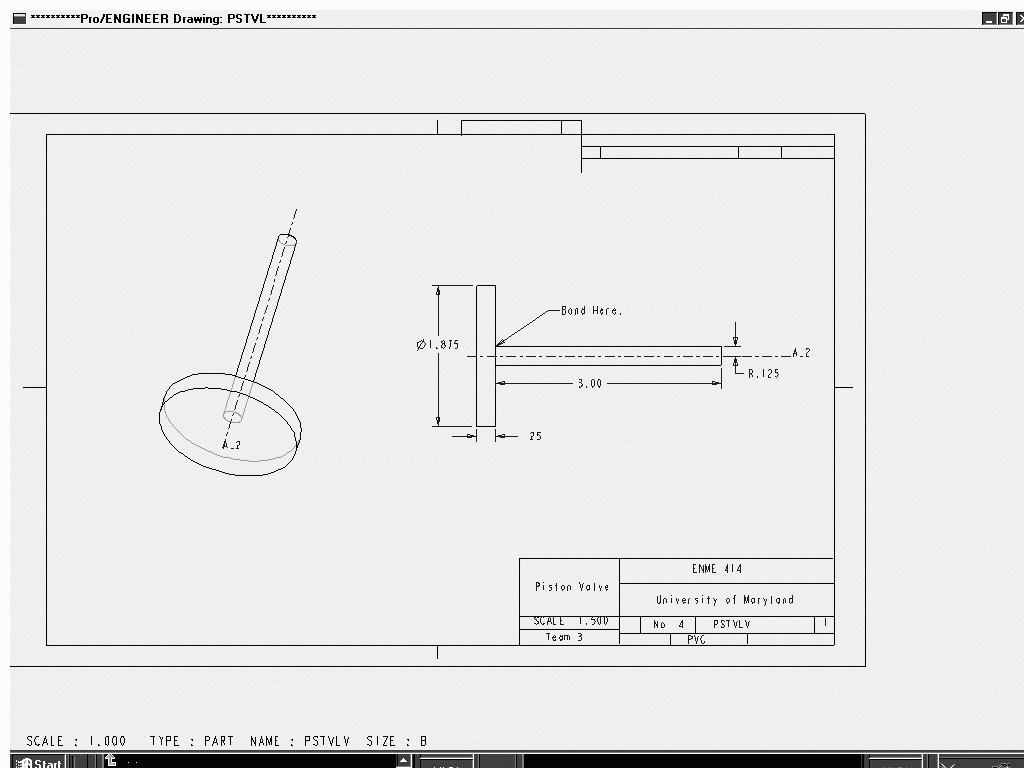
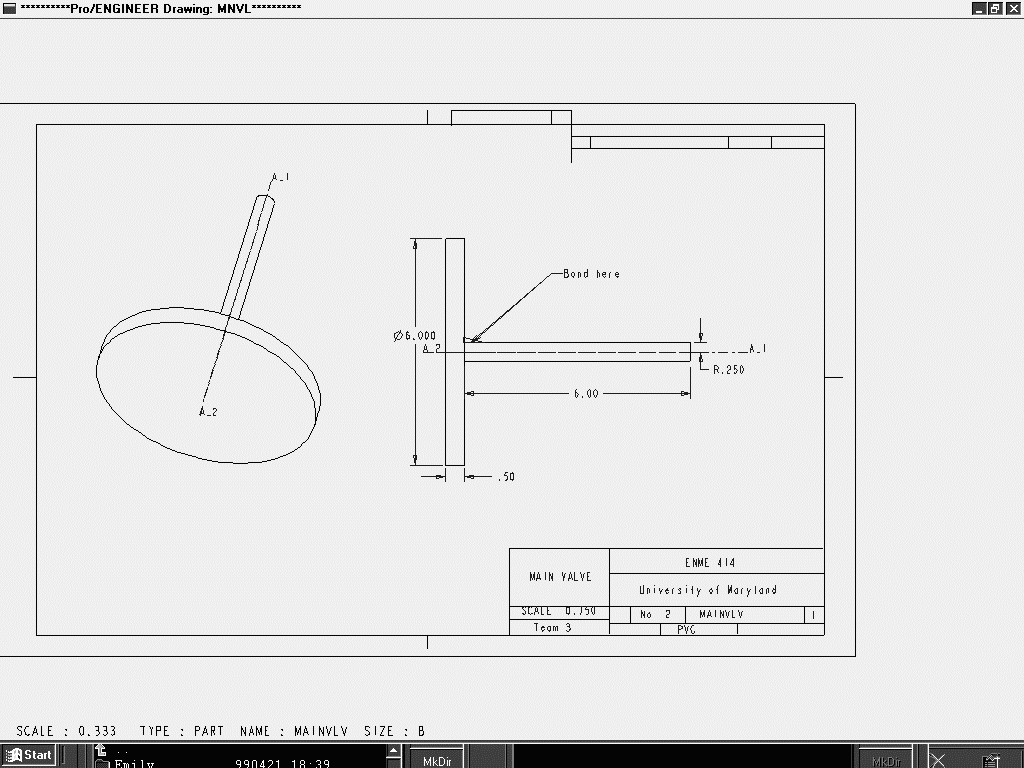
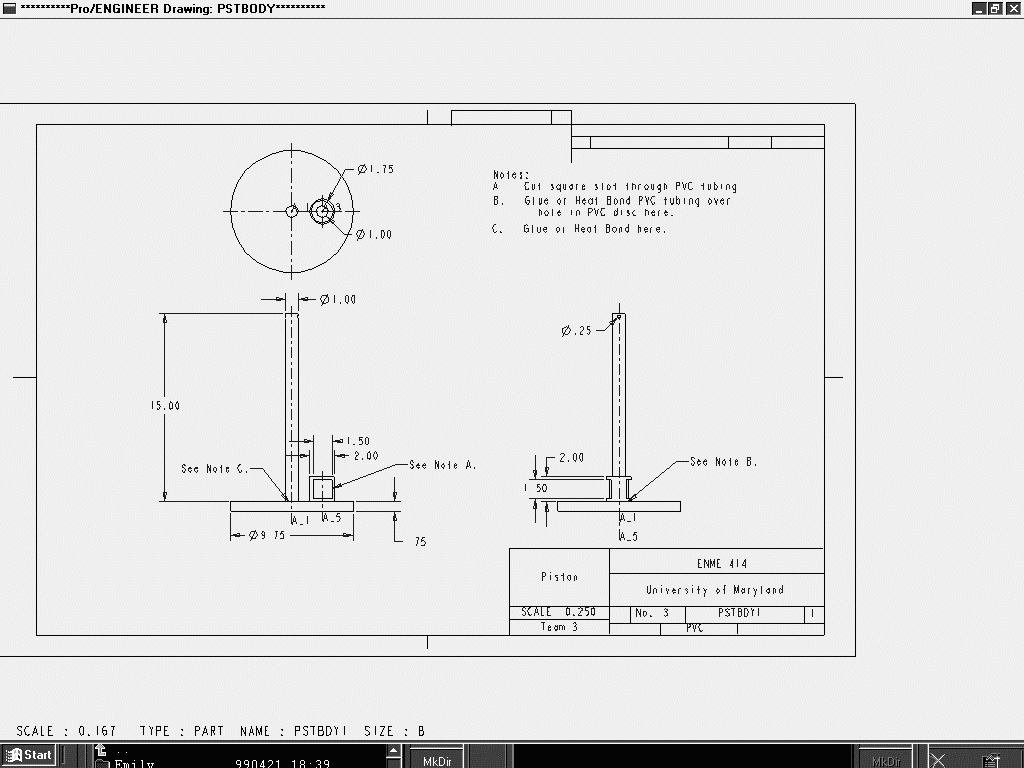
The water pump designed is similar to a typical reciprocating lift pump. The general concept of the reciprocating pump uses the motion of the piston in a cylinder as the operating principle. Referring to the Exploded Assembly drawing in the Appendix the principles of the designed water pump will be explained. The upward motion of the piston (Part 3) creates a lower pressure inside the cylinder of the pump body housing (Part 6). The difference in the pressure inside the cylinder and the atmospheric pressure acting on the surface of the water outside of the pump forces the inlet valve (Part 2) open and draws water into the main cavity of the pump body housing (Part 6). With the downward motion of the piston, the inlet valve is closed and the outlet valve (Part 4) is opened allowing the water to flow out of the spout. The next motion of the piston restarts the cycle of moving water from a large reservoir through the pump and out the spout.
The threads found at the bottom of Part 6 are for a pipe to be attached to reach into the water reservoir. Theoretically, a column of water 33 feet high can be sustained by atmospheric pressure. This means in theory a pipe can reach 33 feet into a reservoir of water and have "suction head." However, the pipe and water are not ideal substances, and the vapor pressure of the water and resistance in the pipe reduce the "suction head" to about 23 feet (The World Book Encyclopedia, 792).
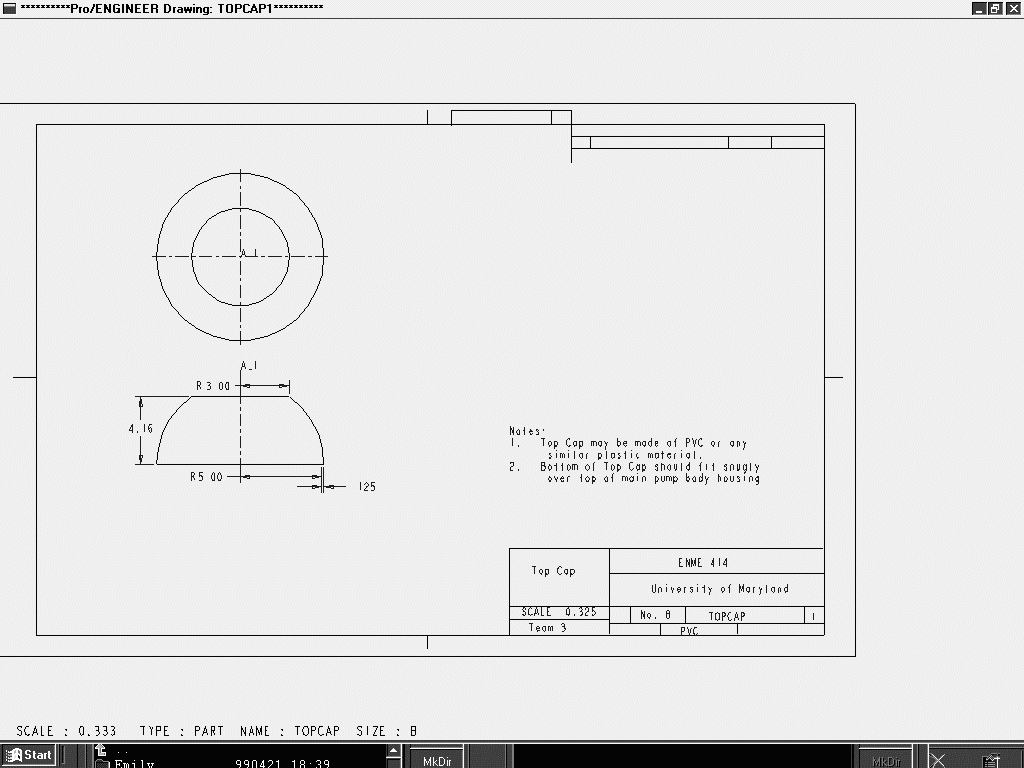
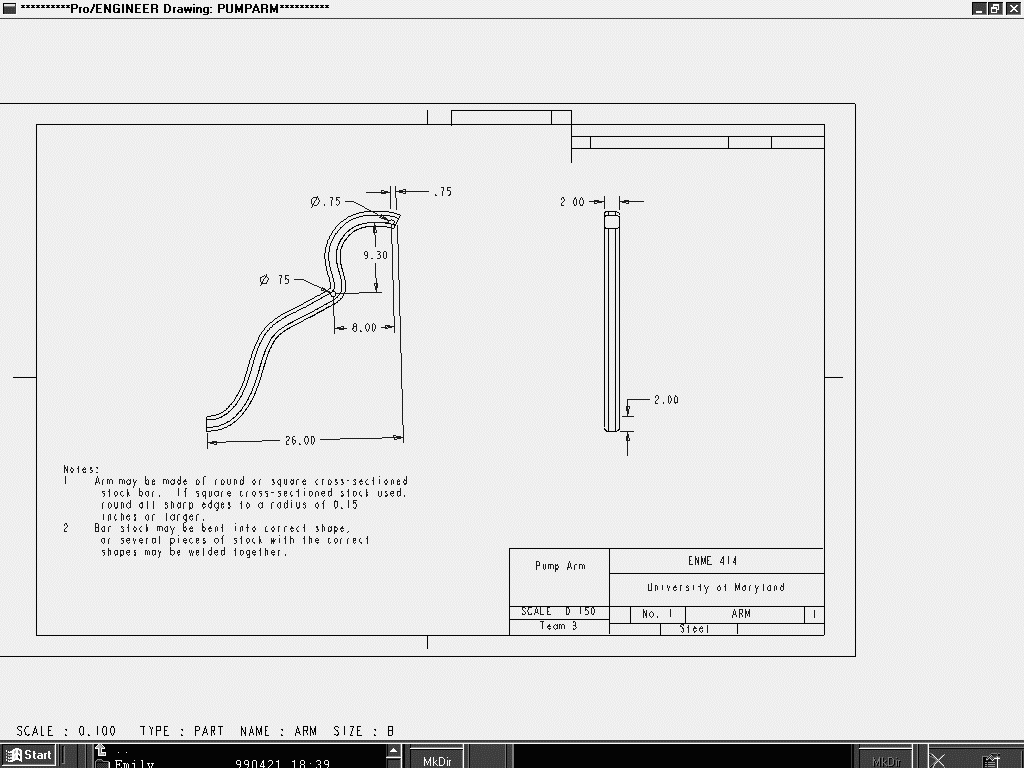
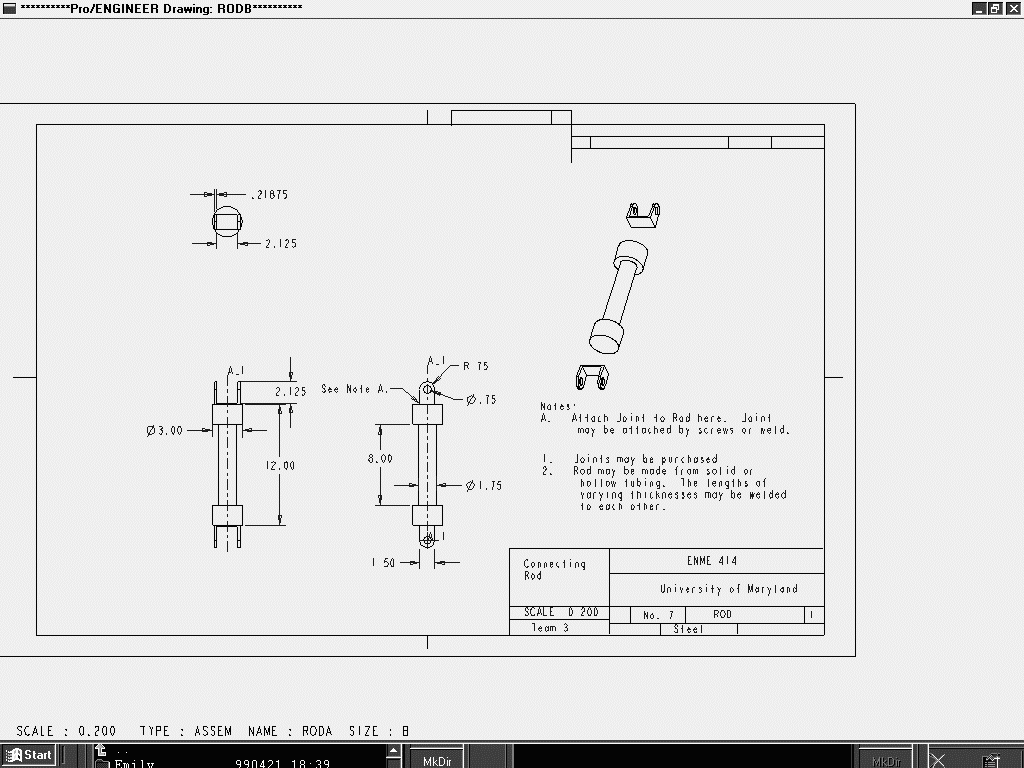
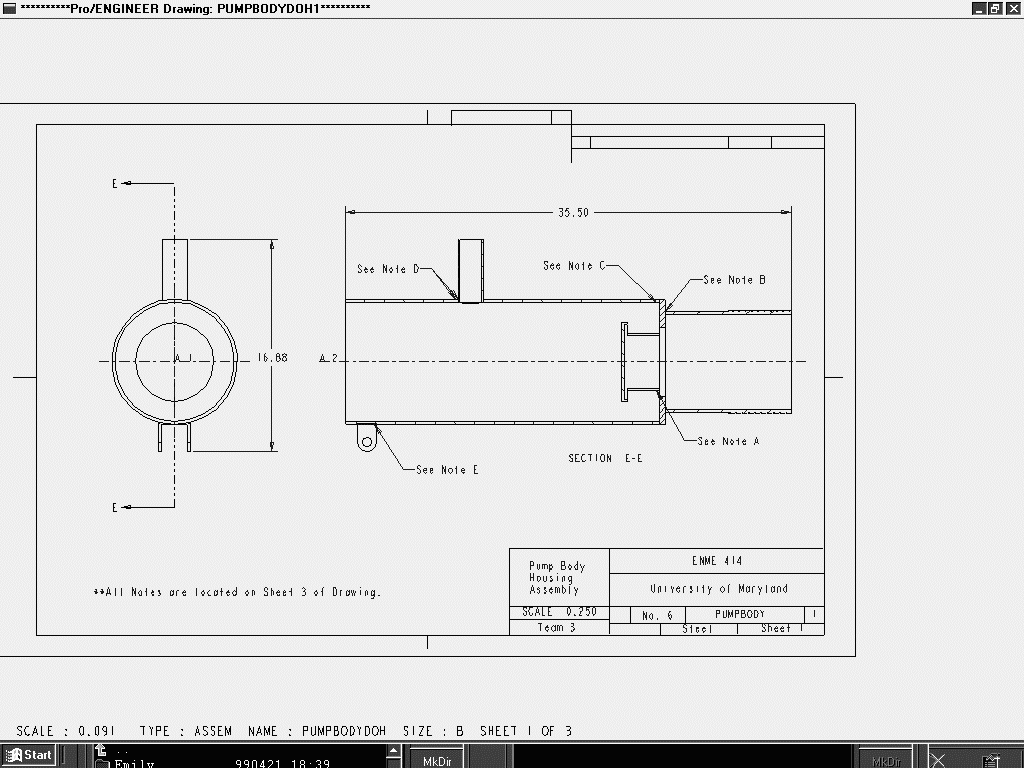
Engineering drawings containing the exploded view of the pump assembly and the individual components can be found in the Appendix. The piston will not work unless it is airtight therefore a close-fit assembly is necessary for the main body (Part 6) and the main piston (Part 3). The dimensions, geometry and materials can be optimized and modified depending on the initial design specifications and the final application.
Pump Assembly
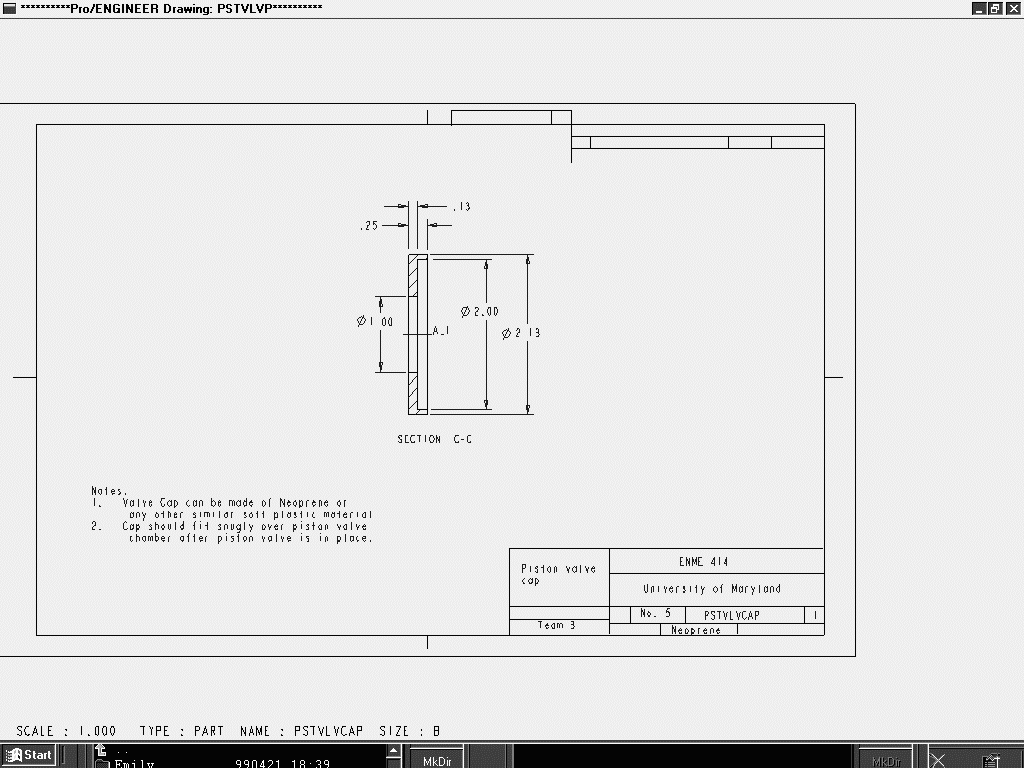
The main housing body of the pump (Part 6) includes threading at its base which allows piping to be attached, a main valve chamber on the inside base which controls the distance the main valve can move during pump use, and a pin joint where the handle (Part 1) is connected. The spout in the main housing allows the water to exit the pump when it is filled to a certain height. The main valve (Part 2) is positioned inside the chamber at the base of the pump housing cylinder. The piston (Part 3) fits inside the housing so that the flat surface of the piston rests on the top surface of the main valve chamber. The piston valve (Part 4) fits inside the valve chamber on the piston in the same way that the main valve fits in the main valve chamber. The piston valve cap (Part 5) covers the opening in the top of the piston valve chamber to restrict the distance the piston valve can travel during pump operation. The connecting rod (Part 7) is joined to the top of the piston by a pin, and sticks up through the top of the main housing. The top cap (Part 8) snaps onto the top of the housing and allows the connecting rod to stick through. The upper end of the handle (Part 1) is connected by a pin to the upper end of the connecting rod.
Data & Analysis
As given below, the fluid pressure at any point is directly proportional to the density of the fluid and to the depth below the surface of the fluid:
P = Dh = r gh
where D = weight density, h = depth, r = mass density.
The Rate of flow of a fluid through a pipe can be calculated by this formula:
R = Avt/t = vA
where v = velocity, A = cross section.
The relationship between the pressure, density, velocity, and height of the water pump can be calculated using Bernoulli's equation:
P + pgh + (1/2)v2 = constant
Since the piston of the pump is next to the exit of the pump, the fluid occupies the volume of the vacuum line. It is assumed that the volume of the tubing is negligible at the initial pressure Po = 1 torr. As the piston pushes down, the fluid expands into the volume of the vacuum line and body of the pump. The equation that relates to this process is Boyle's Law:
PoVline = P1(Vline + Vpump)
Solving for P1, the pressure in the vacuum line at the end of the first movement, we get:
P1 = (PoVline)/(Vline + Vpump)
As the piston returns to its initial position, the fluid from the body of the pump is evacuated and the pressure in the vacuum line is given by:
P2 = (PoV2line)/(Vline + Vpump)2
Dimensioning and Materials
The dimensions of the water pump were chosen to make the pump easy to use manually. The height of the pump was chosen so the handle can be used easily by the individual. The size of the main body of the water pump was chosen arbitrarily with the idea that a decent amount of water can be moved through the pump in one stroke of the piston. The other dimensions were chosen to complete the functionality of the pump in a reasonable manner. The materials chosen can also be modified depending on the design specifications. The stainless steel was used because it will not rust or corrode from the environmental elements. The PVC was used for the piston because it will allow for a close fit assemble with the main body in order to create the vacuum necessary for the pump to work. PVC was used elsewhere because of its durability, low cost and large availability. The neoprene was used for the cap to create a part the was durable and can be deformed easily without losing its structural integrity when removed for maintenance purposes.
Conclusion
Water pumps can vary greatly depending on the design specifications and application. The final design was determined to be the best because of the simplicity of the principles used and the geometry created. The equations stated above can be used to optimize the dimensions of the given design for a specified quality of the pump. Such product specifications may include a certain velocity for the ejected water or a certain volume of water ejected while using minimal motion in the handle.
References
Tippens, E. Paul. Applied Physics: Third Edition. Gregg Division: McGraw-Hill Book
Company: New York, 1985.
The World Book Encyclopedia: Vol.15, (P). Field Enterprises Educational Corporation:
Chicago, 1974.
Zhang, Guangming. Engineering Design and Pro/ENGINEER, 2nd ed. College House
Enterprises, LLC: Tennessee, 1999.
http://www.ubishops.ca/ccc/div/sci/chem/Pump%20hand.html
http://www/millenium-ark.net/News_Files/INFO_Files/Hand_Pump.html
http://www.10mb.com/zacryl/page6.html
Appendix
A Exploded Assembly of Water Pump
B Unexploded Assembly of Water Pump
C Arm (Handle) Drawing
D Main Valve Drawing
E Piston Drawing
F Piston Valve Drawing
G Piston Valve Cap Drawing
H Pump Body Housing Drawing
I Connecting Rod Drawing
J Top Cap Drawing