DENTAL STRUCTURES
FINAL REPORT
TEAM 2
Bourke, Deborah
Butler, James
Chen, Patrick
Michael, Richard
Rogers, Jonathan
Arya, Avneesh
1. Introduction
1.1 Background
People who have lost their teeth due to poor dental hygiene, age, or other reasons require dentures or dental implants. Dentures are removable replacements for missing teeth; although dentures are relatively inexpensive, they often cause discomfort and inconvenience. In contrast, dental implants are small devices, usually pins, posts, or plates, which are placed in or on the jawbone to provide a firm foundation for replacement teeth. While implants are expensive and complicated, they cause less inconvenience because they are permanently attached to the jawbone. Several types of dental implants are available. The most common type is the post implant. With the post implant, a tiny titanium post, or cylinder, is implanted into the patient’s existing jawbone. Bone slowly grows around the post, bonding it to the jaw. After the bone heals, a tiny screw anchors prosthetic teeth to the implant.
1.2 Candidates for dental implants
Although many people use dental implants, the structural integrity and lifetime of current dental implants are often unsatisfactory. An enhanced prosthetic base with a long and predictable life span is needed. In addition, current dentures and dental implants often result in alveolar ridge resorption (AVR). AVR is the loss of bone mass in the jaw due to a lack of stimulation of the jawbone. Micro-strains in the jawbone are required in order to promote continued bone growth. Dentures and current implant devices do not adequately transmit chewing forces to the jaw. As a result, many denture wearers and implant patients suffer approximately 80% AVR after 25 years of denture/implant use.
1.3 Governing Constraints
Conditions other than proper micro-strains are required in order for adequate bone growth to occur. The cellular building blocks of the bones must be able to migrate though the implant structure. In addition, the cells must be able to attach themselves to the implant surface. Research has shown that grooves or openings of an implant should range between 75 and 250 microns for optimal cell migration and adhesion. In order to design an effective dental implant, both the implant structures’ strength and interconnectivity size must be considered. Team 2 investigates alternate configurations of prosthetic microstructures in order to optimize bone growth while maintaining a long life span and high structural integrity.
2. Methodology
2.1 Parameters
In creating this dental structure several important design parameters are considered. Based on analysis shared by professionals in the field, the harsh mouth environment dictates particular materials and dimensions. The pore size and strut thickness are limited to a range best suited for cell growth, generally not to exceed .5mm by .5mm and .2mm, respectively. The combination of pore size and strut thickness are offset to yield a certain interconnectivity. The certain levels of interconnectivity are necessary for cell migration. The size of the mouth limits this structure to 10mm high by 10mm wide and 6cm in length. Finally, the structure must be capably of withstanding a force of 100N across the top ridge.
2.2 Modeling the Dental Structure
First creating solid layers and cutting out a series of pores formed the structure. These porous layers are stacked at an offset, creating interconnectivity. Finally, an extruded outer shell was placed on top of the stacked layers, using an elliptical datum.
Several different structures were created to examine the effects of varying pore shape, pore size and strut thickness. The first structure was constructed to the maximum dimensions of .5mm x .5mm pore size, .2mm strut thickness, and .4mm strut height. A second larger structure was created at 1.5 times the maximum dimensions; .75mm x .75mm pore size, .3 mm strut thickness and .4mm strut height. A third structure examines the effects of round pores 1mm in diameter, separated by.25mm. Additional modifications to the outer shell thickness are examined. For the first structure the shell thickness is varied from 1mm to .5mm.
3. Analysis
3.1 Layering Structures
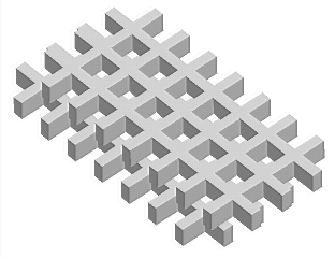
In analyzing structure geometries, layer construction had to be taken into consideration. Rather than directly stacking layers on top of each other that were exactly aligned, a stronger, staggered formation is used. This allows for a better distribution of stress. The method used for stacking layers is to offset the layer by half the distance of a repeating lattice. Figure 1 below shows an example of this.
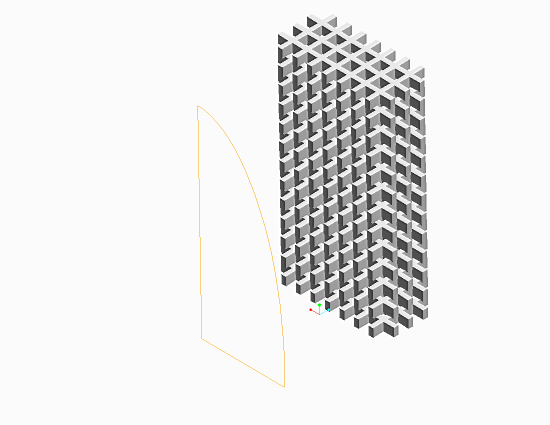
Once the layers have been stacked to a sufficient height, a formation results which an inner denture geometry can be cut out. Figure 2 below shows the stacked layers.
3.2 Symmetry
In order to simplify Team 2’s analysis, symmetry is utilized. Since the elliptical outer structure is symmetrical, it is split in half and shortened greatly. Splitting the structure in half greatly reduces the run-time for conducting a finite element analysis (FEA), examining the stress distribution (which will be discussed in greater detail later). This is also the same reasoning for shortening the structure. Essentially, the model is greatly simplified for the ease of analysis. Originally, the 100 N force was applied to the entire 6-cm length, but is redistributed over a length of 2.95-mm.
3.3 Interconnectivity
As a result of stacking the layers in an offset pattern a smaller pore size is created for interconnectivity. The pore size due to the interconnectivity of the layers is 0.15 mm. This is a good size to allow tissue growth in the structure. The pore size corresponds to the interconnecting layers of the model to scale with the largest parameters given to Team 2 by the doctors consulting the class.
3.4 Software
Before analysis of loaded models could begin, the models themselves had to be created on Pro/Engineer. Using three-dimensional solid modeling capabilities in Pro/Engineer, structures were created, first, of the inner layers, and then an outer shell was added. After the model was created, Pro/Mechanica was used to do an FEA on the structure. Constraints to the model were set and the stress distribution was analyzed. Since no material was specified, strain and deflection was not analyzed.
5. Results
Results were initially generated for the scale model and the scale model with a thinner shell. The results are illustrated in Figures 5 and 6.
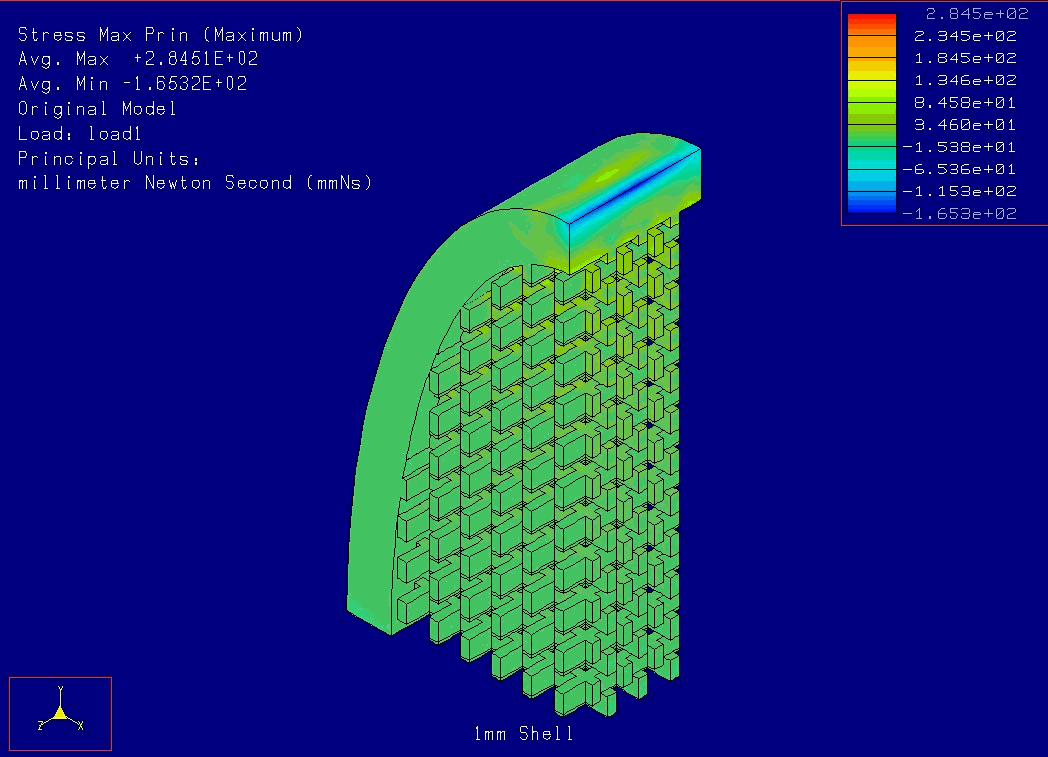
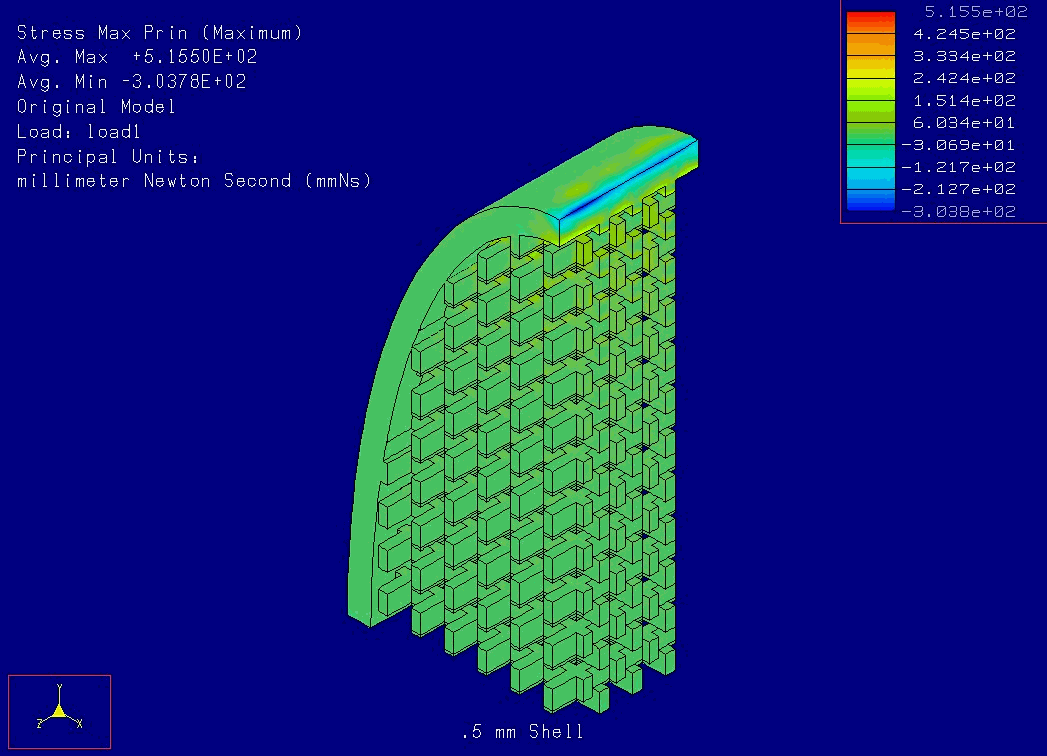
Due to the complexity of the design in conjunction with the simplicity of the FEA, the results are very general. For example, the results show unnaturally high stress concentrations where the load was applied. Shown in Figure 5, the regions of higher stress are dissipated approximately halfway down from the top of the structure. Figure 6 shows the stress dissipating slightly less than halfway down from the top. Since both structures share the same internal scaffolding, it can be concluded that the shell thickness is responsible for the change in stress distribution. Therefore further analyses were conducted on the shell alone.
The shell structure that was analyzed was the 1 mm-thick shell in Figures 5 and 6 above. Sans any scaffolding, the results of a loaded shell are shown below in Figure 7.
Figure 8a graphically shows how the stress decreases down the cross section of the shell.
Similarly, Figure 8b shows how the stress varies along the curved surface of the shell. Again, disregarding inaccuracies in the FEA software, one can see that in general, the inside surface of the shell is in compression, shown in green in Figure 7, while the outside surface is in tension, shown by the yellow color. These observations are also seen in the graphs below. One can see that in Figure 8a, the stress, shown on the y axis, changes from positive stress (tension) to negative stress (compression) at approximately four-tenths from the top of the structure along the cross-sectional thickness. Figure 8b reveals that the stress along the outside surface of the shell begins as compressive stress at the top, changes to tensile stress on the way down, and becomes compressive stress again at the bottom. From the plot, it must be noted that the majority of the stress is tensile – beginning very close to the top of the structure (approximately a half millimeter away from the peak) and ending 3 mm shy of the bottom.
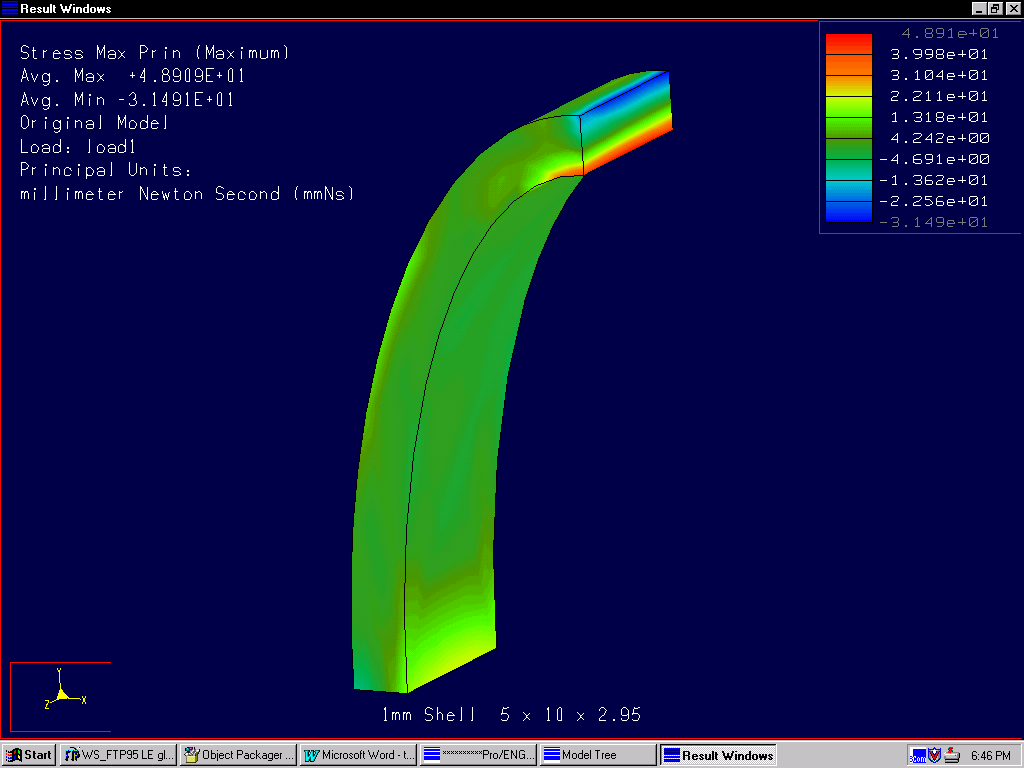
Figure 7 – Stress distribution on 1-mm thick shell
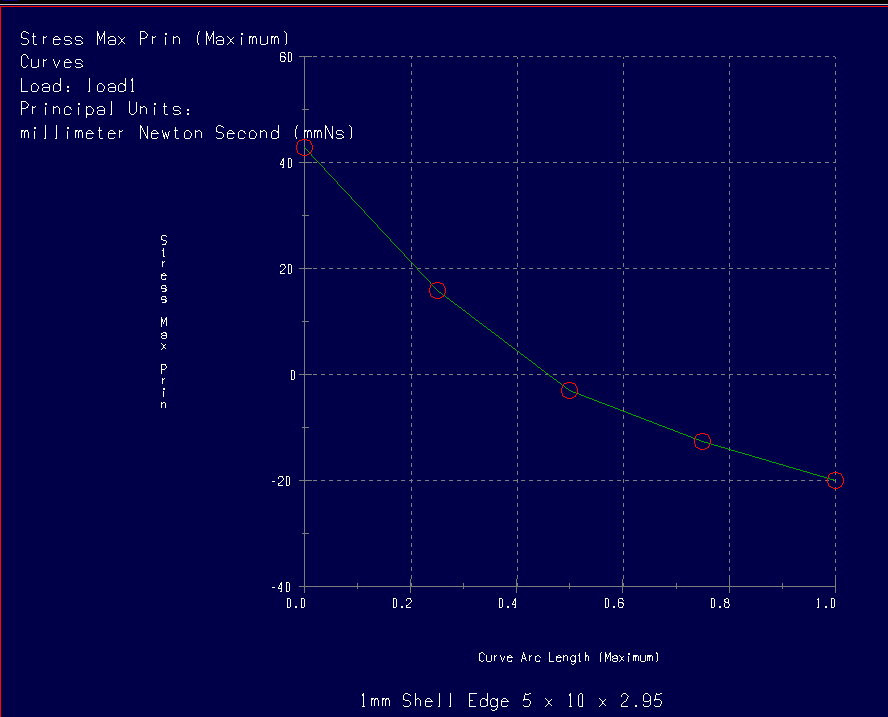
Figure 8a – Stress variation along the shell’s cross-section
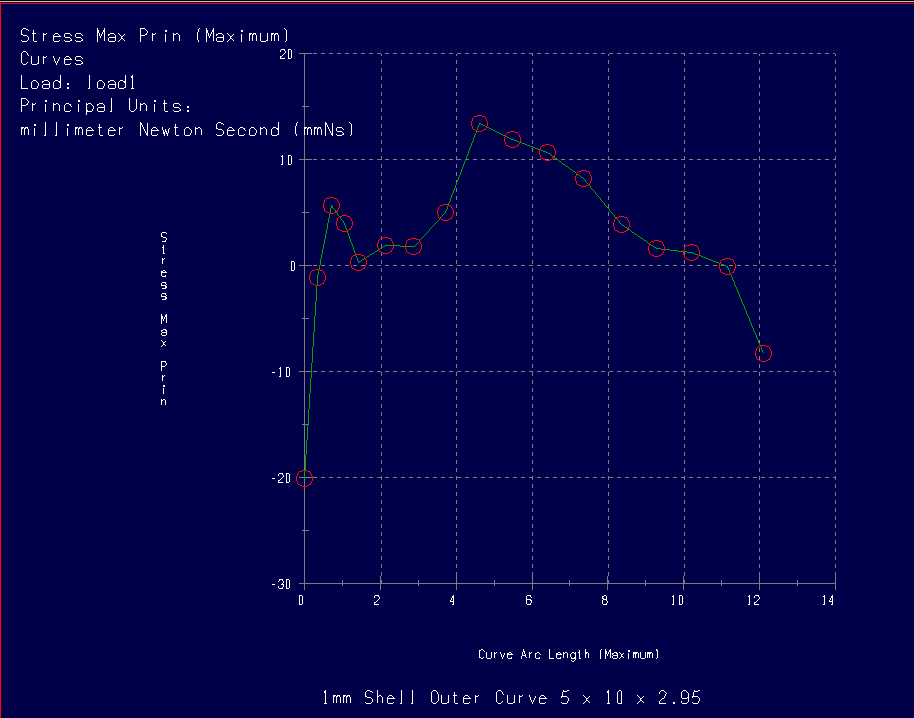
Figure 8b – Stress variation along the shell’s curved outer surface
To substantiate the analyses conducted on the half shell above, the same analyses was run on a full structure in Pro/Engineer and Pro/Mechanica. The analysis could not be run for the full model earlier due to the complexity of the internal layered structures. The full shell with a 100 N load is shown in Figure 9 below. By inspection, the stresses are very similar to the half structure in Figure 7.
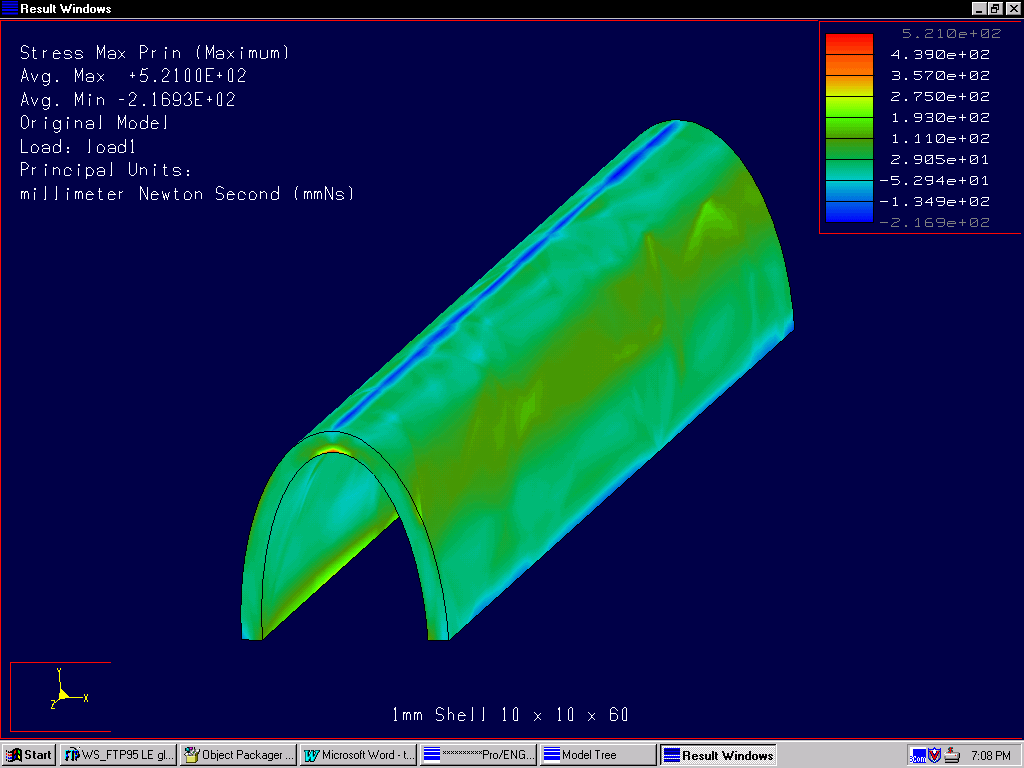
Figure 9 – The full structure analyzed with similar results to the half structure
Three-dimensional solid models and corresponding graphs for Figure 9 (similar to the graphs in Figure 8) can be found the in the appendix.
6. Limitations
Throughout the research project, Team 2 encountered some limitations that were based on time constraints and available software/hardware.
The engineering computer labs, available to Team 2, consist of of 300 Mhz machines. On these computers it literally took several minutes to create or regenerate the dental model. Once the structures were created, they were turned over to the teaching assistant (TA) for further analysis. This was necessary because the analysis would take at least take a day on the computers in the Engineering Lab. Even on the TA’s faster computer, dual-Pentium 600 Mhz box, it took anywhere between 10-15 hours for the analysis to complete. In some cases, unsuccessful analyses were generated after a full run.
6.2 Software Analyses
Originally the project included a variation of different sizes and geometries. The groups intent was to create geometries ranging from extremely small pore size to a pore twice the size of the specified parameter. Unfortunately, Pro-Engineer was not able to recognize extremely small dimensions and the computers did not have enough memory to support the larger dimensions.
The project originally included both rectangular and circular geometries. However, Pro-Mechanica was not able to run the analysis on the model with circular pores because the software could not create a mesh for the circular model.
As a result of these limitations, extensive research could not be generated for the dental study.
7. Future Research
The results generated from the FEA are very informative, however additional studies should also be employed to determine the best possible structure for the ridge design. Further studies should include analyzing more geometric structures, apply different loads, include other FEA software, and incorporate other reactions in the analysis.
7.1 More Geometric Structures
This project analyzes the stress distribution on the outer shell and within the internal scaffolding. An additional structure that should be considered includes stacked hemispherical layers with radii that are increased by constant increments. In every other layer the pattern will be the same, which offsets the pores for optimal interconnectivity. A second method for achieving the same effect would to stack identical layers and connecting them with columns. A honeycomb pore should also be tested for a comparison to the original rectangular shaped pore.
7.2 Vary the Applied Load
Team 2’s research project applied the uniform load to only half of the shell for symmetrical reasons. Future research should include applying the load over the entire structure in order to obtain the most accurate results.
7.3 Other FEA Software
Inclusion of other FEA software packages is also very beneficial for obtaining a range of results. Some other software packages include the following: ANSYS, Cosmos (Solid Works), and Algor. With the use of other FEA software, the different sets of results could be compared to determine the mean and standard deviation.
7.4 Other Engineering Reactions
Team 2’s study analyzes the stress distribution along the outer shell due to a 100N load. Further studies could determine the strain values corresponding to the 100N load using different material properties. Using additional tests, the most suitable material could then be selected. Other studies could also analyze the deformation results under the same conditions.
8. Conclusion
This research project has taught Team 2 the parameters governing the AVR problem, which are currently posing the dental industry. The parameters were applied when modeling the structure in Pro/Engineer and running an analysis in Pro/Mechanica. The results illustrate that the structure is capable of withstanding human forces caused by chewing, eating, etc. Understanding how to generate stress results is a very valuable lesson for modeling real word structures and utilizing a finite element analysis.
APPENDIX
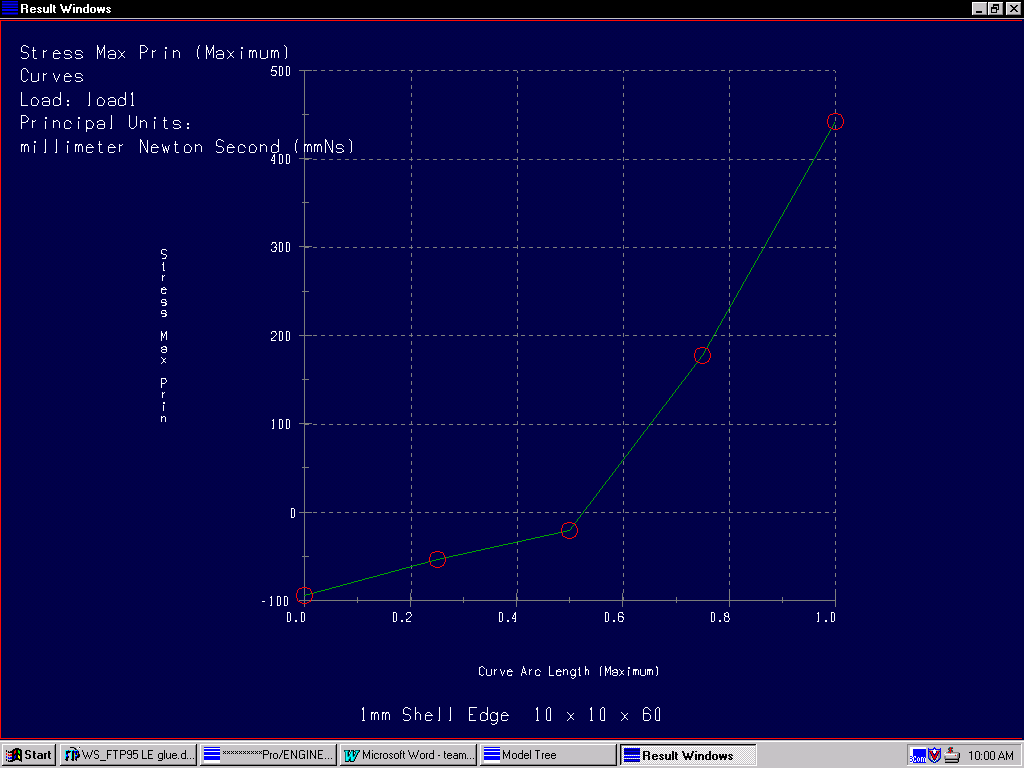
Stress from top to bottom.
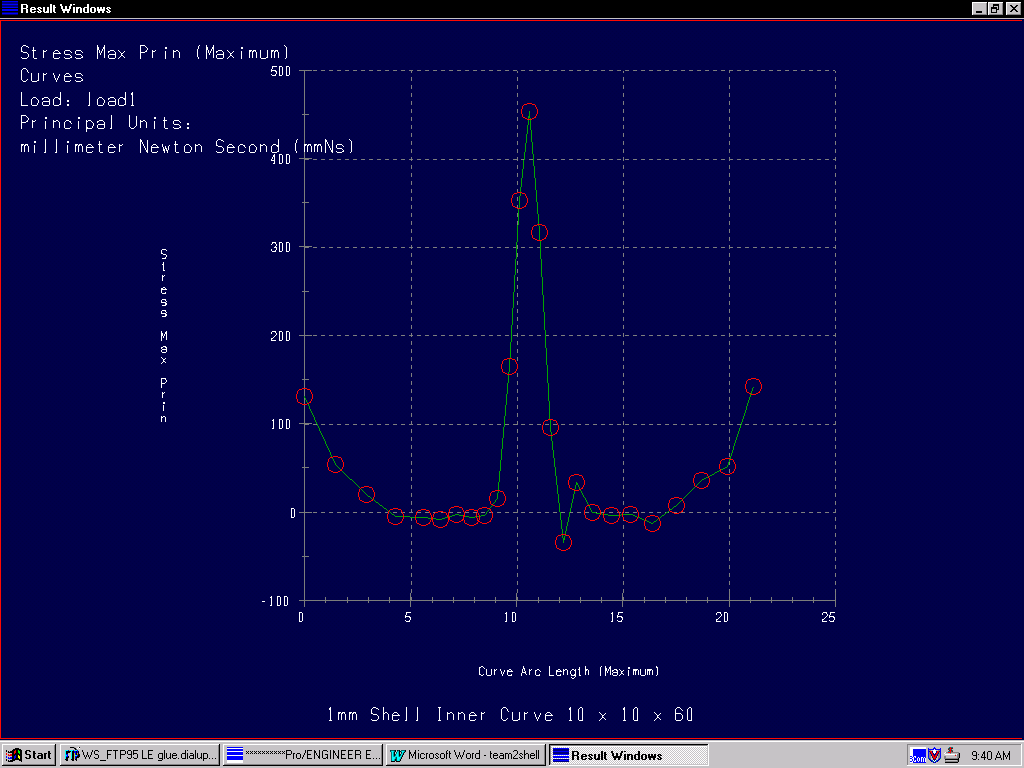
Stress from left to right inner curve.
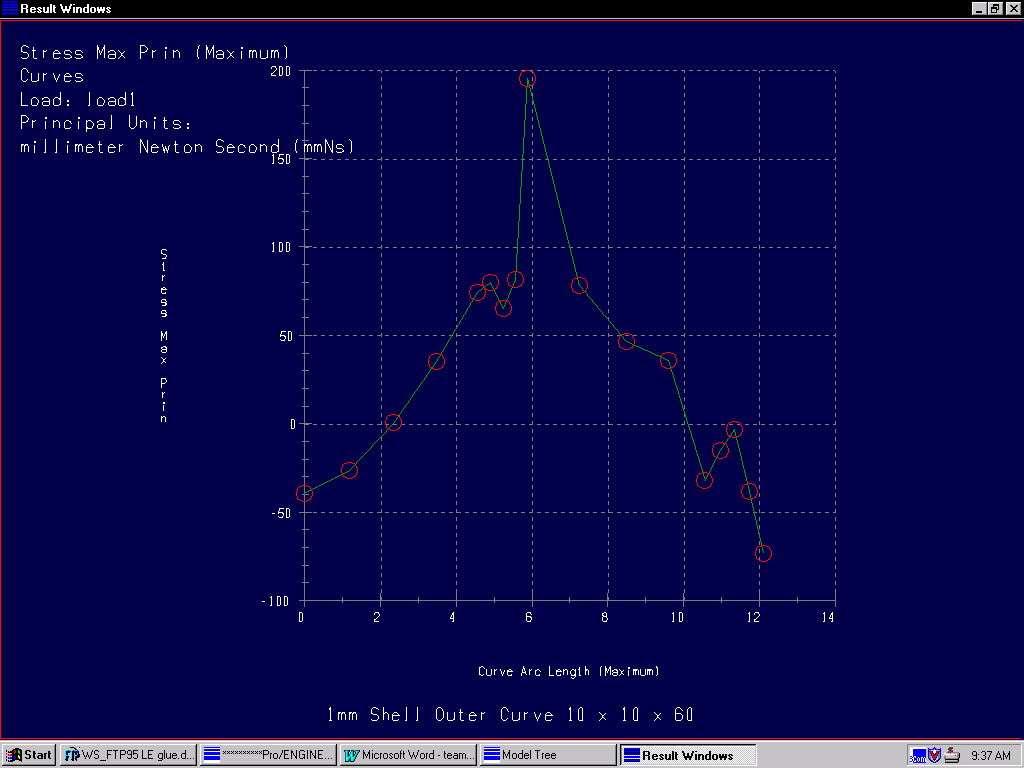
Stress from bottom right to top outer curve