

Event name: Smithsonian Environmental Research Center (SERC)
Event time and place: Edgewater, MD October 24, 2026
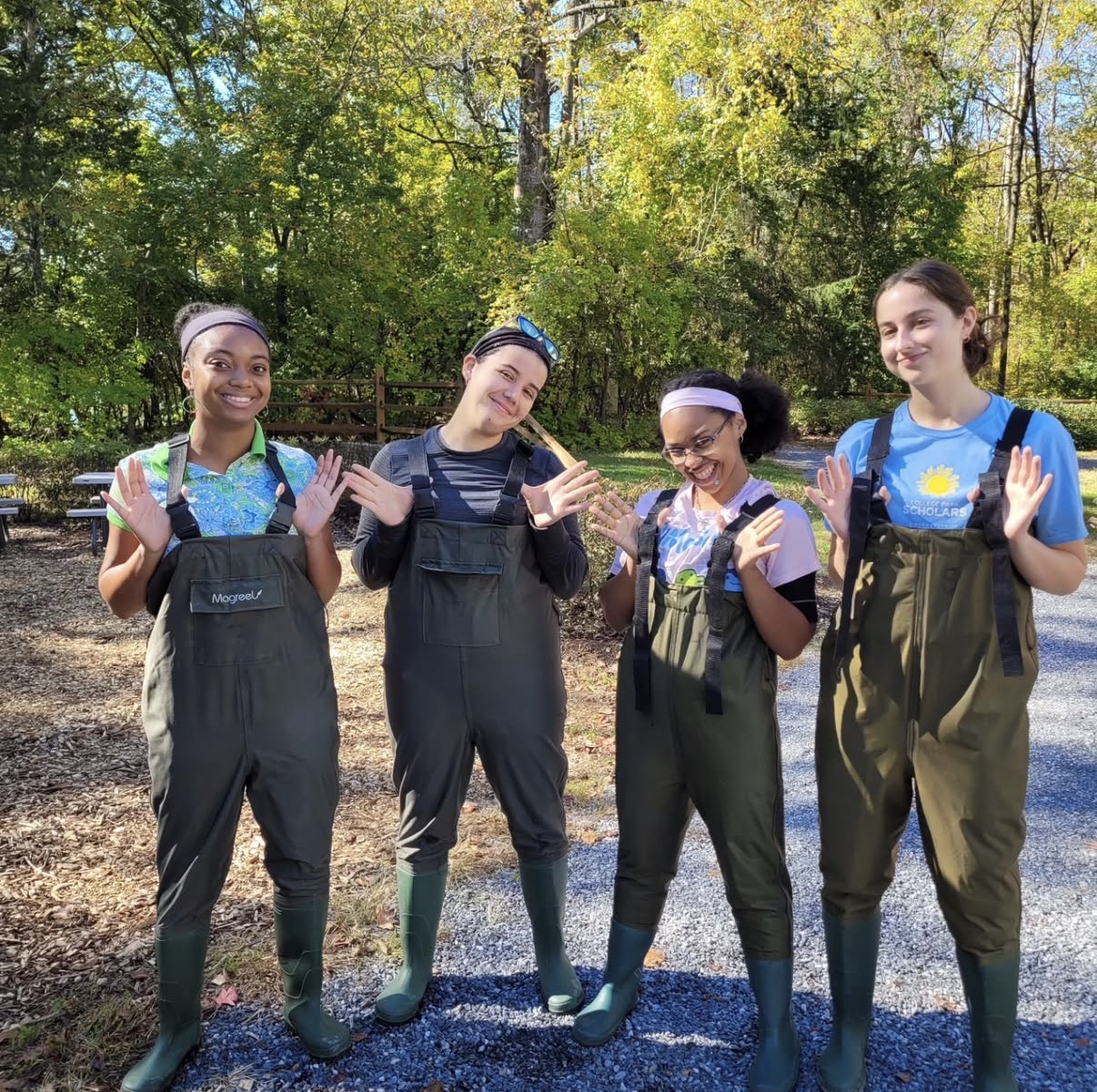
Me, Lia, Erica, and Charlotte in our waders.
The research experiments conducted at the facility involve observational studies without interference and manipulation of variables to measure the effect. Biodiversity is an important indicator of environmental health and supports human society. Observing changes in the biodiversity can reveal threats to the system and inform actions to improve the ecosystem. Scientists and students collect samples of species from different environments and count the number of different species (species richness) and organisms for each species (relative abundance). While on the trip, we got to simulate these experiments by collecting oyster baskets on the pier and seining in our waders along the coastline. Another experiment that was discussed by the tour guide was the TEMPEST experiment. This involves staff periodically flooding plots of coastal forest with briny water for scientists to analyze the effect of sea level rise. As the Earth heats up, glaciers melt, and water expands, sea levels rise causing land to be flooded with water of higher salinity than they are meant to handle. Understanding these effects on the soil and plant life will help society adapt for a future with a higher sea level.
The two main environments that our experience focused on were the intertidal and subtidal zones. The intertidal zone is periodically above or below sea level depending on the tides. It provides an interesting habitat for small fish, crustaceans, and other vulnerable species to lay their eggs and hide from larger predators in the deep water. These environments are endangered by sea level rise because enough rise will make the zone permanently submerged and push out the flora and fauna faster than more coastline can be eroded and transformed. Invasive species such as the phragmites are also a problem because they outcompete the native species and alter the functioning of the ecosystem. Moving out to the intertidal zone, the health of the environment is impacted by sensitivity to rising temperatures and other anthropogenic activities like fishing and nutrient runoff. The oyster population is an important species to the health of the Chesapeake Bay because they support biodiversity and filter the water. Harvesting practices have flattened the beds used for shelter by other organisms and depleted the population. Along with the temperatures affecting their reproduction, the oyster population is no longer capable of filtering the entire bay from nutrient runoff and suspended particulate matter.
SERC is dedicated to making this knowledge about the environment accessible to the public. The staff conduct children’s camps for students of various ages to start their environmental education early. Their curriculum was similar to ours and focuses on experiential and place-based learning. This gets the children engaged in the learning process and emphasizes the importance by connecting broader concepts to their local area. Additionally, visiting researchers come to the facility to develop their knowledge for their degree and publications. The ecosystem provides a laboratory for them to conduct wide-ranging experiments on different types of habitats with limited human disturbance. The scope of their research can apply to global impacts or regional restoration projects. Lastly, the public are allowed to walk the grounds as long as they abide by the rules to preserve the environment. They could be seen on trips taking leisurely walks and reveling in the natural beauty. This is an indirect yet still powerful method of education because it allows people to form an emotional connection with nature and encourage curiosity about environmental health and knowledge. These outreach methods are effective in combination because they target multiple levels of society with varying structure in order to get them invested in environmental science and solutions for a better future.
The opportunity to visit the SERC was able to connect concepts of how science and scientific education can support the environment. Their dedication to developing knowledge made me reflect on how the scientific community can better communicate with the public and connect everyday lives. It could resemble centers like this which allow the public to see and experience the importance of their research and garner support to continue their work. This is especially vital in a time science is stigmatized and misunderstood, leading to cuts in funding.