


National Zoological Garden:
May 3,2026, Washington, DC:
During my visit to the zoo, I explored the Small Mammal House, the Reptile Discovery Center, and Amazonia, including attending the 11:30 guided tour. Each of these buildings grouped animals thematically and presented information differently, but all contributed to my understanding of the species and their environments.
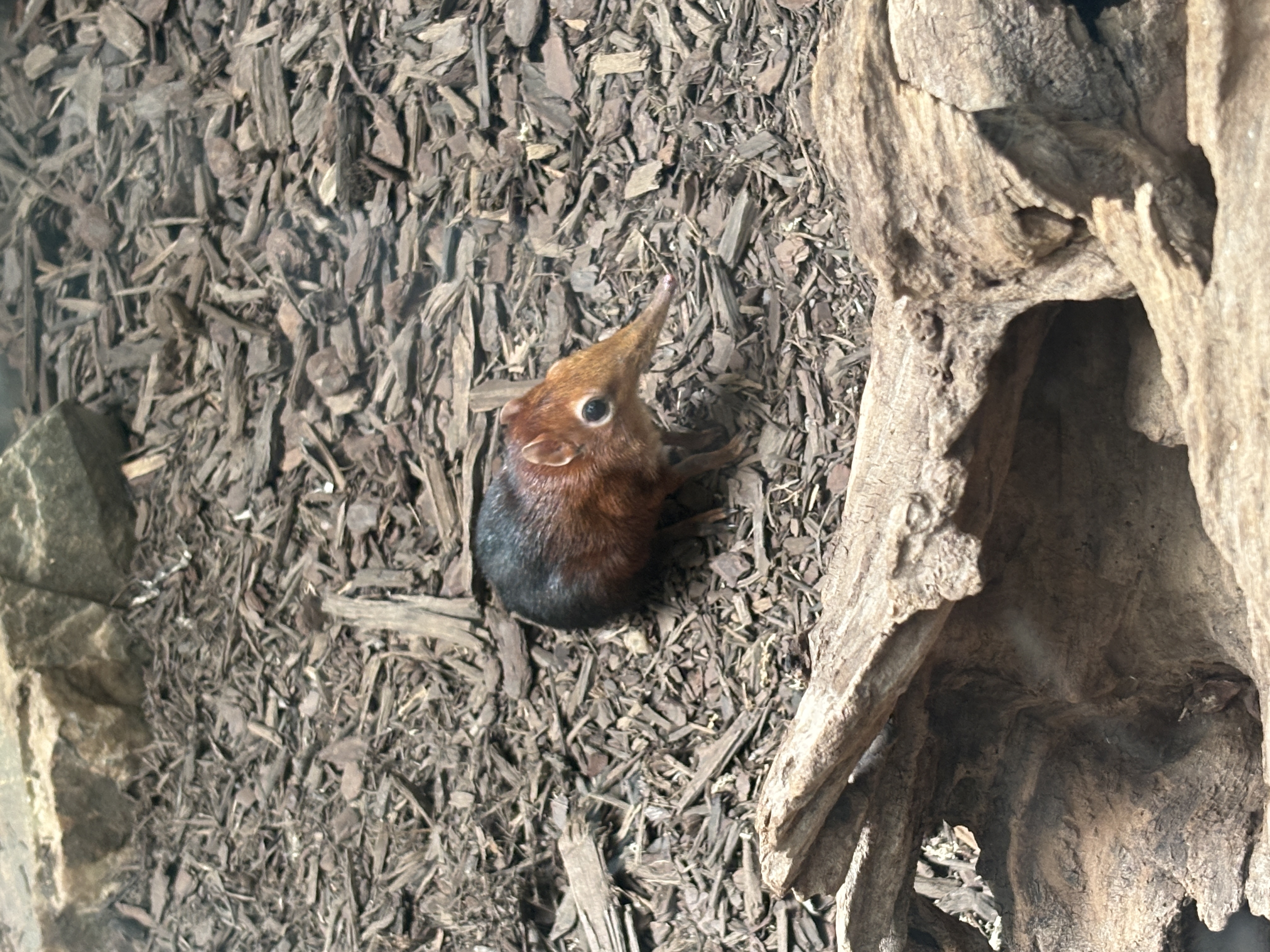
In the Small Mammal House, each species had detailed plaques that included where the animal comes from, shown through both written ranges and maps highlighting specific regions. The displays also listed habitat, diet, and both the common and scientific names. In some cases, they included conservation status and extra explanations about behaviors, such as why armadillos create underground burrows. This exhibit stood out to me because I saw many animals I had never even heard of before. Some of the species on display included the golden-headed lion tamarin, fennec fox, prehensile-tailed porcupine, sand cat, naked mole rat, black and rufous elephant shrew, and the bearded emperor tamarin, which honestly became one of my favorites. In terms of displays beyond simple text, there were not many interactive features. There was a nocturnal mammals section with additional signs explaining their behavior, and certain animals had more detailed descriptions, like the naked mole rats and how they live in colonies. While these weren’t very interactive, I still learned new things from them. The exhibit seemed mostly aimed at children, since many of the signs were placed at a lower height, but the information could still be interesting for all ages. I did notice that some visitors, especially parents with kids, were reading the plaques, but most people were more focused on just looking at the animals.
The Reptile Discovery Center had a similar setup in terms of basic information, but with some additional details. Each plaque included the animal’s name, scientific name, whether it was venomous, and a map showing its range and habitat. There was also usually a short paragraph describing features like coloration or patterns, and sometimes conservation status. Some of the most memorable species I saw there were the snouted cobra, puff adder, Henkel’s leaf-tailed gecko, yellow-spotted Amazon River turtle, alligator snapping turtle, and the Japanese giant salamander. Compared to the Small Mammal House, this building had many more interactive displays. One example was a model of a snake with labeled organs, where pressing buttons would light up different internal parts like the heart or lungs. There were also X-rays, such as one showing a frog that had eaten a mouse, and diagrams comparing human and reptile anatomy. These displays were actually really informative and made it easier to understand how these animals function. The education level seemed slightly higher than the Small Mammal House, since some of the material went into anatomy, but it was still accessible to kids. However, because the building was more crowded, I noticed that fewer people were paying attention to the information and were more focused on spotting the animals, especially the ones that were camouflaged.
Amazonia had a slightly different approach, especially during the guided tour. The plaques for the fish generally had less information, including the name, scientific name, a short paragraph with facts or behaviors, and sometimes conservation status. However, certain species had more detailed explanations about their unique traits. During the guided tour led by Dr. Merck, we learned much more in-depth about several animals. For example, we saw the arapaima and learned about its lateral line system and the fact that it has two jaws. We also learned about lungfish, which are interesting not just because they have lungs, but because they rely on them instead of gills. Other species we discussed included the matamata turtle, which feeds through suction and blends into its environment, and the Panamanian golden frog, which connects to the book The Sixth Extinction that we read in class. This exhibit also had more educational displays, such as information about rainforest ecosystems and interactions between species like ants and jaguars. One of the most interesting sections focused on amphibians and the fungus affecting them, including an interactive display showing temperature ranges where both amphibians and the fungus can survive. I found these especially informative. This hall seemed aimed at elementary to middle school levels, but some of the content, like the disease affecting amphibians, was more in-depth. While I did not see many visitors engaging closely with the displays, I did notice a staff member explaining information to people as they walked through, which added another level of education.
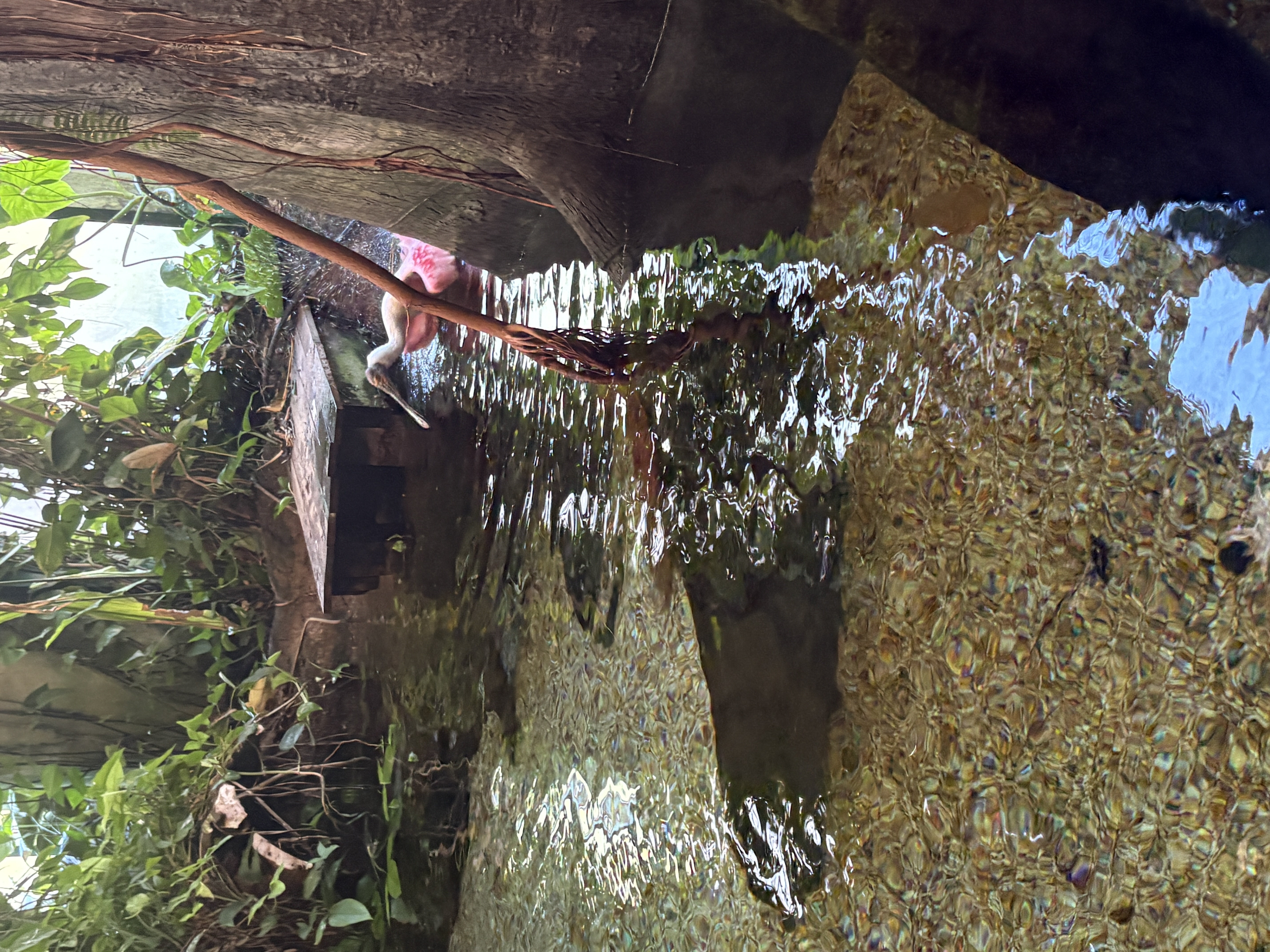
Beyond simple plaques, the zoo helps educate the public in other ways as well. One example is the use of immersive environments, like the recreated Amazon rainforest in Amazonia, which allows visitors to feel like they are actually inside the ecosystem. This makes it easier to understand how animals interact with their surroundings. Another example is the use of interactive learning tools, such as buttons, models, and visual displays, which help explain complex ideas like anatomy or environmental changes in a more engaging way.
Finally, the zoo also makes efforts to support the mental and emotional welfare of the animals. Many enclosures include enrichment tools such as climbing structures, ropes, and elevated platforms, especially for primates and small mammals. These additions encourage natural behaviors and make the environment more stimulating. Another example is how the zoo recreates natural habitats, including vegetation and water features, like those seen in the Amazonia exhibit. These environments not only make the animals more comfortable but also allow them to behave more naturally, which is important for their overall well-being.
Overall, each of these exhibits offered different ways of presenting information, but together they showed how zoos can educate the public while also trying to improve the lives of the animals in their care.