


Museum of Natural History Excursion:
November 22, 2025, New York City:
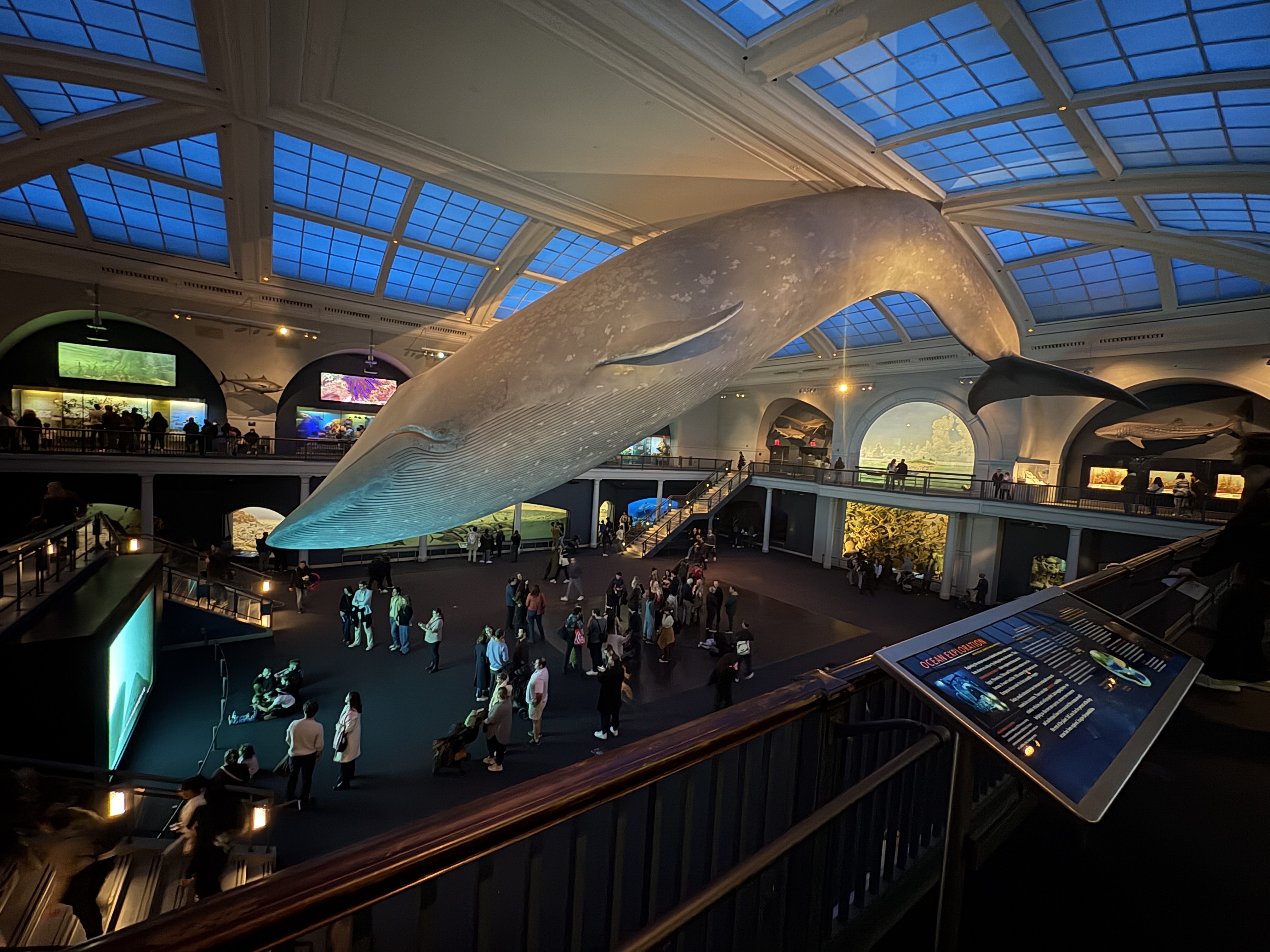
The exhibit "Impact: The End of the Age of Dinosaurs" showed the event of the asteroid striking Earth and ending the Age of Dinosaurs by taking visitors through a kind of before and after journey. It started with a display of a triceratops, a tree meant to represent the forest, and other animals to set the scene of what life looked like before the impact. Then there was a short film that explained how the asteroid hit, what happened during the impact, and how some species managed to survive while many others went extinct. They even displayed the bones of animals to reinforce what the film described. After that, the exhibit moved into the aftereffects and eventually into the modern age, showing the species that survived and how they evolved.
Two displays that really helped explain the event were the one that let visitors smell the smoke from the fires caused by the impact and another that used screens to show how dark the sky became afterward. There were also displays about mass extinction in general and even a simulation of a satellite hitting a meteor that was on its way toward Earth. The smell display worked by lifting a small screen that instructed visitors to lift it to smell, which made it simple and interactive. The asteroid simulation was set up near the exit next to information about whether a similar event could happen again.
I think the exhibit did a great job making everything clear enough for a casual visitor to understand. The visuals guided people almost like a story. You saw the beginning, then the film showing the impact, then the aftermath, and finally the present. I even noticed little kids following along and asking questions, which showed that the flow made sense even to them.
The exhibit makes this event from 66 million years ago relevant to people today by connecting it to our understanding of Earth’s history. It helps explain why the dinosaurs went extinct, how the surviving species evolved, and how events like this shape our world. It also gives us a chance to think about how to prevent something similar from happening in the future.
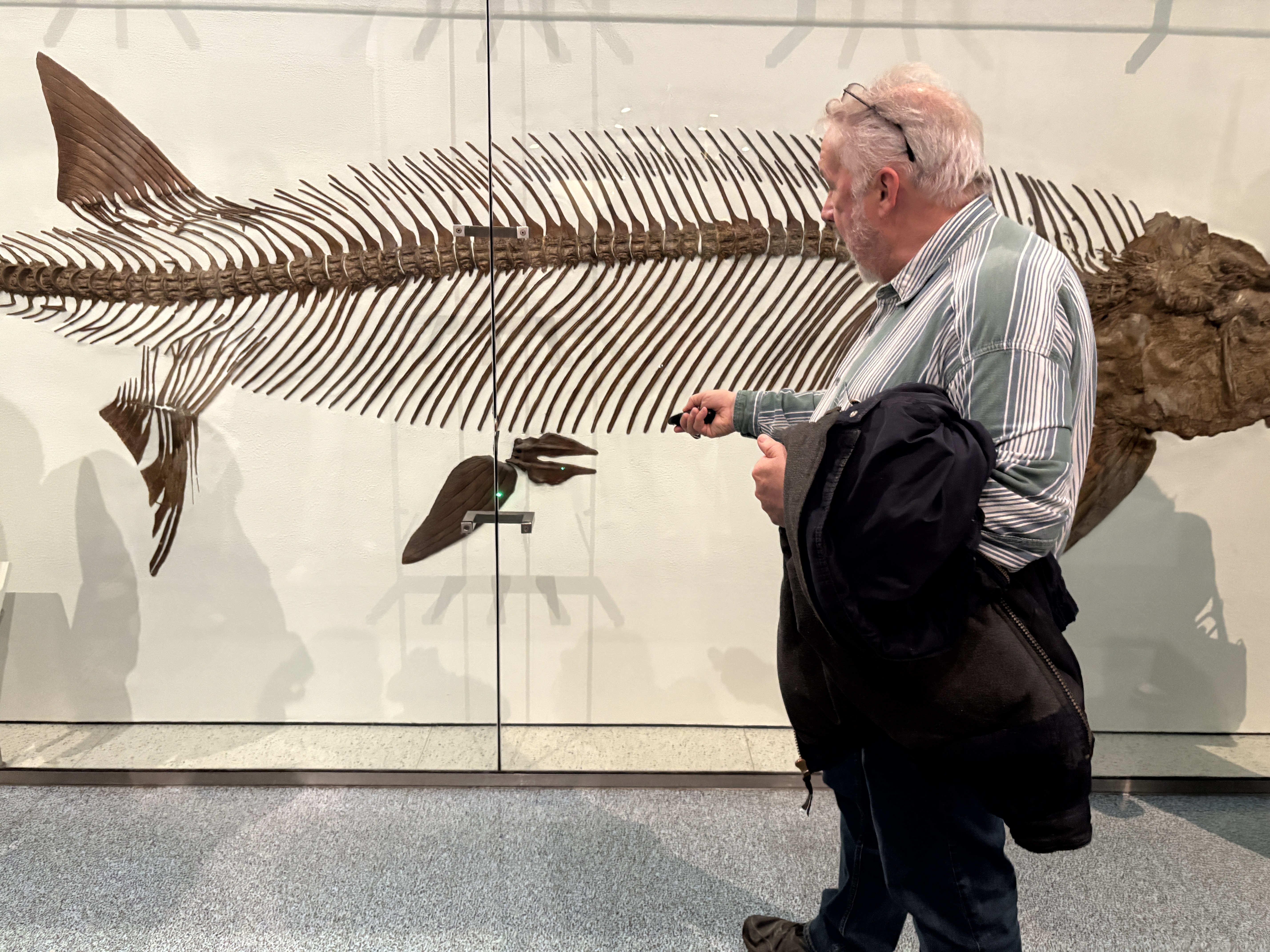
In the Collections Core with Dr. Merck at the Hall of Vertebrate Origins, I saw a fossil of a Sauripteris fin that was displayed next to an image showing a clearer view of the bone structure. This helped show how aquatic vertebrates eventually evolved into land animals. I also saw what I believe was a fossil of a Stenopterygius quadriscissus, which was placed behind a glass pane. This fossil showed the animal in the middle of giving birth, along with the young it was delivering. It demonstrated how some aquatic animals evolved to carry their eggs inside their bodies because their eggs were not waterproof. At the end of the tour, we learned about Pterosaurs and how one of their fingers was actually the long support for the wing tissue. We also talked about how their chest bones were not very flexible because their bodies were structured to carry most of their weight on the upper half. Natural history specimens like these are useful because they help us understand how animals evolved and adapted.
For my self guided observation, I went with a small group to the North American Mammals Hall. The hall was arranged with taxidermized animals in realistic habitats with painted backgrounds, which helped make each display look like a snapshot of real life in the wild. One exhibit that caught my attention was the mountain goat display. It showed that they live in southern Alaska and explained that baby goats can climb anywhere their mothers can within a week. It also said they can climb seventy five feet in a minute and included a map showing their range. Another display featured white tailed deer from New York. It explained that because early settlers eliminated eastern cougars and wolves, the deer population grew freely. When deer overwhelm an area, they can eat so much that new trees cannot grow, which then harms the deer themselves because they lose access to good food. The exhibit also identified the trees in the scene, like red maple and blackgum. Another display I saw was about the American mink, which can be found in New Jersey. The information explained that minks always live near water, eating fish and frogs underwater and small mammals near the shore. It pointed out their webbed feet and how their fur has been used in garments and even farmed for fashion. It also described how wild minks are usually deep brown but farmed ones can be bred in many colors. The exhibit included information about the plants shown with the mink. Most displays explained where the animals were from and provided helpful details, and overall I did not feel like there was information missing. The Space Show was a film at the Big Bang Theater narrated by Pedro Pascal. The theme was the birth of the universe. It described how gas clouds formed, galaxies with stars, and planets, as well as how galaxies collided and caused massive explosions. The images were very clear and stunning, and they looked real rather than like something created by a special effects team. There was information I didn’t know before, especially about how galaxies collide and about the telescope that captured images of the universe and nearby stars.
The AMNH works hard to accommodate all kinds of visitors. There were many tactile objects that people could touch to feel different textures. Several touch screens offered language options and the maps around the museum also came in different languages. The elevators helped not only our group but also parents with strollers, older visitors, and people with mobility challenges move easily between floors. The signs and explanations next to the exhibits helped visitors of all educational backgrounds understand what they were looking at even without someone there to guide them.