


Event name: Zoo Field Trip
Location/Time: Smithsonian's National Zoo and Conservation Biology Institute, Washington, DC, 24 November 2025
Two weekends ago, I had the opportunity to visit the National Zoo in Washington, DC. Aside from the appeal of seeing the interesting animals, this excursion gave me the opportunity to learn vastly about the different animals, the habitats they reside in, and the importance they have to a larger, interconnected ecosystem. This visit also helped to change my perspective on zoos from an ethical standpoint.
As you enter the park, there are big maps that show the different Zoo areas and all they have to offer. From Amazonia, to the Asia Trail, and the Bird House, there were various collections of plants and animals to learn about. Also on the map was a QR code that links patrons to a guide for each of the different areas of the Zoo. Using this guide, I was able to find specific areas of interest to me and observe, as well as read, about the various animals in each section. For example, on the Elephant Trails, I had the chance to walk over a massive bridge that spanned the Asian elephant’s area while observing them from above. A staff member nearby was explaining how the female was pregnant and soon expecting, but that the gestational period could be up to 22 months long. This got me thinking about how difficult it must be to bear offspring in the wild while still supporting yourself, and how this must be one of the reasons the beautiful species is endangered today. From this view, I could also clearly see how the elephants feed, using their strong trunks and ripping small bushes or other natural substrates out of the ground, then finessing the food into their mouths elegantly. After watching this, I read deeper about the elephant from the resource given to us and found that their trunk has about 150,000 muscle units and tendons that allow such precise but powerful movement. I had many other moments like these as different animals and their capabilities struck my interest. For example, I had seen the Arapaima on a favorite TV show of mine from my childhood and always took an interest in the animal. So, I was happily surprised to find one in the Amazonia exhibit. This gave me the opportunity to both see the animal in real life and use the linked resource to learn more about the fish, satisfying a personal interest I had not remembered for years. This Zoo excursion turned a childhood interest of mine into real learning that I will remember.
Continuing with this, my favorite of the exhibits was Amazonia. When you enter this building, the staff at the front warns that the animals in the next exhibits are largely free roam and that you need to be attentive. This piqued my interest, and I was not disappointed. Making my way from room to room, there were birds flying over my head, shallow ponds with different species of fish, and even a turtle walking along the path. The exhibit also did a fine job of mimicking a rainforest habitat with huge avocado and cacao trees draped in moss and vines for birds to perch on. The moisture in the air was thick and reminded me of the exhibit I was exploring. This combination of both habitat and free-range animals gives you a better sense of what it is like to live in a rainforest ecosystem.
After visiting the National Zoo in the context of the broader SGC curriculum, I have to give more credit to their conservation efforts than I previously have. Through our discussions in Colloquium, I have learned just how delicate different populations are in the wild, especially at the hands of human development. The National Zoo offers the opposite, preservation of delicate species and environments due to human development. All over each exhibit, there are signs that label endangered species or vulnerable ecosystems throughout the world. When I saw these, I reveled in the fact that these animals have the opportunity to survive without worry of their habitat loss, lack of food resources, or general global warming and its effects. They are given a chance at life, even if they are restricted and not out in the wild. My favorite example of this was listening to a woman talk about the Bald Eagle exhibit. She began by talking of how the Bald Eagle used to be an endangered species but has since made an incredible rebound in population size after tireless conservation efforts. This alone was encouraging, but she added on that the Eagle we were observing was not “captured” but was being protected. The Eagle had sustained an injury that no longer allowed it to fly, so keeping it in the Zoo ensures its ability to survive, even with its severely limited mobility.
This brings me to my next point, which is that the National Zoo is free to enter. I understand that not all Zoos are like this, but they should be. The animals should not be considered a show, with a ticket to buy like it’s the circus. Having free entry makes the Zoo feel like a learning environment, instead of an exploitative gimmick. I understand that the optics aren’t great, with animals restrained in range and natural predation, but I think the National Zoo offers far more than this. If you take away the optics, you see a truly beautiful environment of learning for individuals of all ages, while also serving as a center of conservation for some of the most loved but at-risk species on the planet. I thoroughly enjoyed my experience learning about the different animals and ecosystems the Zoo had to offer, and I hope other people visit to enjoy the same experience I had.
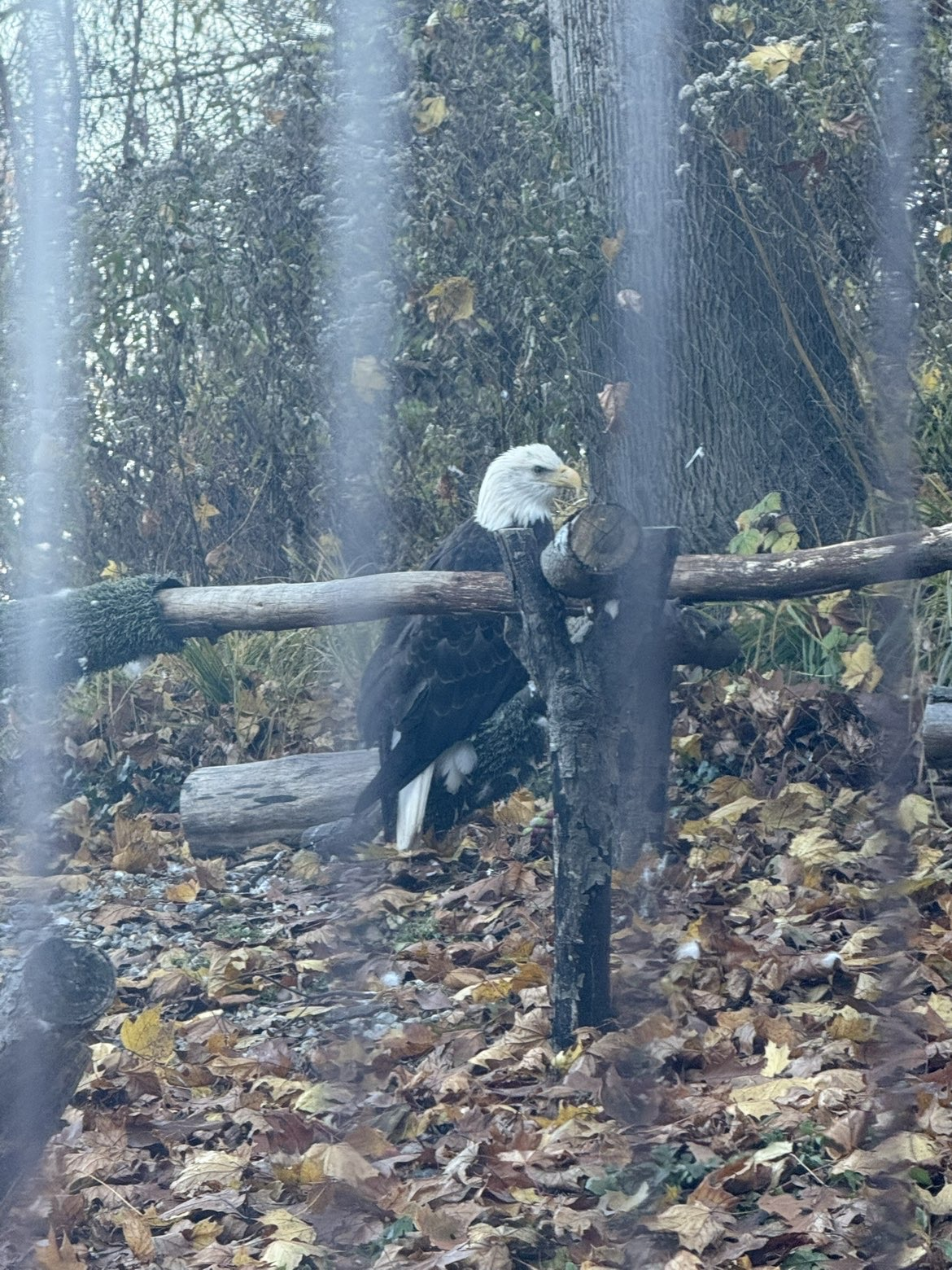
Flightless Bald Eagle on America Trail.
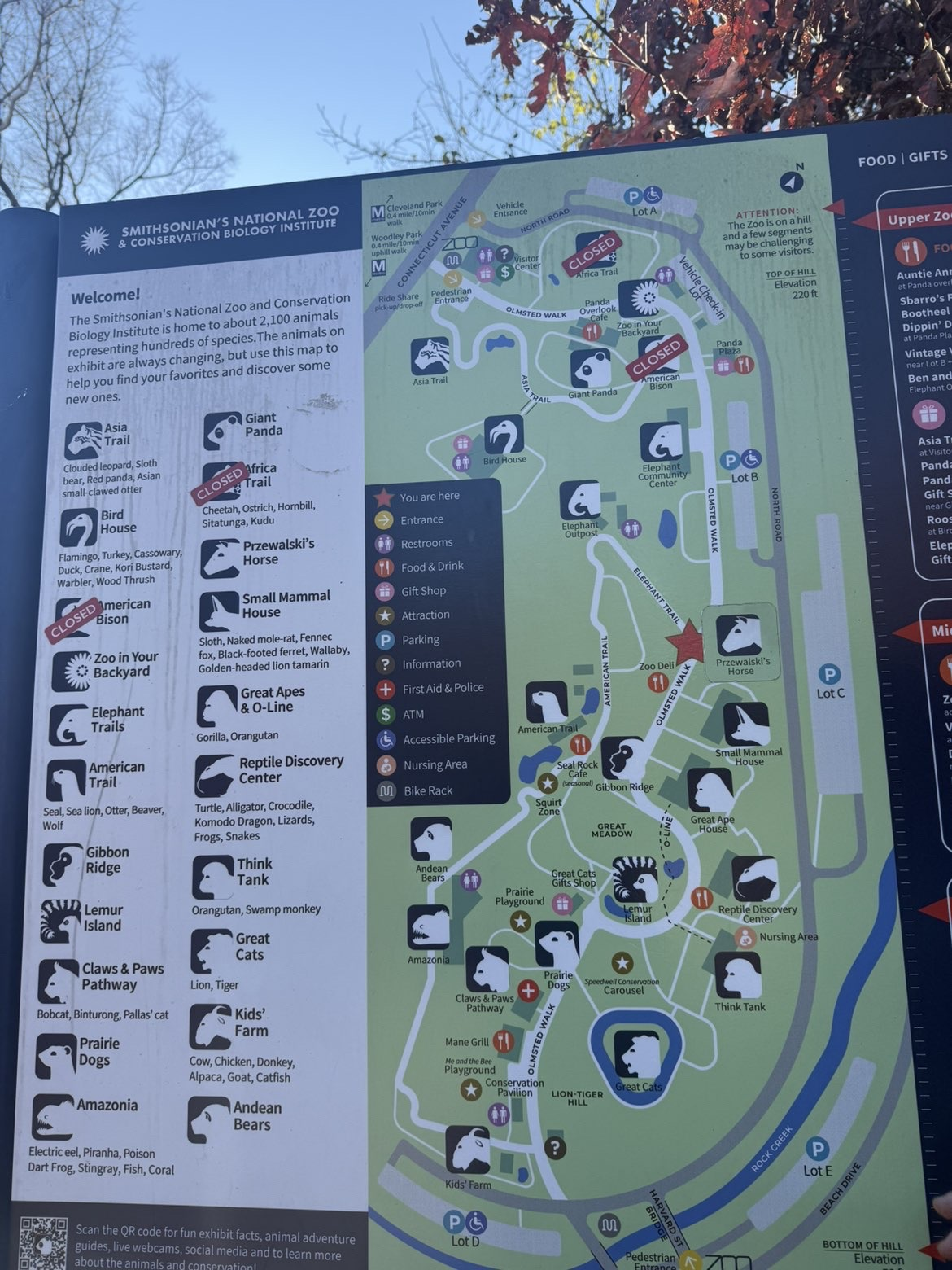
Informational map at park entrance.
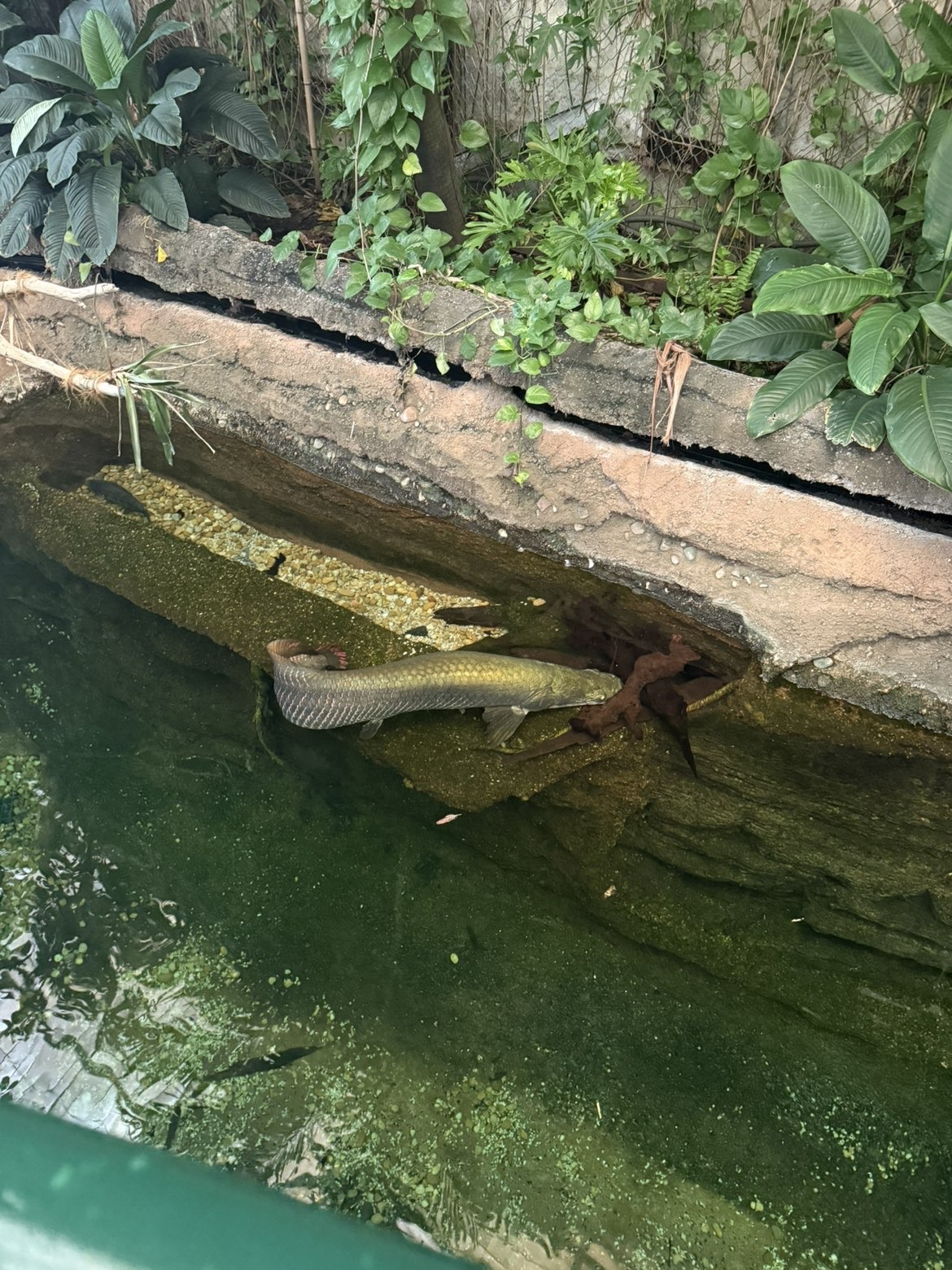
Aerial view of Arapaima in Amazonia exhibit pond.