


Renzo Balsamo
Name of Presenter: Professor Micheal Ross
Title of Presentation: The 14th Amendment
Event time and place: September 17th, Stamp Student Union
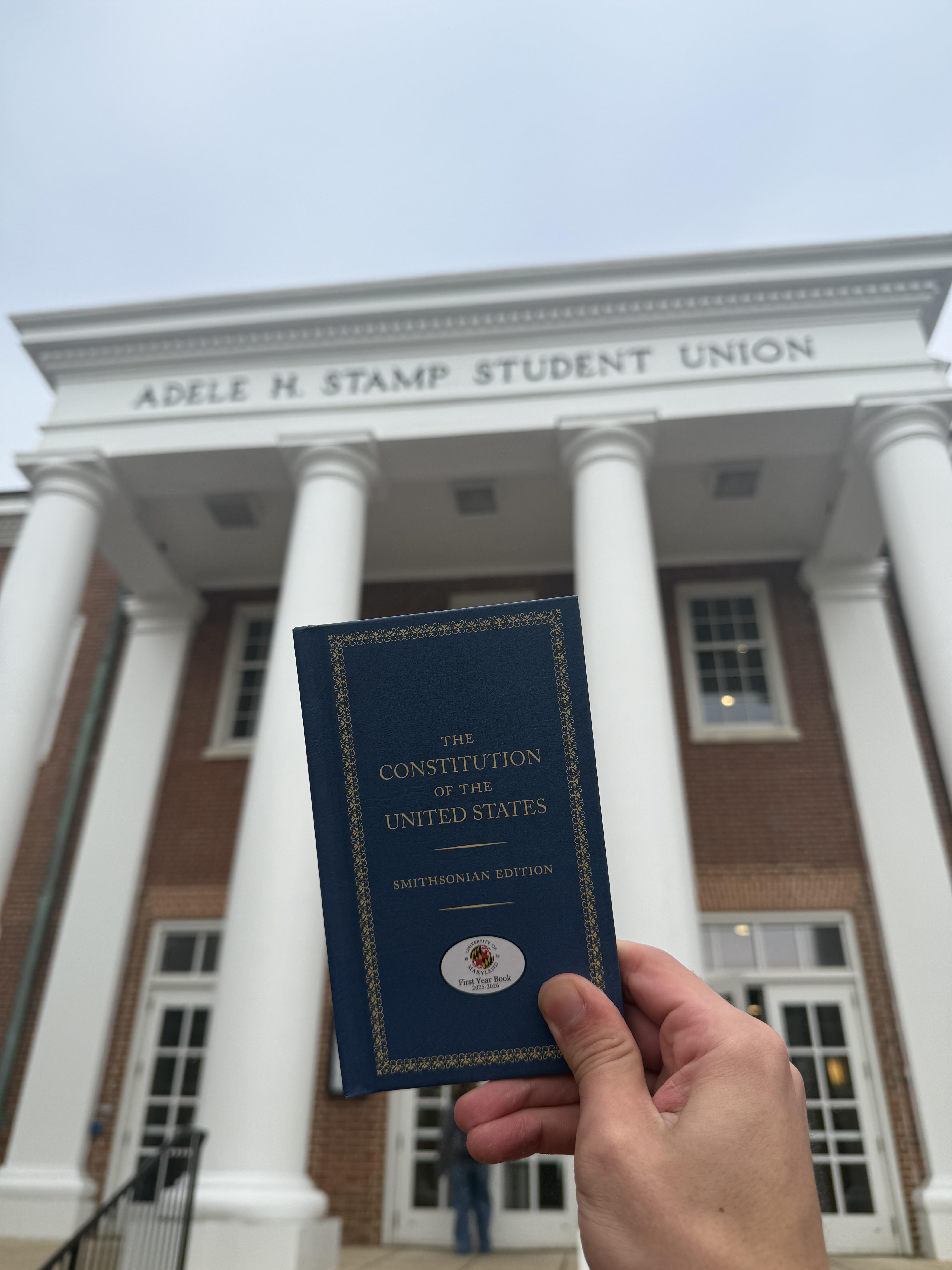
Due to the constitution being signed on September 17th, that day is now the Federally Dedicated Constitution Day. Academic Institutions such as UMD are required to provide academic presentations and/or material to educate students on the history and importance of this document. In our cases, the university gave a few presentations within the Stamp Student Union, and handed out complementary constitutions along with that. The presentation I attended was all about the 14th Amendment, which includes the incredibly important Citizenship Clause. Dr. Ross was the presenter of this talk, he overviewed and went deep into the history of why this amendment was ever drafted in the first place, who it was originally meant for, and how the ratified and modified version looks now. He then highlights the controversy over its modifications, dealing with which people were technically kept out of the amendment and the loopholes found to enact injustice on these people.
Dr. Ross presented this talk in the structure of a timeline. He started off providing us with the important context of the post-civil war state in the United States. He illustrated how there was still such a clear stain of discrimination towards African Americans after slavery was abolished (13th Amendment), especially in the south. Though this was country wide, there were progressive few in the government that wanted to give those recently freed people the actual rights of living in the country. This is where the 14th amendment came into discussion. This was a solution that allowed for the granting of rights to more than just White Americans, and gave opportunity for individuals born outside the country to become a citizen. It gave equal protection for all citizens and made sure accommodations were the same. Though the 14th amendment had now been indicted into the constitution, loopholes were found by those who were fans of the discrimination. An example of this is a white shopowner who used the fact that race isn’t distinctly stated in the 14th to argue that his rights were being infringed upon. So again, ratification and clarification had to take place. The country was heading into unionized state but there were still gaps in the writing. While the amendment granted equal protection to all citizens, it did not specify against segregative laws. This realization came about in the infamous “Plessy vs. Ferguson” case and quickly spread across the country, which led us to the Jim Crow laws era. This struggle wasn't resolved until the Civil Rights Act til, and just goes to show how racism refuses to die in the face of progression. Additionally, the 20th century conflict of whether corporations are considered persons within law came about due to the phrase “...nor shall any state deprive any person..” found within the 14th Amendment. This commotion creates what we know today as corporate law. Now I realize how related this amendment is to the original mission of our country, and the huge impacts to our country after it was put in place.
There wasn’t necessarily an actual argument that I could disagree with in this topic, as it was more of a story about underrepresented Americans finding fairness throughout the recent centuries. If anything, I could say that I heavily disagree with all the social and political injustice that is a part of the 14th amendment’s history. I found everything that he was saying to be interesting and convincing enough to the point where I pretty much believed everything he was saying. Dr. Ross is a seasoned professor and knows his United States history/policy better than I ever will. That being said, the only fallacy I was able to possibly dig up was my potential appeal to his authority.