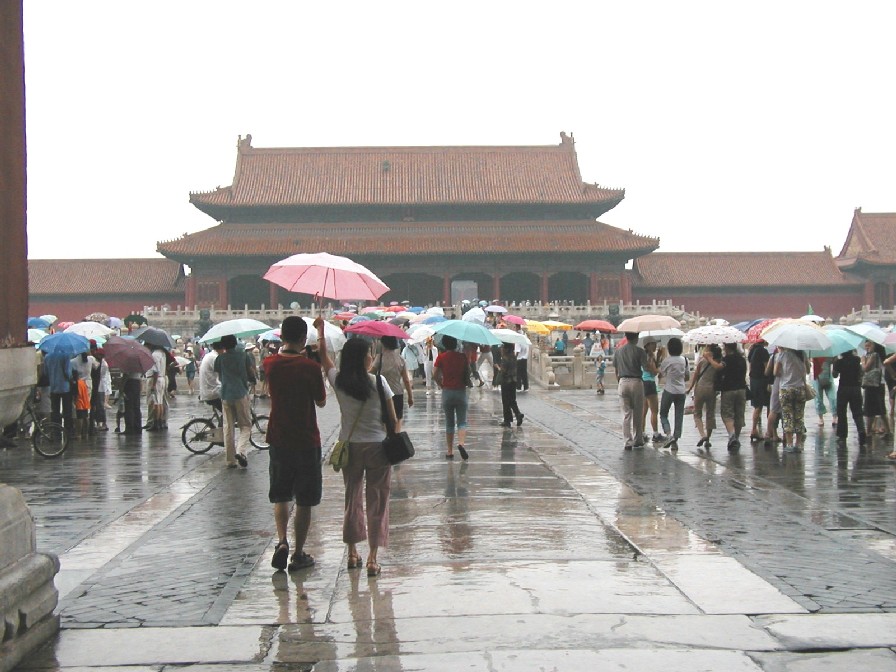
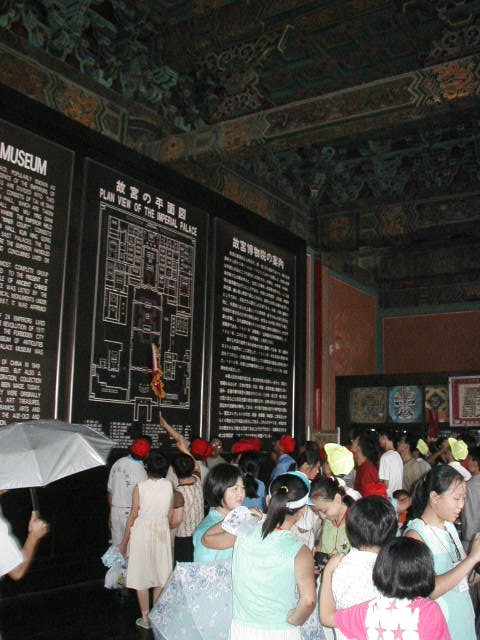
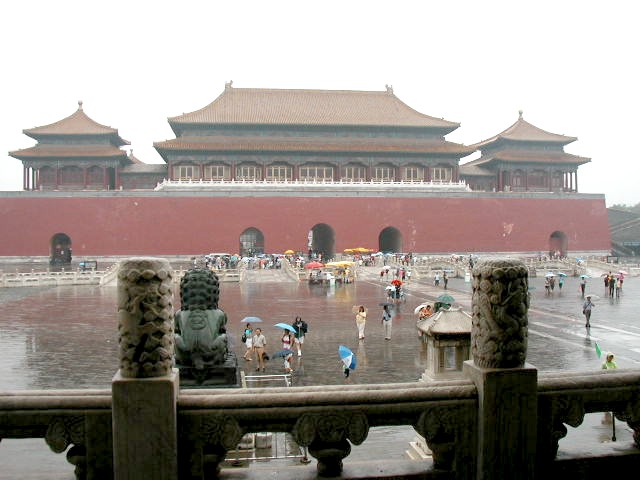
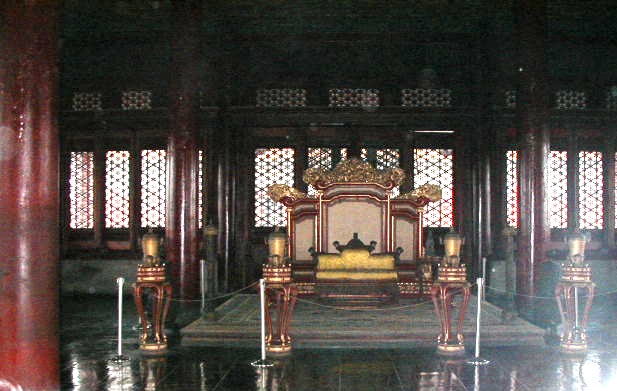
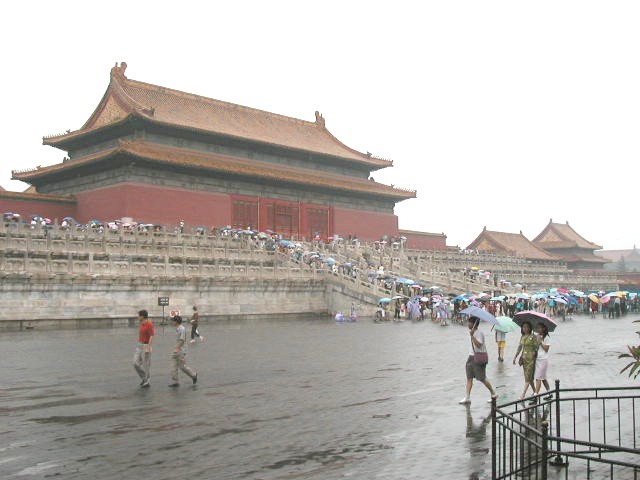
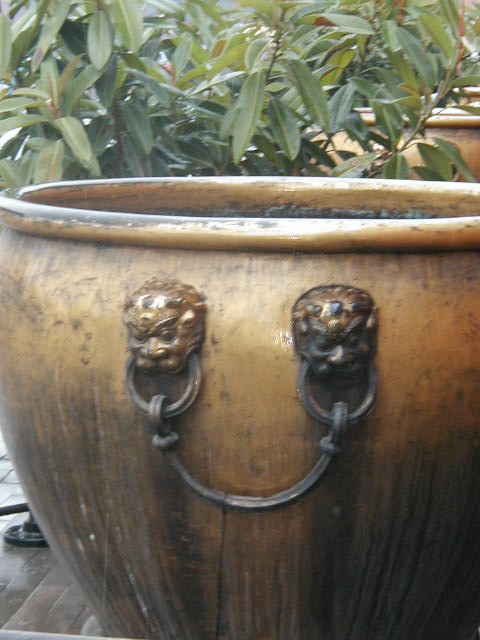
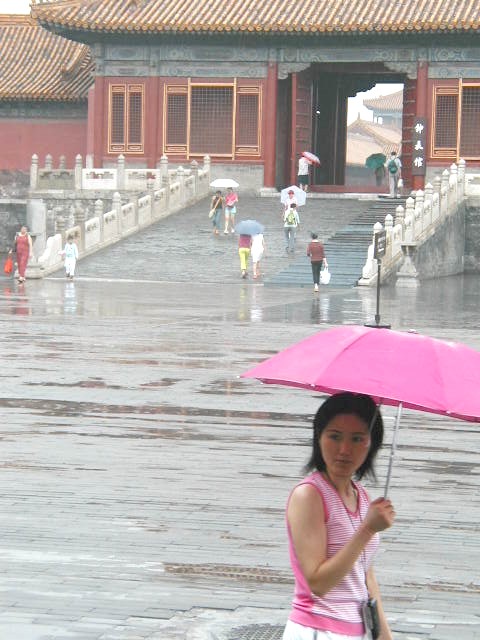
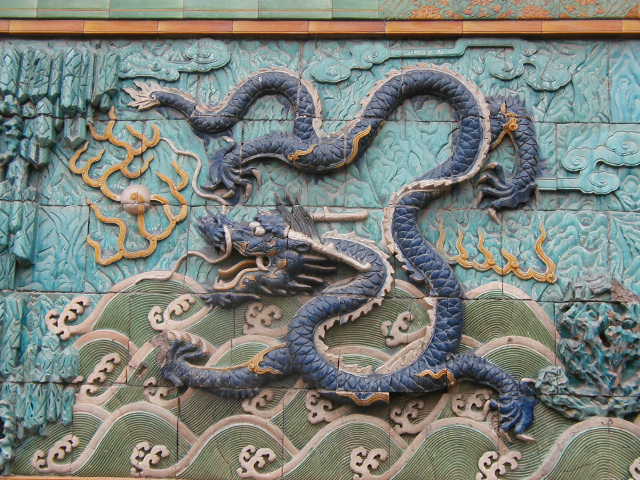
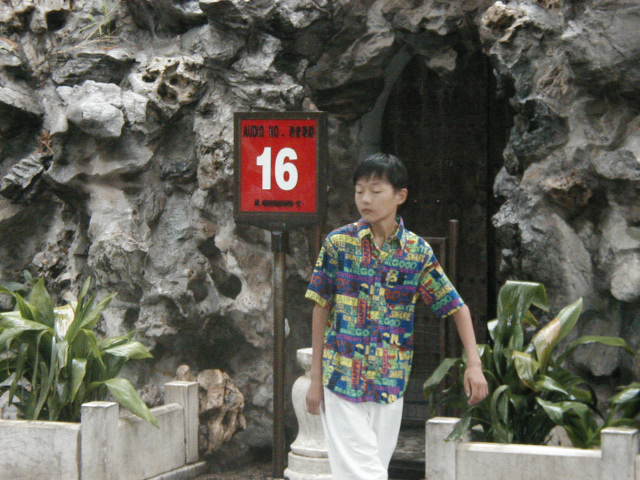
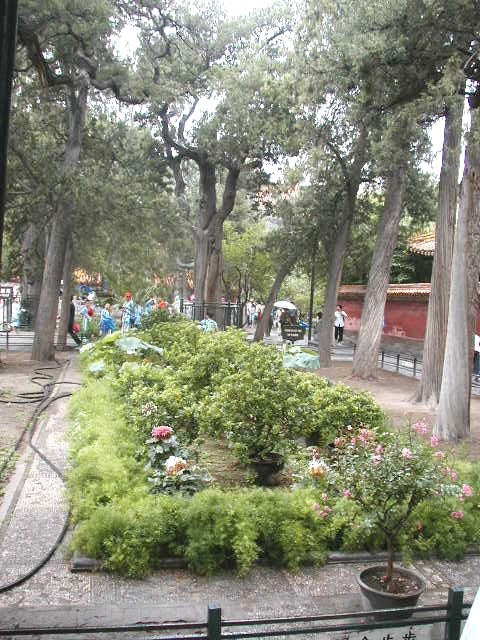
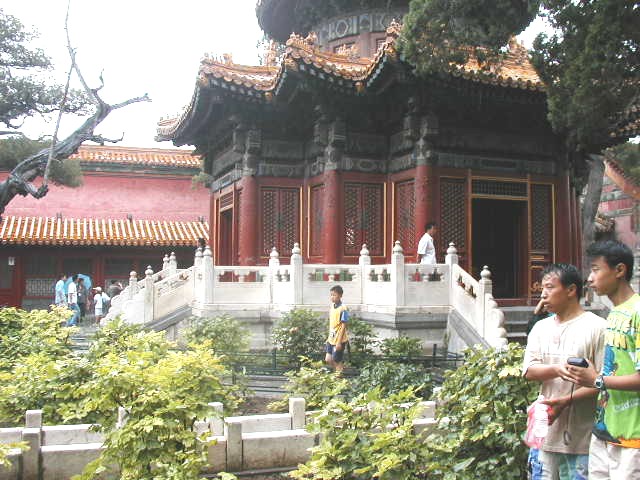
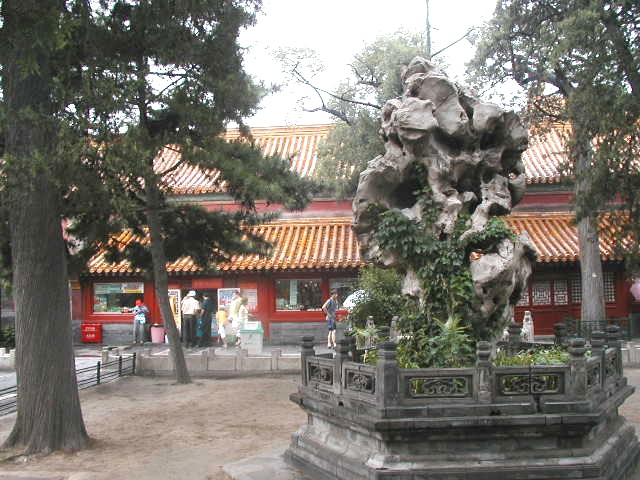
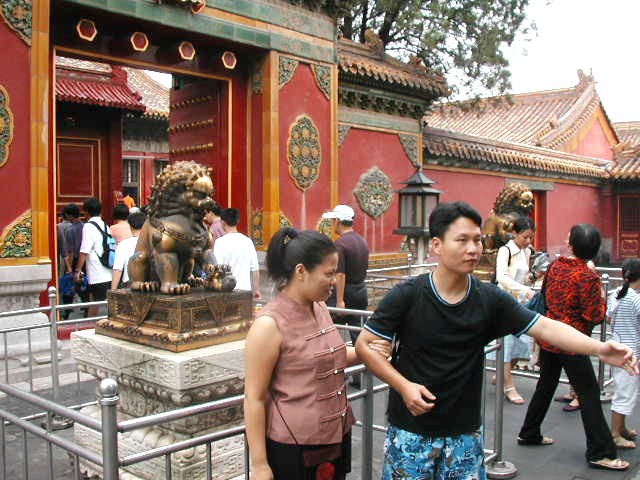
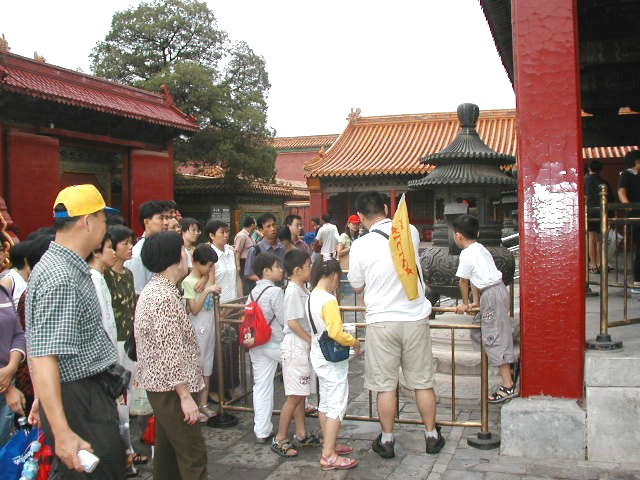
It rained on the day we went to the Forbidden City, which did little to dampen the size of the crowds that accumulated after mid-morning. The Forbidden City is a vast complex in the center of Beijing, where the emperors used to live. Once highly secretive, most of it is now open to the public, for a fee.
For an additional fee, you can go into a clock and watch museum, showing clocks from the last 400 years or so. Many of the first few hundred years' clocks were gifts to the emperors from Europeans, but the last few centuries' are Chinese clocks, most with many complicated moving parts. The history of elaborately decorative clocks led eventually to the ubiquitous Mao clocks produced during the Cultural Revolution (for example, with Red Guards waving red flags with each tick), and now produced for the tourist market.
The fees for historical monuments (a few dollars), are small for Americans, but substantial for average Chinese.