


National Zoo Washington, DC
03 May 2026
I’m lucky I like taking the metro places, or else getting up at 6:30am on May 1st would be significantly more difficult. I made the 30 minute walk to the College Park metro station and prayed the delays on the red line would be cleared up enough for me to make it to the zoo in time. Thankfully, I only had to wait 20 minutes. I was especially prepared for this zoo trip; I had my small notebook, extra water, an obligatory energy drink, and extra tissues in case my allergies act up. As I waited with my SGC classmates, I couldn’t wait to see all the animals. I’m a self-aware grown man now though so I wasn’t bouncing off the walls like a little kid (even though I felt like it).
The first house the group of friends I tagged along with visited was the small mammal house. Inside the very first exhibit was two tiny Red Ruffled Lemurs, which had many kids pressing their face against the glass to see them. The parents around were directing the kids toward the information plaques around the enclosure, which were easy enough for the elementary school kids to understand. Like all the plaques in the zoo, the lemur signs displayed some basic information about where the lemurs were from (Madagascar) and why they are endangered (loss of habitat). Next, we saw a Fennec Fox, my second favorite animal in the zoo (we’ll get to my favorite later), which might be the cutest animal ever. After we found some Slender-Tailed Meerkats standing and starting at a crowd who was likewise staring back. And on our way out, we spotted a Rock Hyrax, which looked like a morbidly obese rabbit.
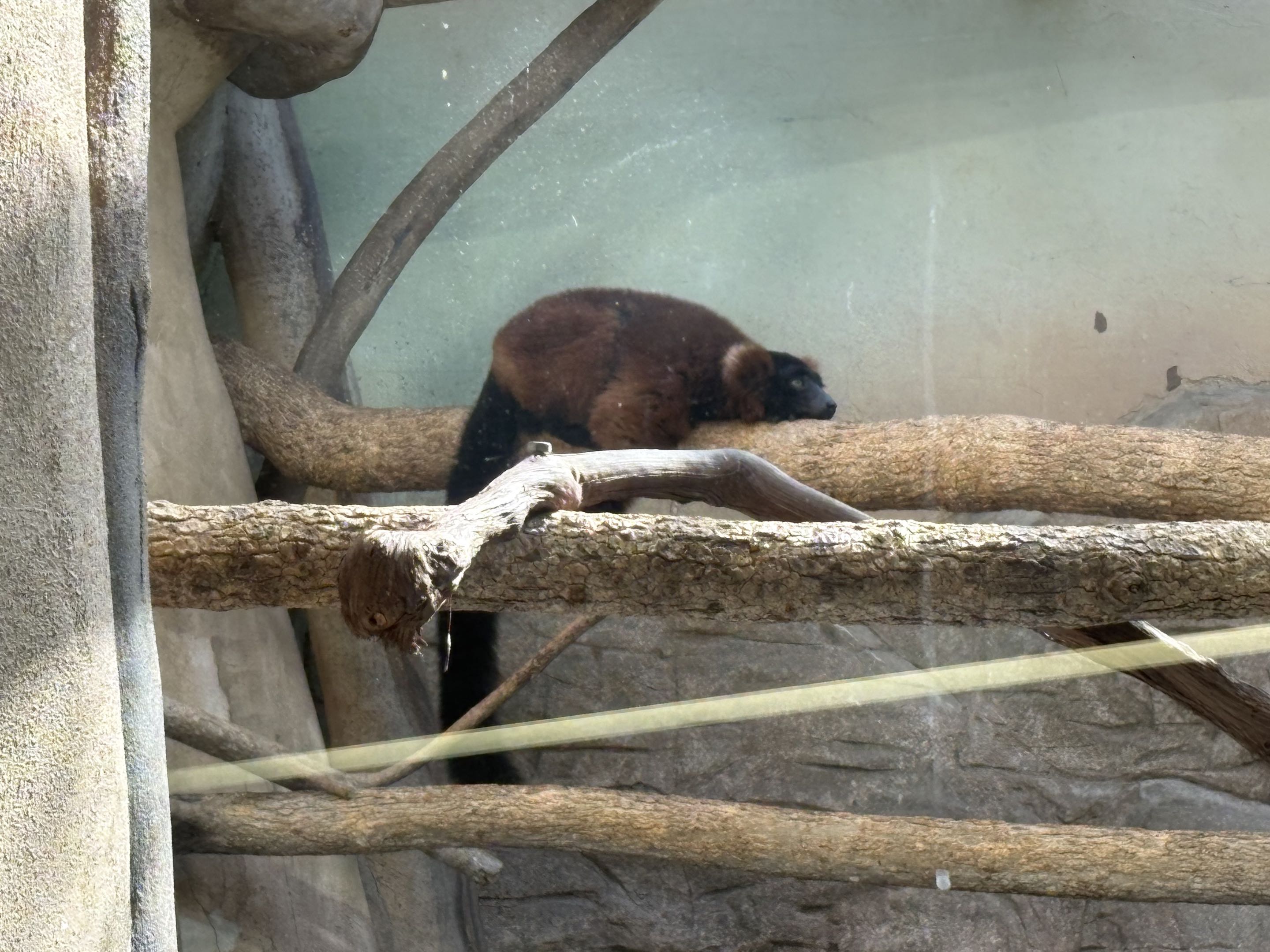
A red ruffled lemur
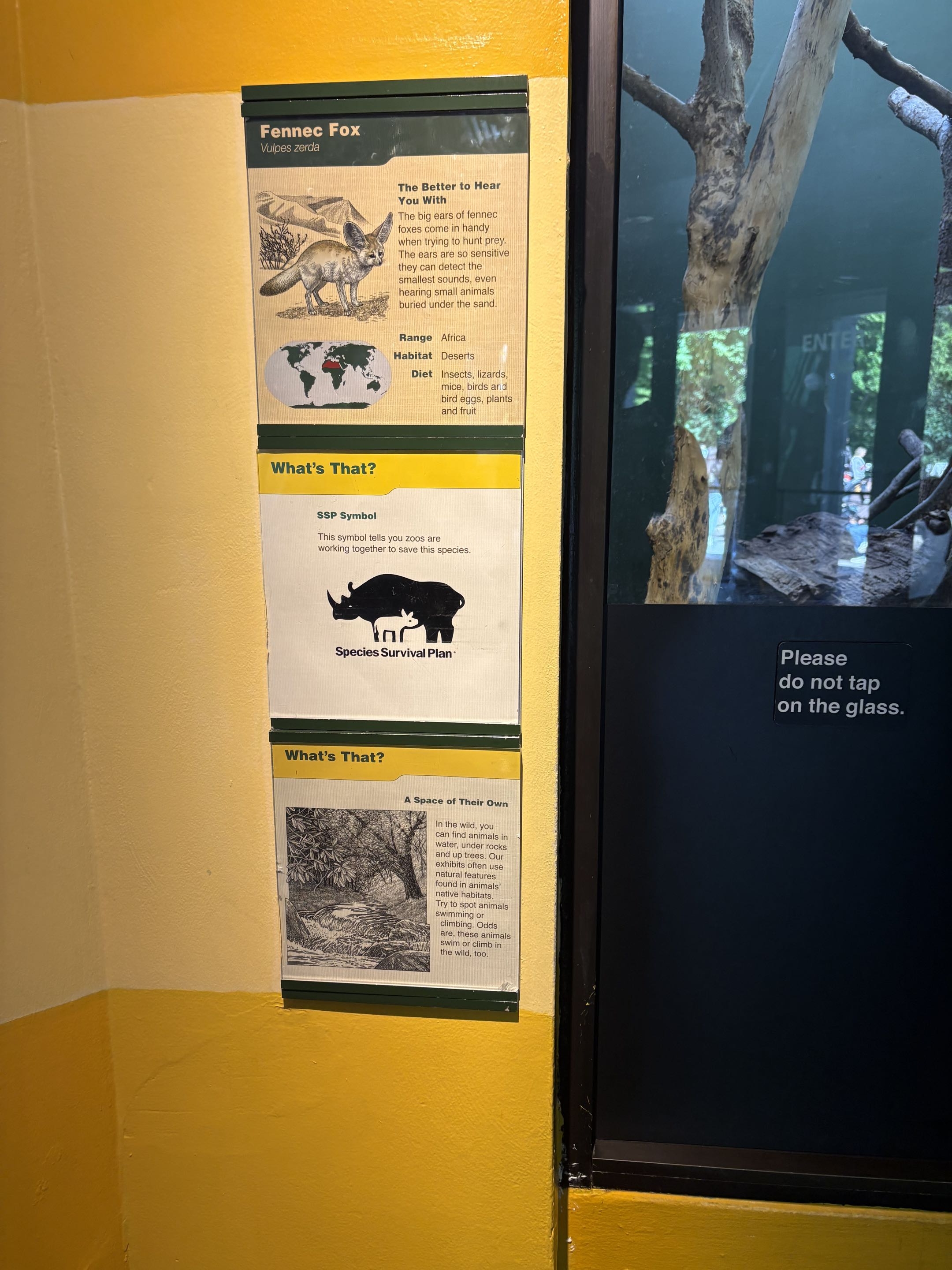
Plaque with information about the fennec fox
While moving in on the reptile house, we spotted a small information booth outside, which had a colorful wheel meant for spinning. Several children and an 18 year old “kid” (totally not me) waited in line to take our chance at spinning the wheel and answering a corresponding question about amphibians. Another interesting way the zoo displayed information beside a plaque was through real jaguar skin and a real jaguar skull in the Amazonia house. The worker explained how the anatomy of the skull came to be and why jaguar skin has its distinct spots.
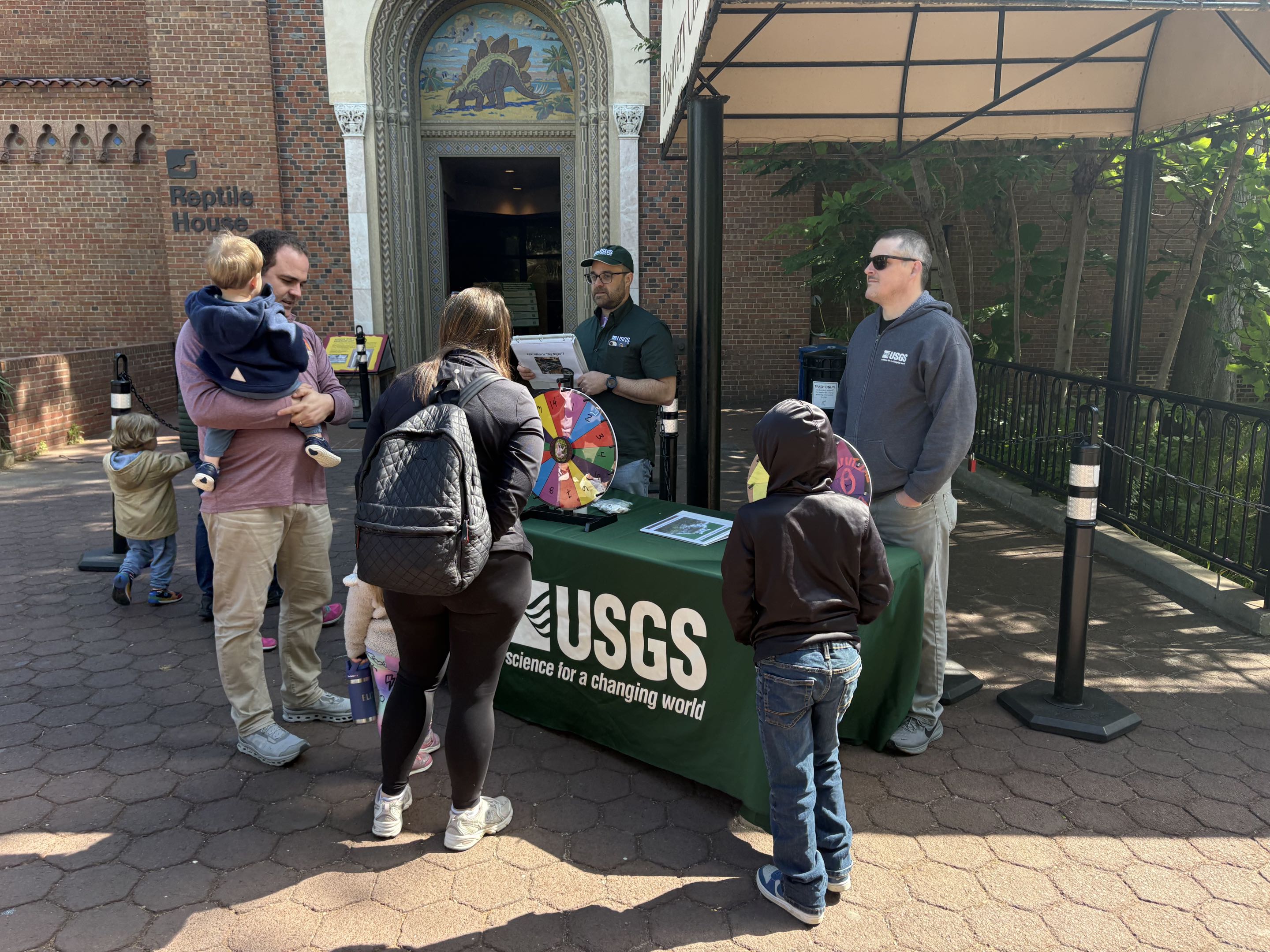
Amphibian info booth outside the reptile house
Within the reptile house itself were several snake enclosures all with different species from all over the world. My three favorites were the Snouted Cobra, the Timor Python, and the False White Cobra. Further along in the house, there was a huge enclosure dedicated to a Cuban Crocodile with a plaque displaying information similar to the ones in the small mammal house. Next, there were several turtles of all sizes, some even many decades old. Even though we wanted to stay a little longer, the tour for the Amazonia house was about to start, so we made our way over.
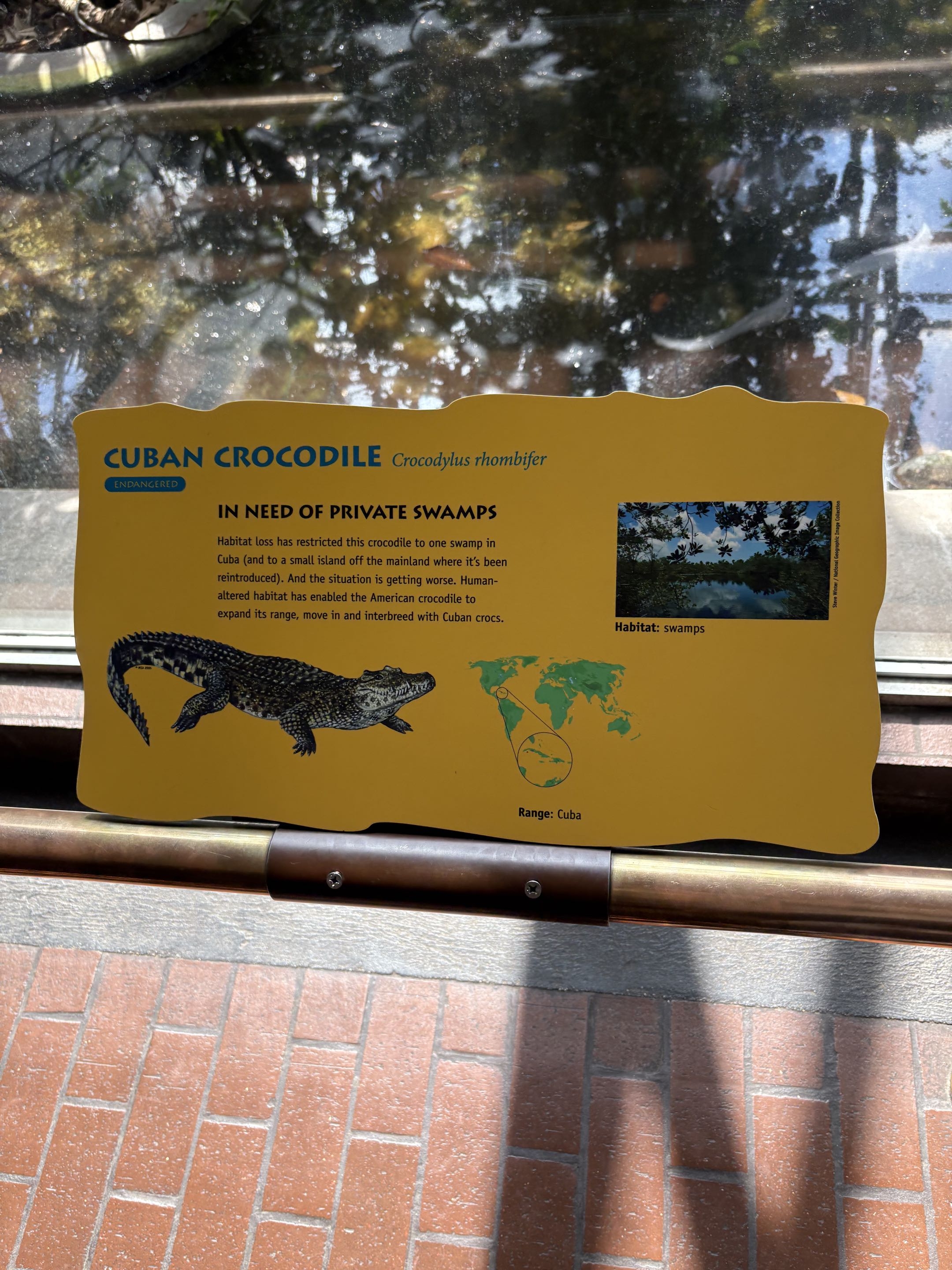
The Cuban Crocodile was among the largest reptiles held in the zoo
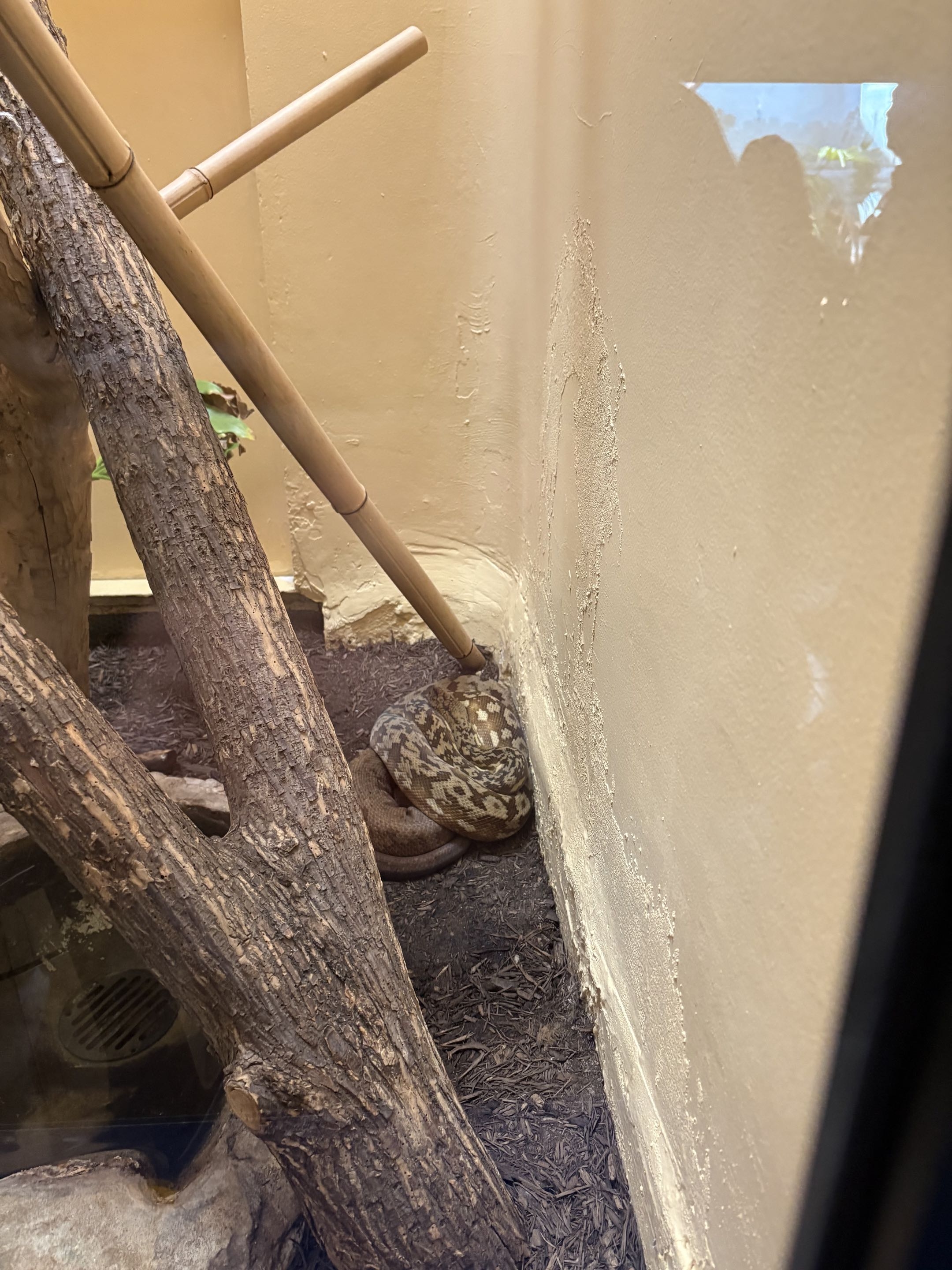
This snake was coiled up in the back of its enclosure
On our way towards the Amazonia house, we passed by a petting zoo style area for kids. There were several cows and donkeys there. However, it was most interesting that the donkeys had several toys and their own mini playground. Being in an enclosure all day is likely an extremely sad and stressful environment, so these toys/playgrounds are ways the zoo will help the animals feel more at home. Another instance of the zoo supporting their animals was in the Fennec Fox enclosure from the small mammal house. The fox had a small ball it was rolling around with in its enclosure.
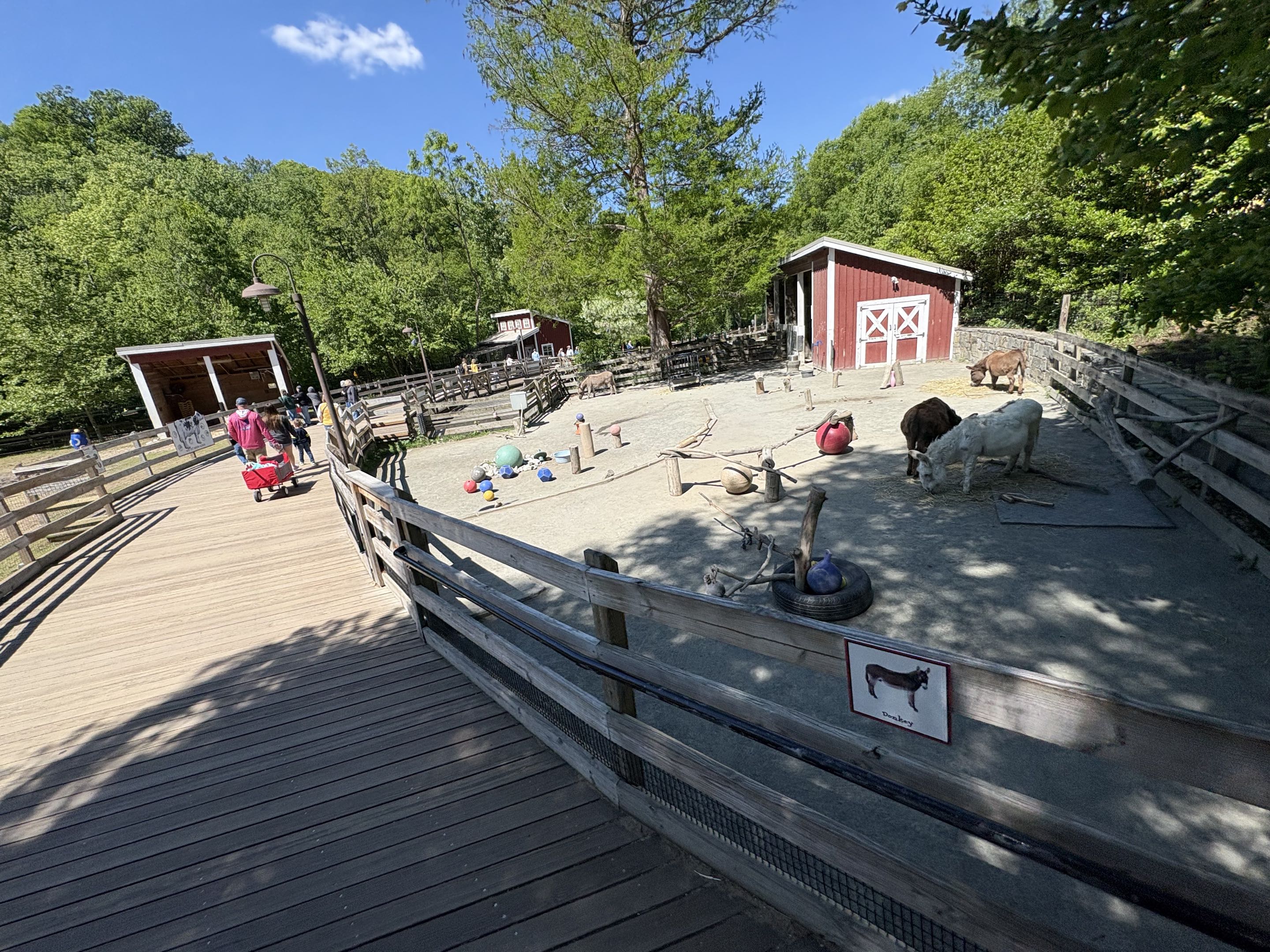
The donkeys have several balls to play around with
Our last house to visit was the Amazonia house, where Dr. Merck gave us a tour of all the different species around us and the three different types of amphibians. First, we took a look at the Freshwater Stingrays in an open tank environment for people to look down into. Next, we saw Arrau Turtles and a Black Doradid, a type of catfish, in the tanks underneath the amazonian bird section. Then came my favorite part of the whole trip, seeing the birds in an open enclosure environment. The most eye catching bird was the Roseate Spoonbill, which has pink feathers and a long beak. These birds often got very close to people and were extremely friendly. One even hit me in the face with its wing while flying right by me!
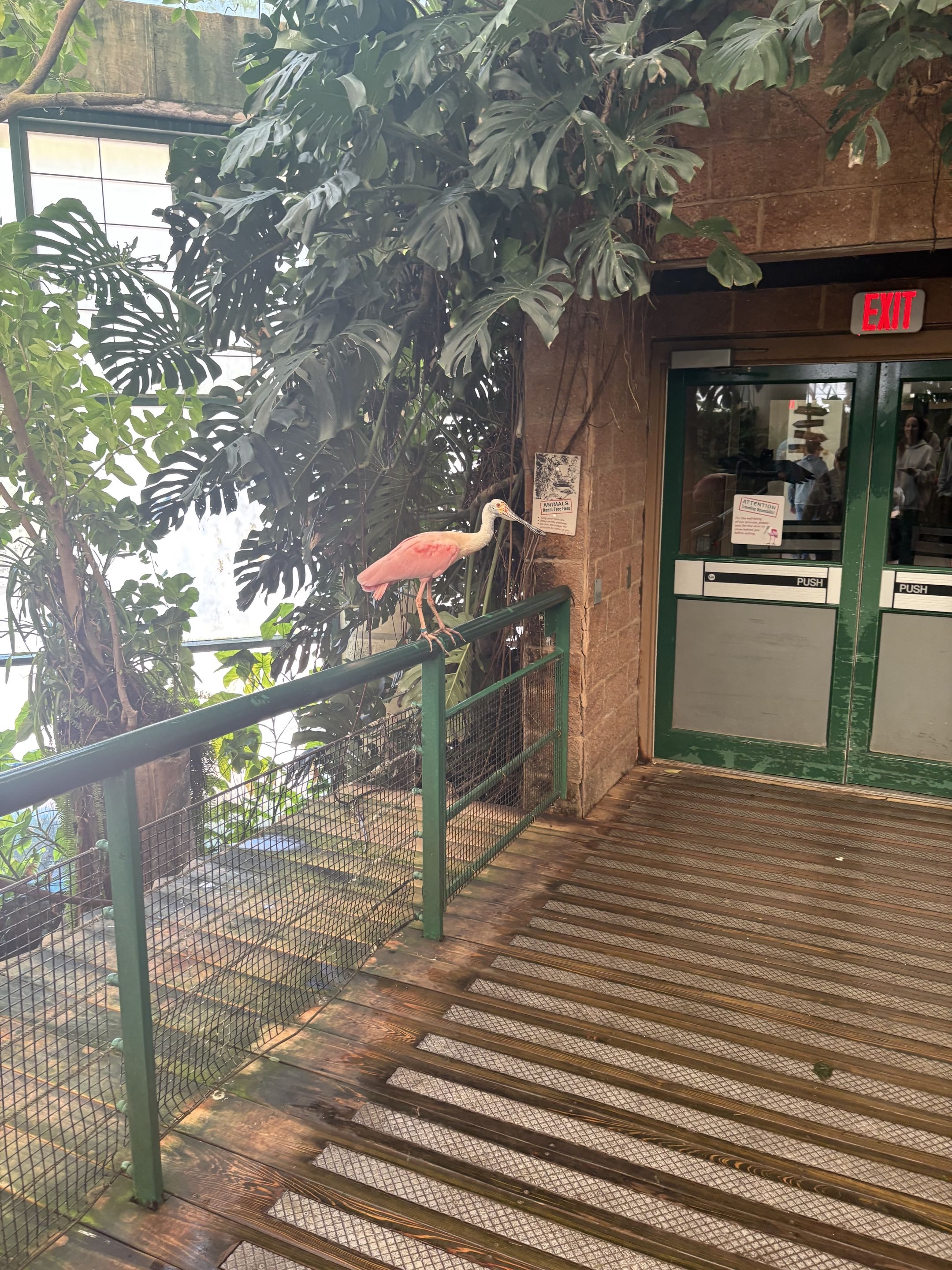
A very friendly spoonbill landed within arms reach!
After the amazonia tour, I stayed in the zoo for a while after looking through the gorilla exhibit and a couple others, but I was so tired. I had 30k steps and still needed to catch a train home, so I decided to head back for the day after my first time at the zoo in 10 years.