


Event name: National Zoological Garden
Event time and place: Washington, DC, May 3, 2026
The Amazonia exhibit presented each species with a brief description focusing on physical appearance and main traits. Among the animals on display were the Freshwater Stingray, Roseate Spoonbill, Black Pacu, and South American Lungfish. In addition to information panels, the building included several engaging displays such as skeletons and X-rays, which helped explain how different animals function. One comparison showed a human skull next to a snake’s skull, demonstrating how a snake’s flexible jaw allows it to swallow much larger prey. There was also a video about amphibians near the lab area. These interactive elements were both informative and enjoyable. Overall, the exhibit seemed primarily for children and younger audiences, as the information was presented in a simple and accessible way. Many parents were observed reading the plaques while children engaged with the interactive displays.
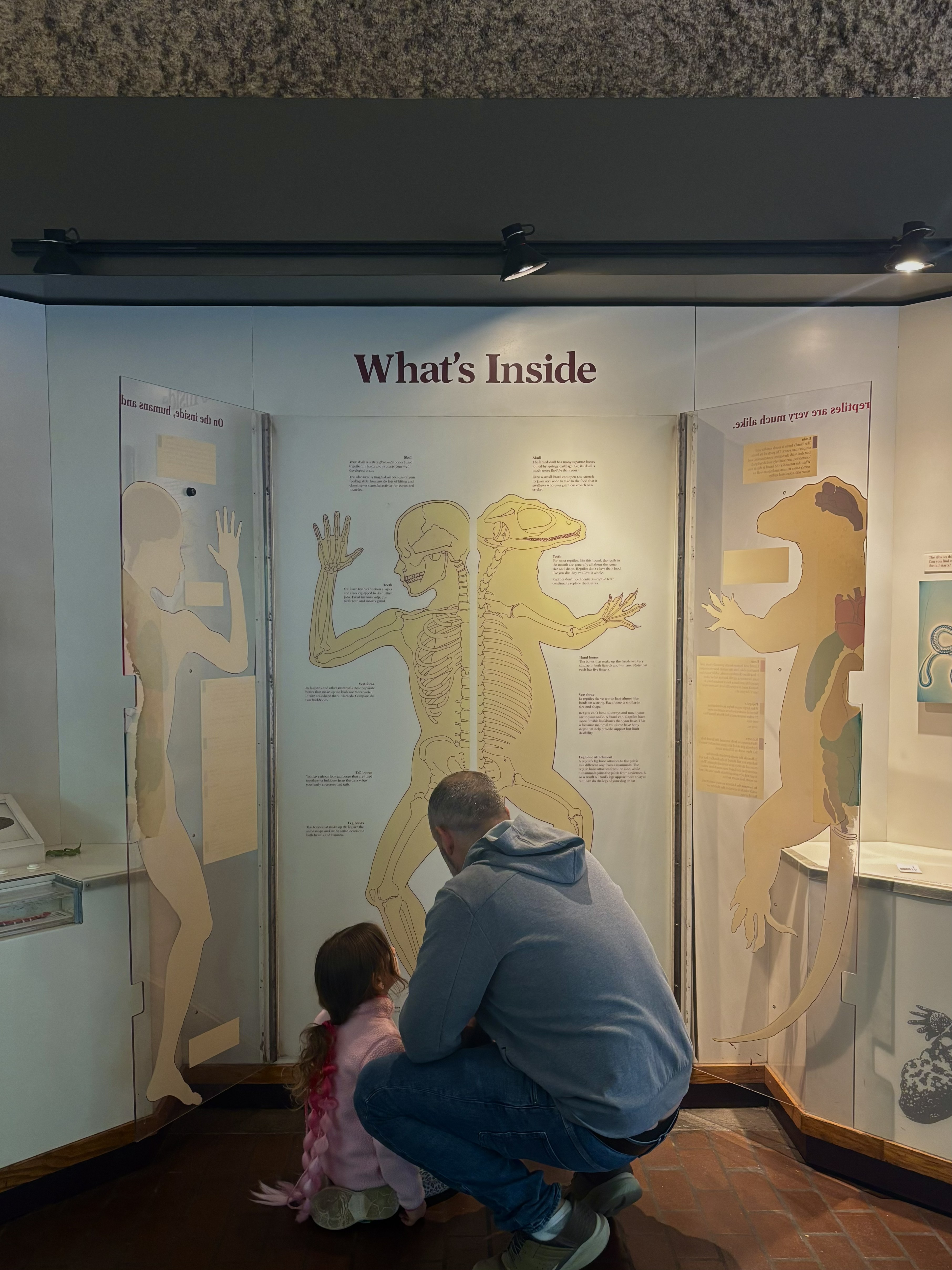
Human vs. Lizard Skeleton, 2026
At the Reptile Discovery Center, each species display included a short “fun fact” paragraph, along with details about habitat and a map showing the animal’s geographic range. Some species included the African Plated Lizard, Home’s Hinge-Back Tortoise, Timor Python, and Painted Terrapin. The exhibit also offered a variety of interactive and educational displays, especially during Amphibian Week. These included hands on tables with information about frogs, comparisons between human and reptile skeletons, and posters explaining the global decline of amphibians. These features were highly informative and engaging, particularly for younger audiences. The exhibit appeared to be designed mainly for elementary and middle school students, with simple explanations and interactive activities such as T-shirt making. Many children were actively reading and engaging with the displays.
Beyond informational plaques, the zoo supported public education through interactive and personal experiences. One example was a staff member explaining meerkat behavior in real time, helping visitors understand what the animals were doing and why. Another example was the Amphibian Week activities, which included interactive tables and educational materials that raised awareness about amphibian conservation. These approaches made learning more engaging and memorable by encouraging direct participation.
The zoo also showed efforts to support the mental and emotional well being of its animals by enhancing their environments. For example, the sand cats were provided with a play structure similar to those used for domestic cats, along with soft bedding areas where they could rest comfortably. Along with that, birds such as the Roseate Spoonbill were in environments with artificial trees and root structures that mimicked their natural habitats. These features helped create more natural and stimulating living conditions, promoting healthier and more natural behaviors in the animals.