

Event name: Prefacing the Scholars Programs
Event time and place: October 21st, 2026 in Cambridge Community Center
Art, Business, and Media Programs, 2026
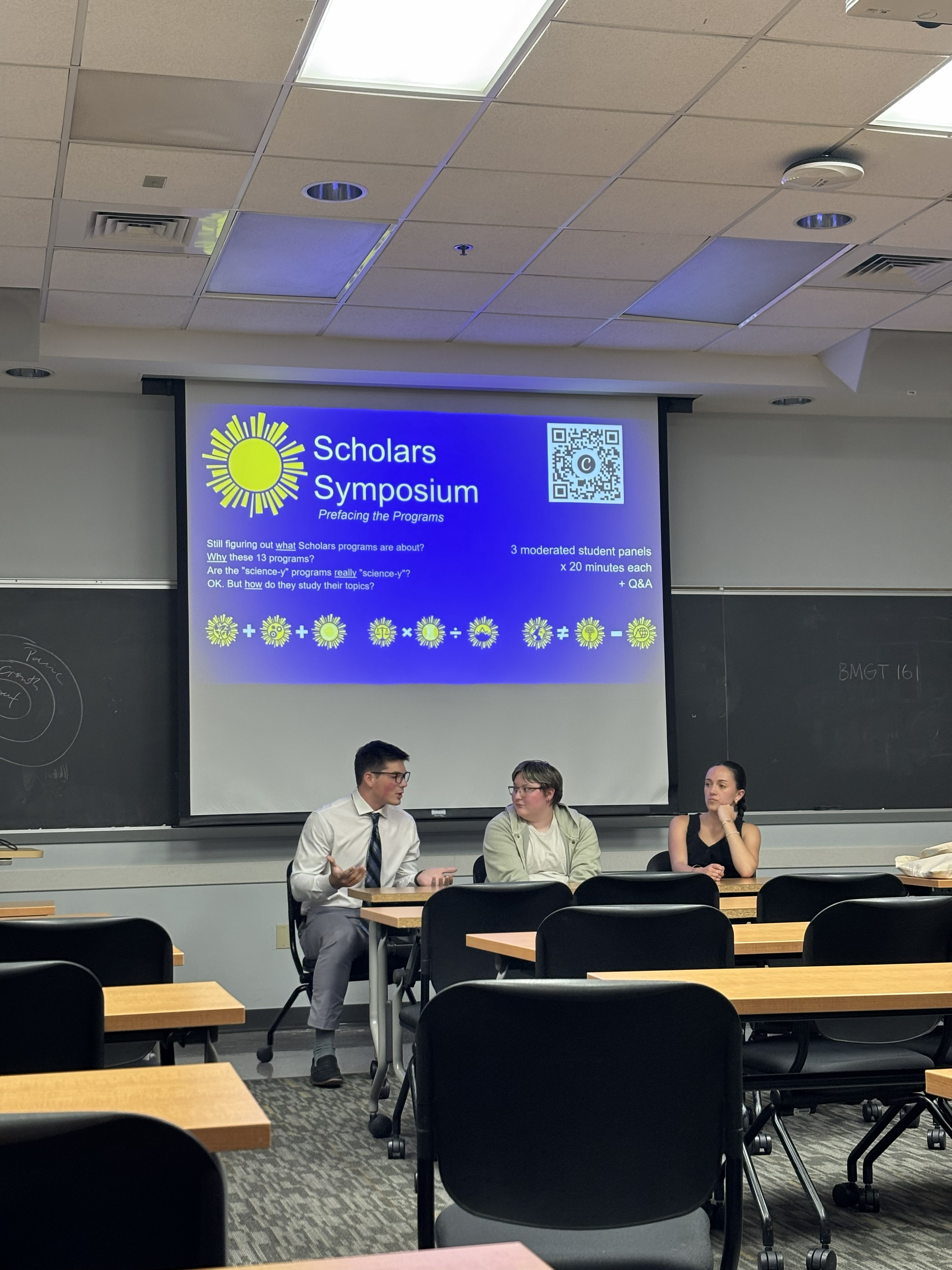
The presentation focused on how different Scholars programs at UMD help students explore their academic interests, develop new perspectives, and apply what they learn to real world issues. Although each program focuses on a different subject, sustainability and community engagement were common themes throughout the discussion. The Science and Global Change Scholars program, for example, helps students to explore global challenges through science, public health, and sustainability while learning how to address problems on a bigger scale.
The presenters also discussed how the Political Science Scholars program connects classroom learning to issues such as food insecurity, redlining, immigration, voting rights, and health equity. Through service projects and community engagement, students have opportunities to understand these issues beyond just reading about them in class. Other programs, including Arts, Media, and Business, encourage creativity through activities like debunking misinformation, exploring different art forms, and learning about entrepreneurship. A major theme was that creativity is important in every academic field, including science and research, because it encourages students to think differently and stay open to new ideas. Overall, the presenters emphasized that Scholars programs provide students with a supportive community where they can explore their interests, develop friendships, and discover passions they may not have considered before.
I found the main points of the presentation convincing because the presenters provided specific examples of how participating in Scholars programs helped them develop their interests and apply what they learned outside the classroom. One point that stood out to me was how these programs help students take a broad topic and explore it more deeply through assignments, projects, and community engagement. Rather than only learning about issues through lectures and readings, students have opportunities to see how these issues affect real people. For example, the Political Science Scholars program discussed topics such as redlining, food insecurity, immigration, and voting rights. Learning about these issues through class discussions and service projects helped students understand the importance of community involvement and how they can make a difference.
I also found the discussion about health equity very insightful. One example mentioned was how some people have to travel for hours just to receive medical care. This demonstrated how access to healthcare is not equal for everyone and how larger social and political issues can affect people's everyday lives. It also showed why it is important to look beyond individual experiences when trying to solve problems that affect entire communities. Science, public health, and political science may approach a problem differently, but combining these perspectives can lead to a better understanding of the issue.
Another point I agreed with was the importance of creativity across different academic fields. Before the presentation, creativity might seem more associated with subjects such as art or media. However, the presenters explained how it also plays an important role in business, science, and research. For example, creativity in biology can help researchers approach problems differently, explore new ideas, and make discoveries. I thought this was an important point because being successful in science requires more than memorizing information. It also needs curiosity, critical thinking, and the ability to consider different possibilities. The discussion about divergent thinking and being willing to make mistakes also showed how important it is to remain open to new information.
I also found the discussion about the community within Scholars programs interesting. The presenters explained how being surrounded by people with similar interests creates an environment where students feel comfortable sharing their ideas and exploring topics they are passionate about. I think having this type of environment can make a difference in a student's college experience, especially when they are still figuring out their academic and professional goals. It was also interesting to hear how some students discovered interests they had never considered before and even changed their career paths because of their experiences in Scholars.
Although I agreed with the main points, I think the presentation could have included more information about the long term impact of these programs. Most of the examples were based on the presenters' personal experiences, which were helpful, but more evidence or examples of community outcomes could have made their presentation stronger. I did not notice any major logical fallacies or clear failures of critical thinking.
Overall, I thought the presentation effectively demonstrated how Scholars programs can help students grow academically, personally, and professionally. It showed that college education is not limited to what students learn in their major, but also includes the experiences, relationships, and perspectives they gain along the way.