Impact - The End of the Age of Dinosaurs:
AMNH 4th floor, temporary exhibit - 10:30am
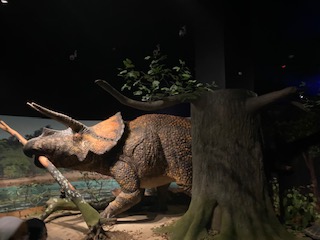
The first exhibit we visited was "Impact - The End of the Age of Dinosaurs," where we toured the new display. The exhibit is designed to allow you to walk through the timeline of the extinction of the dinosaurs. It begins with you viewing many different dinosaur models and makes you feel as though you are on Earth before the asteroid hit. As you walked through the exhibit, you encountered a screening room where they played a video explaining what happened when the asteroid hit. This acted as the "extinction event". As you left the theatre, the entire vibe of the exhibit changed. You are now in the world post-impact. This part of the exhibit explained what life survived and how we started to rebuild the biosphere to what we know today. They used many different types of displays in the Impact exhibit to make it easier to understand the information they are trying to convey. One method was them utilize physical models and screens to immerse you in the environment. For example, they had a large Triceratops display at the beginning of the exhibit, which included the habitat where they lived. The museum had a projector screen in the background of the habitat that played a video and noises of what the triceratops might've seen or heard while living. This was very effective at immersing the viewer in the environment and allowed to get the general message the exhibit wanted to be conveyed (how lively the earth was before the impact) without having to read the display. Especially for kids, who might not understand the more scientific nature of the exhibit, these types of displays help them to learn about the event. I found the post-impact section of the exhibit to be really interesting as well. While more technical than the first half, the museum still did a great job of offering different ways to display the information. They had actual evidence displayed, like a piece of the boundary layer proving the earth was fully covered in debris, and clear charts/diagrams that were user-friendly. They still had small interactive areas, such as being able to smell the smoke from the fire of the impact and seeing the embers light up, which still allowed the more "casual viewer" to understand the concepts. Overall, I found the exhibit to be user-friendly, and the timeline-ordered viewing made the exhibit clear to understand. This exhibit makes the event relevant today, despite happening 66 million years ago, by connecting it to our understanding of our planet's history. It teaches us how events like this have helped shape our world.
Self-Guided Observations:
AMNH North American Mammals Exhibit - 12:30pm
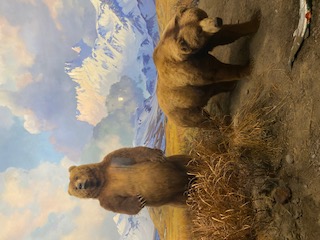
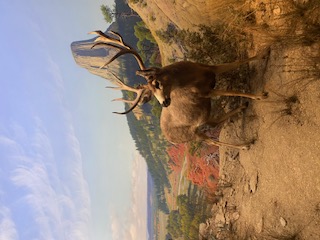
For the self-guided observation, my friends and I visited the North American Mammals Exhibit. The exhibit was organized by region, making it easy to follow where the animal would be found in the wild. Each display featured taxidermy animals in front of a painted background of where they lived. One display I really liked featured Alaska Brown Bears in front of Canoe Bay in the Alaska Peninsula. The sign gave the bears a story about meeting near a stream to hunt salmon to eat, which I thought was a fun way to incorporate information about their habitat and diet into the display. Another one of the displays that did a good job combining both art and science like the River Otter display. While not as large, the paintings, combined with text, not only detailed the otter but also the plant life of the region, were very cool to see. The last display that I really liked was the American Mink, due to it being from New Jersey (like me!). Specifically, the mink is depicted in the Pine Barrens, which I have kayaked and camped in many times. The mink hunt fish and frogs underwater and small mammals near the shore. They have many features that help them adapt to their environment and lifestyle. A piece of information I wish was conveyed was how many species were left in the wild, since some displays mentioned the mammals being extinct. I do understand that it would be hard to update this number to be accurate constantly, which I why I suggest a QR code at the front of the exhibit that brings you do a upkept tracker of the populations of the species.
Concerning the Fossil Halls - Guided Tours
Hall of Vertebrate Origins - 2pm
I attended my second guided tour with Dr. Merck in the Hall of Vertebrate Origins. One thing I found very cool was how the hall was laid out like a Cladogram. The hall had the branches drawn on the ground and connected models at the root and clades of the exhibit, which was great to see visually how everything was connected. This feature is slightly outdated due to advances in knowledge we have about the relation between species. For example, where the turtles are in the museum's cladogram is not accurate anymore. It is hard to update the exhibit to be accurate to the size of the displays, and the fragility of the components. A possible way to update it would be to provide a pamphlet that shows the proper cladogram so people can understand the correct relationships, but this wouldn't address the layout issue of the exhibit. Another part I found to be really interesting was the Stenopterygius quadriscissus, which is an ichthyosaur. The specimen that is displayed died and was buried while giving birth to live young. Overall, I really enjoyed the hall's content, and it was great having a tour guide as I was able to absorb the information presented much better than if I just read it off each display.
Space Show
Encounters in the Milky Way - 3:30pm
This year's space show was titled Encounters in the Milky Way and focused on the origin, development, and present-day encounters of the Milky Way. It was voiced by Pedro Pascal and took us all the way to possible encounters we may have made with other galaxies. I think the images were mainly based on scientific measurements and slightly designed by a special effects studio. I hadn't known about the collision between the Sagittarius dwarf galaxy with the Milky Way, which they were able to determine is happening from the ESA's Gaia mission (making a 3D map of our galaxy).
General Thoughts
The AMNH seeks to accommodate all types of visitors in many ways. One way is by providing translations of most things, including the map and exhibit descriptions (online). This allows guests who do not speak English to enjoy the museum. They also had elevators, so those who needed mobility assistance were able to traverse all the floors. The last thing I noticed was a couple with a service dog, meaning those who need assistance due to being visually impaired or other reasons are able to bring their own accommodation to help them.
Overall, I really enjoyed going on the excursion to the American Natural History Museum! I loved seeing all the exhibits and getting to explore NYC with my friends! I hadn't been to the city or museum in 2 years, so it was great to be able to go back.