


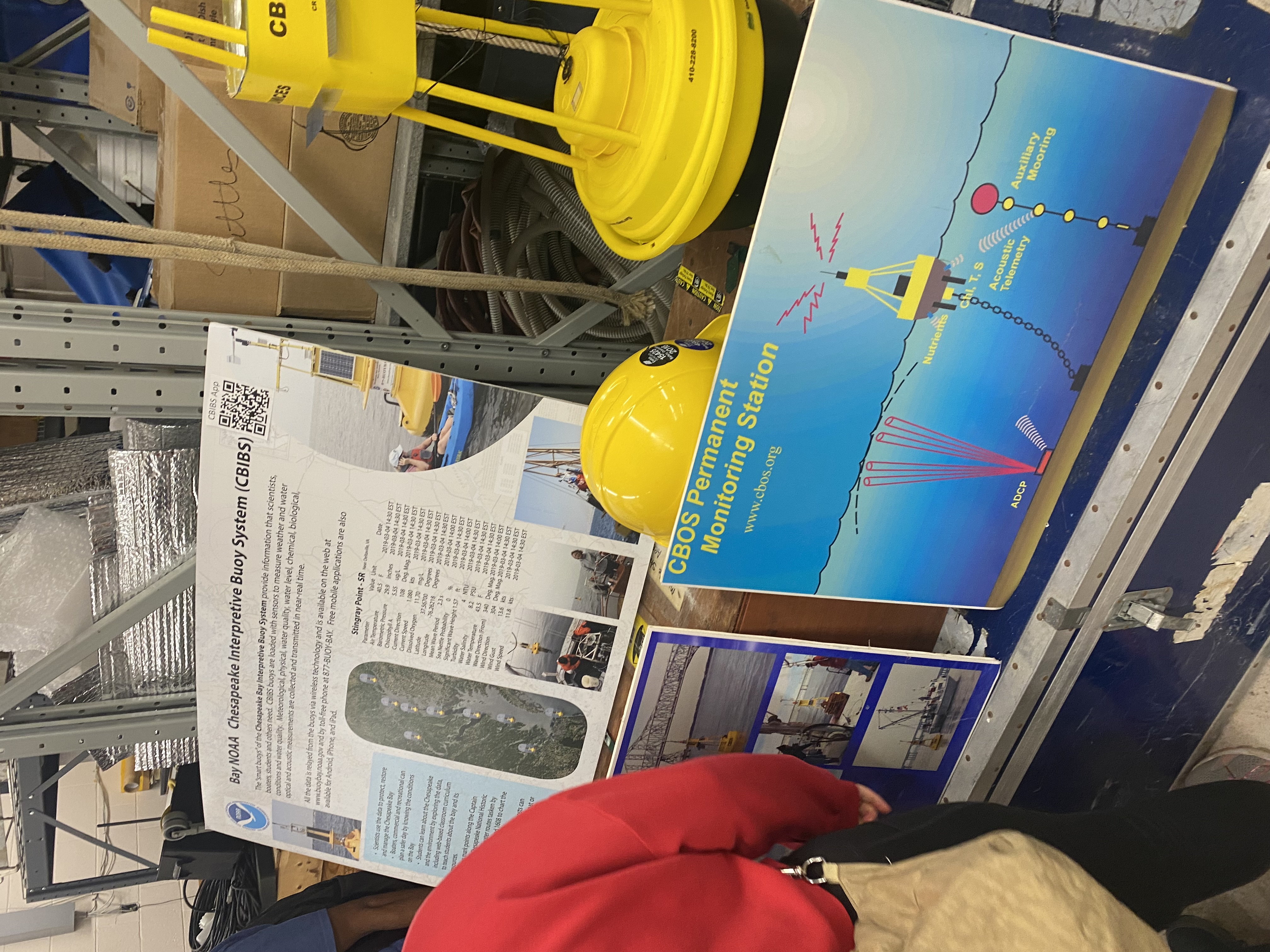
We began the tour of the Horn Point Laboratory at the workshop. Here, I was able to learn about many different technologies the Horn Point Laboratory had developed to monitor the Chesapeake Bay. Monitoring the Bay's conditions is part of the NOAA Chesapeake Bay Office's work to support the health of the Chesapeake Bay. One that stood out to me was the Chesapeake Interpretive Buoy System (CBIBS). It is composed of "smart buoys" that provide information to many. Scientists use the data to track the restoration of the bay, resource managers use it when considering how to ensure sustainable harvest of living resources, maritime interests (sailors, boaters, ect) use it to check for safe water conditions, and students and educators use the data to learn about the ecosystem! Each buoy has many sensors that measure weather, water conditions, and water quality. The data is collected and transmitted in real time via wireless technology. It can all be accessed by the public at any time, by phone or on a website.
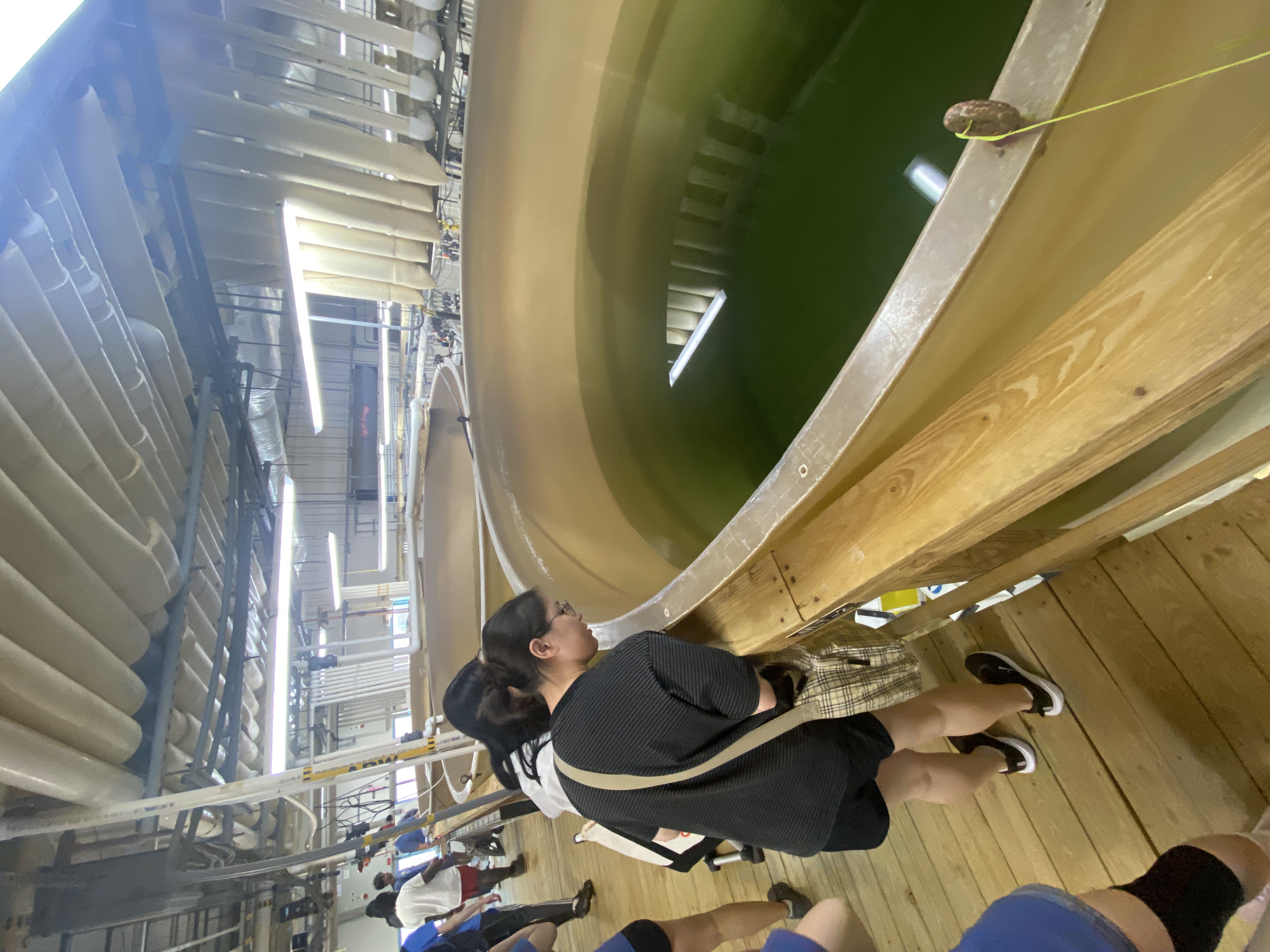
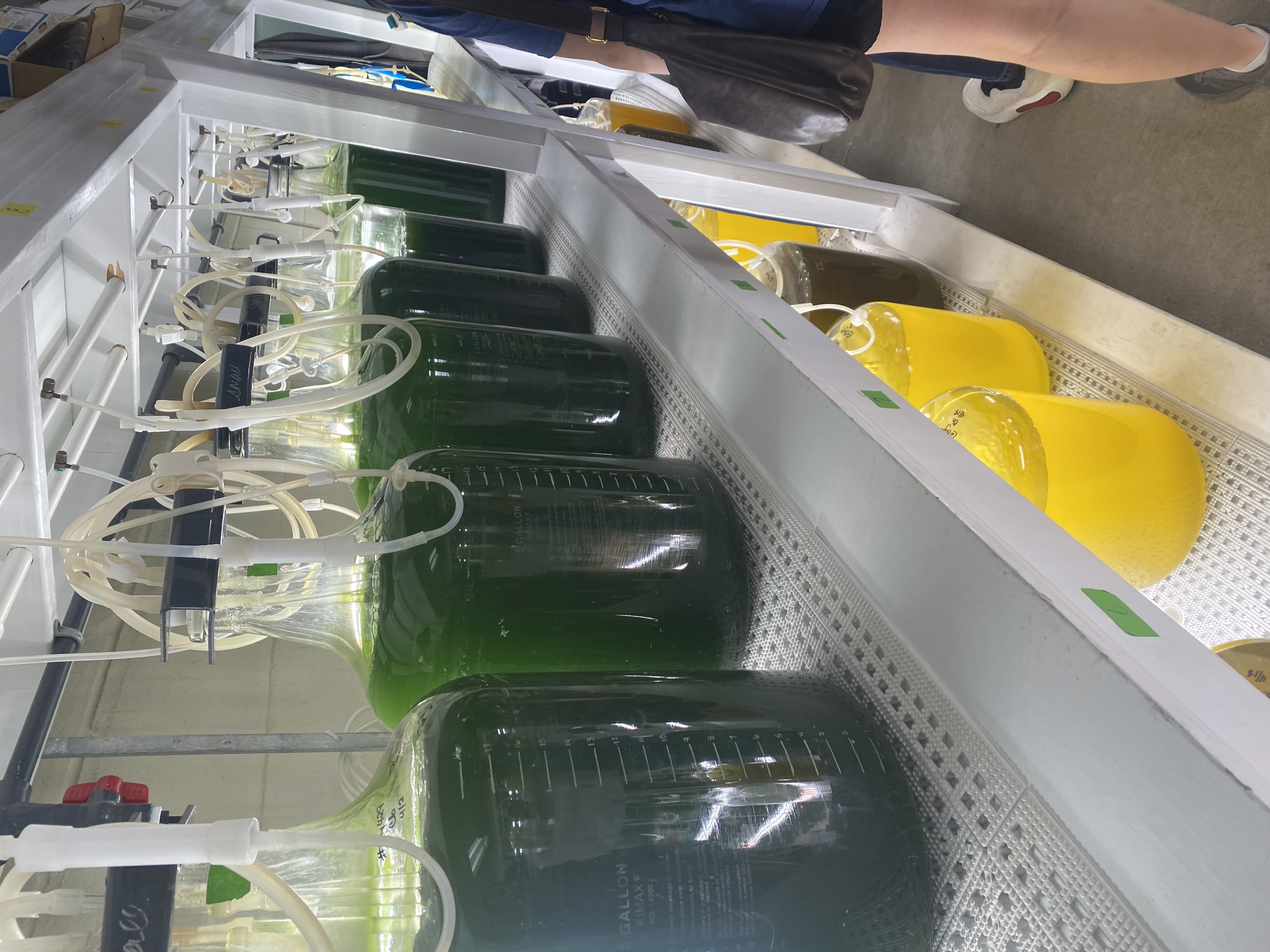
Another thing we were shown on the tour of Horn Point Laboratory was the oyster nursery. Oysters are extremely efficient at filtering the bay water of the Chesapeake of excess algae, nutrients, and other organic matter. Having extra nutrients can lead to eutrophication, which creates anoxic or hypoxic conditions, decreasing biodiversity. At Horn Point, they study the needs and behavior of this species to specifically breed, feed, and raise new oysters. They do this in an environment that maximizes their survival and populations. We got to see them brewing the different types of algae to act as their food; each type serves a different nutritional purpose. The temperatures and transportation of both the algae and the oysters were explained to be very crucial and meticulous, because of how it affects the oysters' breeding and growth.
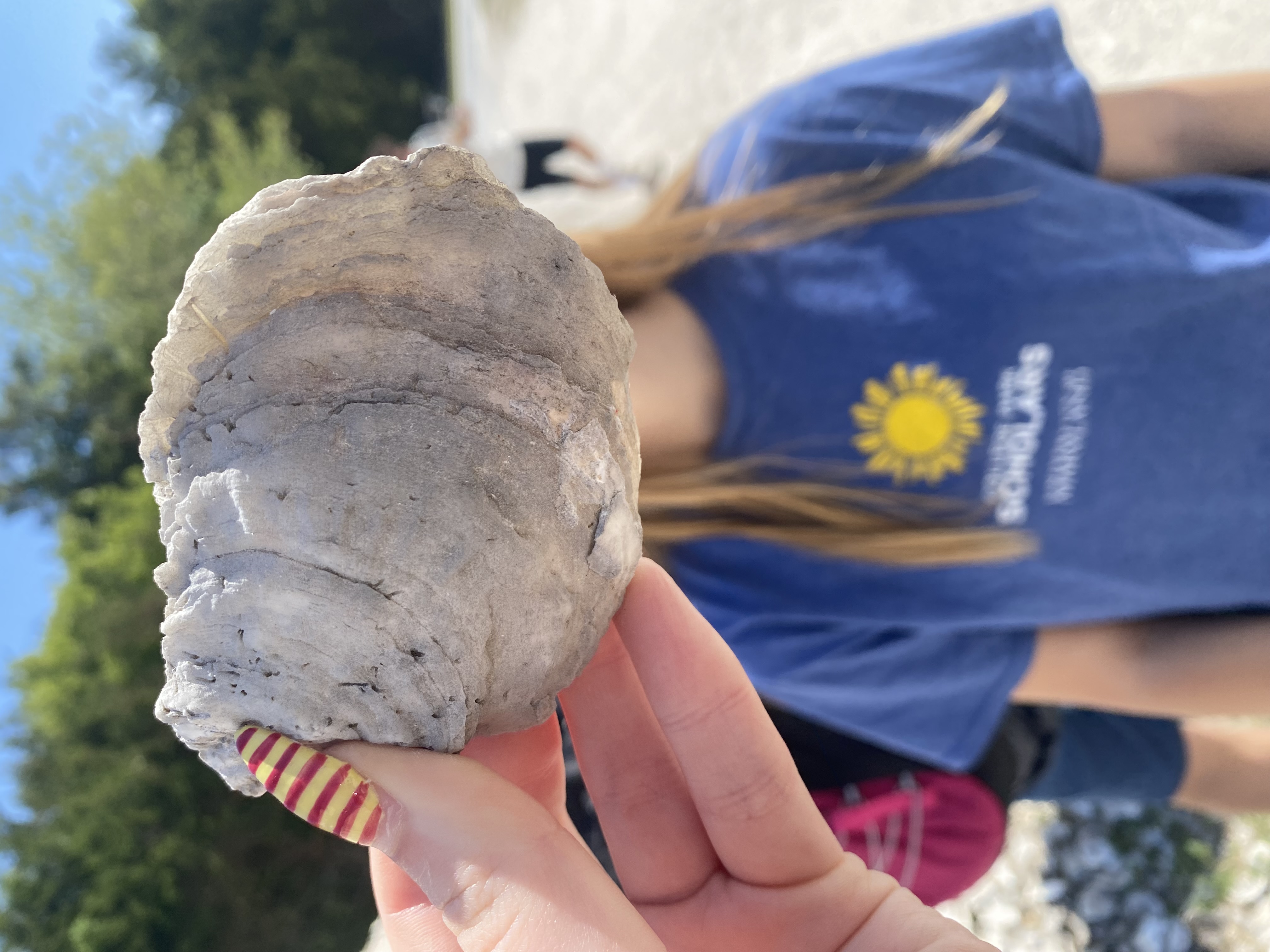
On the tour we also saw an oyster recycling drop off box, as well as the mountains of oysters that have been cleaned and are ready to use for recycling. Oyster recycling at the Horn Point Laboratory is centered on restoring oyster reefs in the Chesapeake Bay, which have declined due to overharvesting, habitat loss, and the loss of natural shell material needed for new oysters to grow. One major issue is that oyster shells, a critical habitat for larvae to attach to, have become scarce and often end up in landfills instead of the water, making this a key environmental limitation for population recovery. Scientists monitor this problem by tracking oyster populations, reef growth, and the availability of suitable substrate (like shells), as well as measuring factors such as oyster survival, growth rates, and overall water quality improvements tied to reef health. To address this, Horn Point partners in oyster shell recycling programs that collect used shells and return them to the Bay, where they are used to build reefs and support new oyster growth. Linking to the nursery I had seen earlier, the oyster larvae ("spat") that Horn Point grows attach to these recycled shells and get deployed into the Bay to rebuild populations. Together, these efforts combine recycling, aquaculture, and long-term monitoring to directly combat oyster decline and improve the Chesapeake Bay ecosystem.
Horn Point Laboratory engages the broader community through outreach programs that connect their coastal research to the public in accessible ways. One major method is through education and public tours (like what we did!), where students, local residents, and visiting groups can tour the oyster hatchery and restoration facilities to see firsthand how oysters are raised and how reef restoration works. During these visits, scientists and staff explain why oysters matter for water quality, how shell recycling supports reef rebuilding, and what environmental pressures the Chesapeake Bay is facing. They also participate in school partnerships, workshops, and public science events where they share data, demonstrate experiments, and involve students in hands-on learning activities related to marine ecology and climate impacts. Through these efforts, Horn Point helps translate complex coastal science into real-world understanding so the community can see how restoration work directly benefits their local environment.
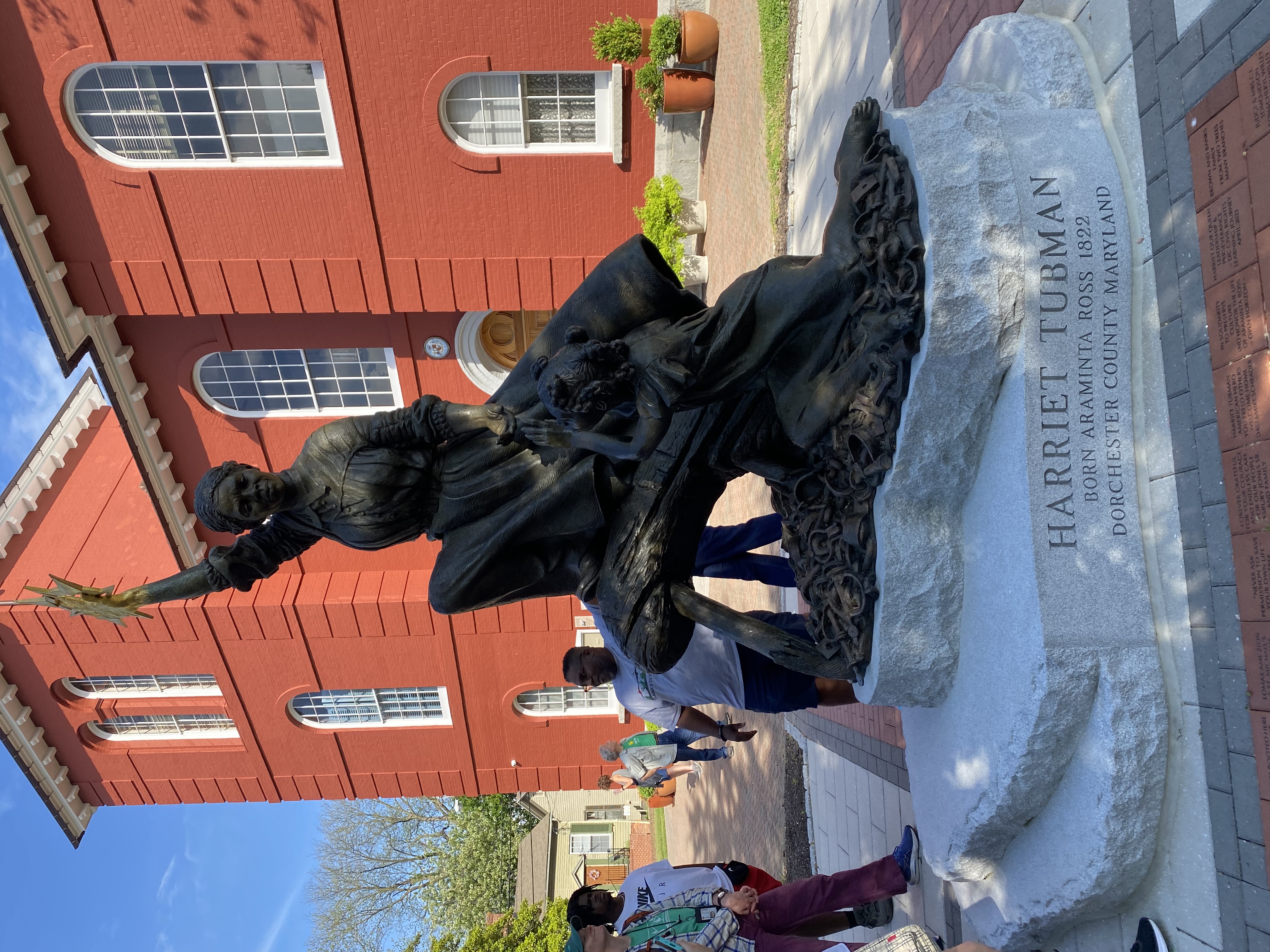
Harriet Tubman, born Araminta Ross, was enslaved and raised on a farm in what is now Dorchester County, Maryland. During our visit, we traveled through the region and stopped at several historical sites connected to her early life. As a border state with dense forests and proximity to both enslaved and free Black communities, Maryland exposed her to a mix of environments that shaped her understanding of survival, freedom, and resistance. Her experiences working in the fields and being sent on errands helped develop the skills and resilience that later made her the legendary figure depicted in the statue. We also learned more about her impact and legacy at the Harriet Tubman Underground Railroad National Historical Park.
Unfortunately, the landscape that helped shape Tubman's life is now threatened by rising sea levels. Because much of the area is at or near sea level, large portions are expected to be submerged within the coming decades. In response, preservation efforts are underway, including the use of virtual reality and LiDAR to digitally document the region's history. While driving through Balckwater Wildlife Refugee, we also observed clear environmental impacts, including changes in wildlife populations and the presence of "ghost trees", which are trees that have died due to saltwater intrusion but still remain standing.