Energy Systems Around Campus
Regents Drive Garage
The Regents Drive Garage solar array is one of the largest solar arrays in the state. It is the largest of the three major solar arrays on campus, with the other 2 being on the roofs of Mowatt Lane Garage and Terrapin Trail Garage. The array on the roof of Regents generates around 743 kW of energy that goes towards powering the campus. There are around 9000 panels that help to power the campus and bring the University closer to its goal of achieving carbon neutrality. UMD has an agreement with outside partners that have committed to funding the initial installation and maintenance of these solar arrays. UMD then "buys back" the energy, allowing the University to get these projects started without having to deal with the immense initial costs.
Zupnik Hall
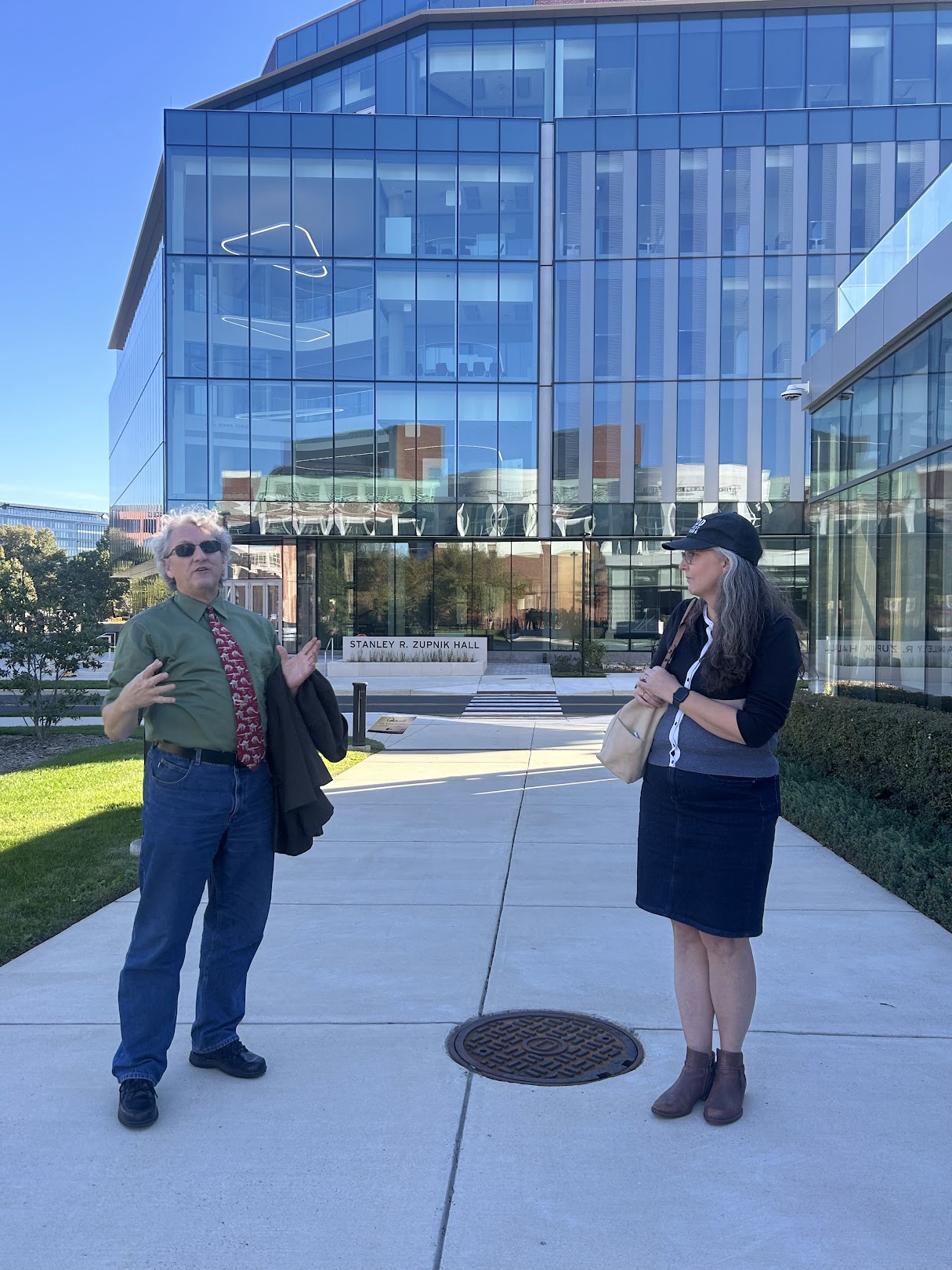
Zupnik Hall is the new center for civil and environmental engineering and is one of the first buildings on campus that is designed to achieve operational carbon neutrality. This means that there would be no net carbon emissions from ongoing use of the building. It is designed to both minimize direct emissions and offset the ones it does emit. Rather than relying on district steam, it recovers wasted heat from the central facility, accounting for 95% of the building's heating needs. The building is also the first on campus to incorporate mass timber in its design. It is a type of manufactured wood that replaces steel or concrete for things such as staircase design. It is an incredible material for sustainable building practices, as it sequesters carbon within it and protects forests from deforestation. It is also fire-safe! The curved design adds shading elements that reduce solar heat gain, which reduces the need for energy for AC by around 25%. The roof is also designed to add a solar array eventually.
AV Williams Building
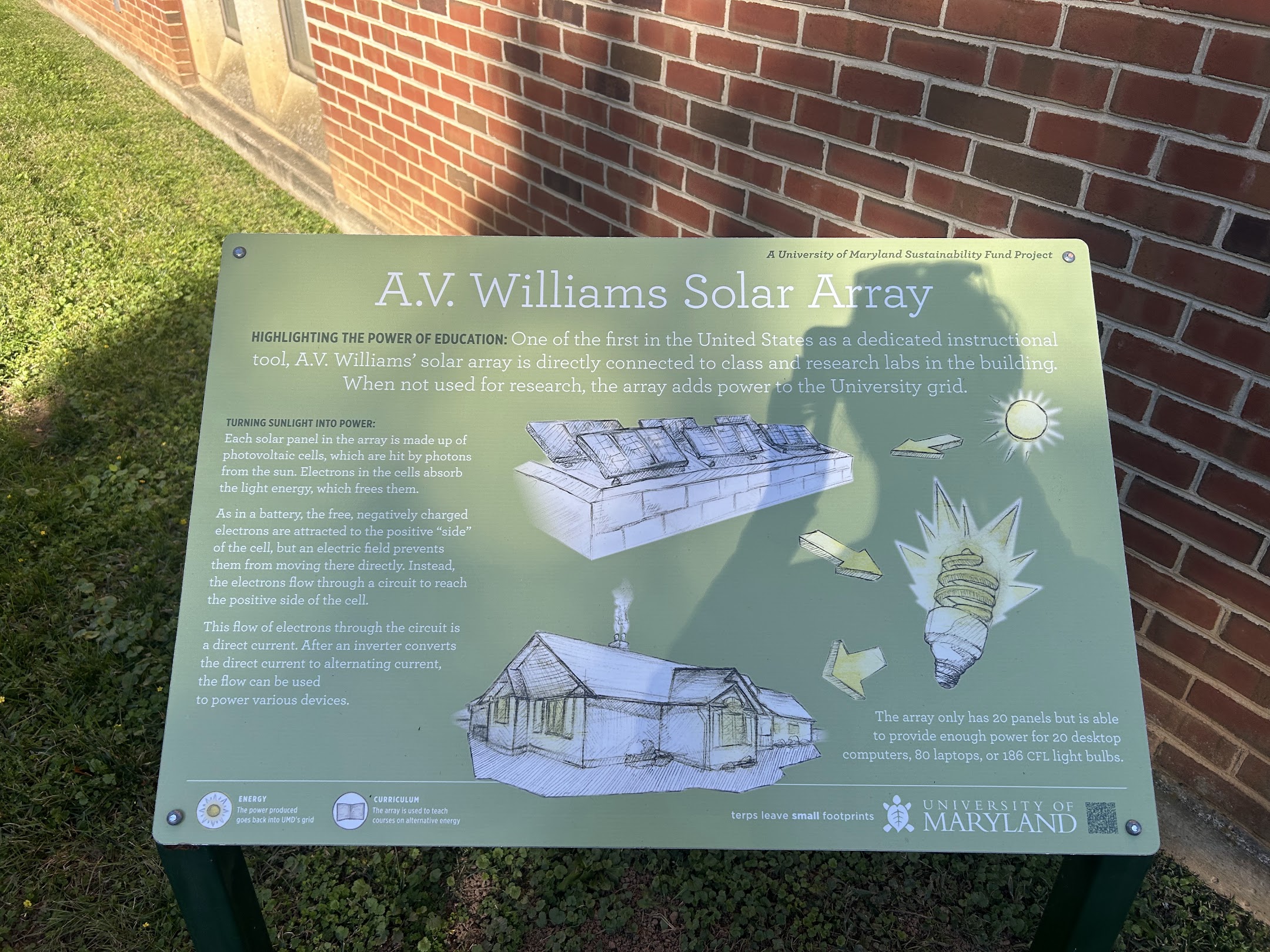
The AV Williams Building hosts a multitude of research labs focused on environmental science and sustainability. One, the Maryland Educational Sustainable Activities Lab, is a hub for alternative energy research and sustainability outreach education. They do a lot of the alternative energy research here on campus, including looking into things such as microgrids, energy-saving devices for home use, and more! They received one of the first grants from the sustainability fund and used it to install the first solar panels on campus in 2008. They have many educational outreach programs, including ones that bring solar panels to elementary/middle schools to educate the students about renewable energy development.
Financial Considerations
There are several financial constraints on making the campus more sustainable. For one, many of the projects are quite expensive. Even as renewable energy gets cheaper and new technologies are developed and become more available, a lot of the projects the University is looking to take on require massive restructuring of our current energy infrastructure. This requires an incredible amount of planning, labor, materials, and design, all of which makes it a more expensive process. Additionally, sustainability does not bring in large amounts of money in the short term. While it will eventually be less expensive and benefits the community greatly, there is not a large flow of money into sustainability like there is in, say, athletics. The current research and scientific funding landscape does not help, as there is less federal funding for grants and programs like sustainability efforts.
General Thoughts
Overall, I really enjoyed the tour! It definitely made me more aware of how the energy systems on campus work, and what the University is doing to actually achieve the carbon neutrality goals we have set out. Often, it can feel like institutions are all talk when it comes to climate action, so it was nice to actually see the steps the University has been taking to achieve these goals. It was cool to see how places where I spend time, like the physical sciences complex, are actually designed with sustainability and climate action in mind. The tour definitely sparked an interest in learning more about how sustainability is being implemented around campus, and I can't wait to see what other initiatives are taking place that I can maybe get more involved in!