Amazonia Guided Tour:
National Zoo, Amazonia House - 11:30 am
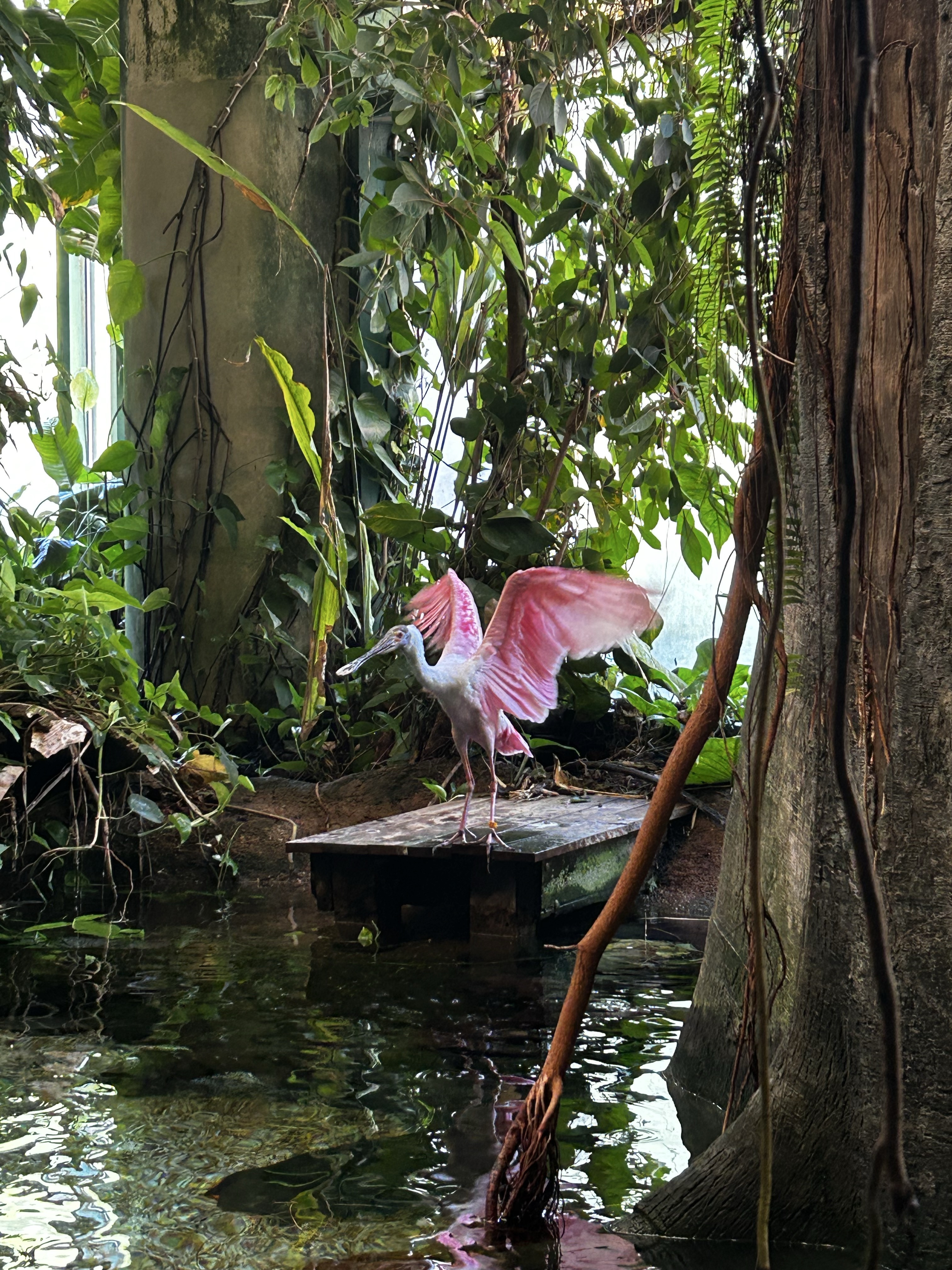
I attended the 11:30 a.m. guided tour of the Amazonia House. W got to see so many different species, from stingrays, several different types of poison dart frogs (as well as many other frog species!), lungfish, as well as many other fish species (silver dollars, emerald catfish, etc.). Most of the species had small plaques that gave some background information on the species, such as the strategies they use to eat, their main form of protection, the parts of the world they live in, and so on. Additionally, there was a lot of information on species endangerment, as many of these species are endangered or extinct in the wild. There were several interactive displays, including one that allowed you to create an electrical charge similar to one that an electric eel makes! I think this hall was aimed to be very easy to understand, with most of the displays having easily digestible information. Considering it's also located very close to the petting zoo, I think this hall is designed for kids to be able to understand and explore. I saw some people reading information, but mostly just looking at the animals in this hall (particularly in the rainforest areas).
Self-Guided Observations:
National Zoo Small Mammals and Reptile House - 12:00pm to 2:00 pm
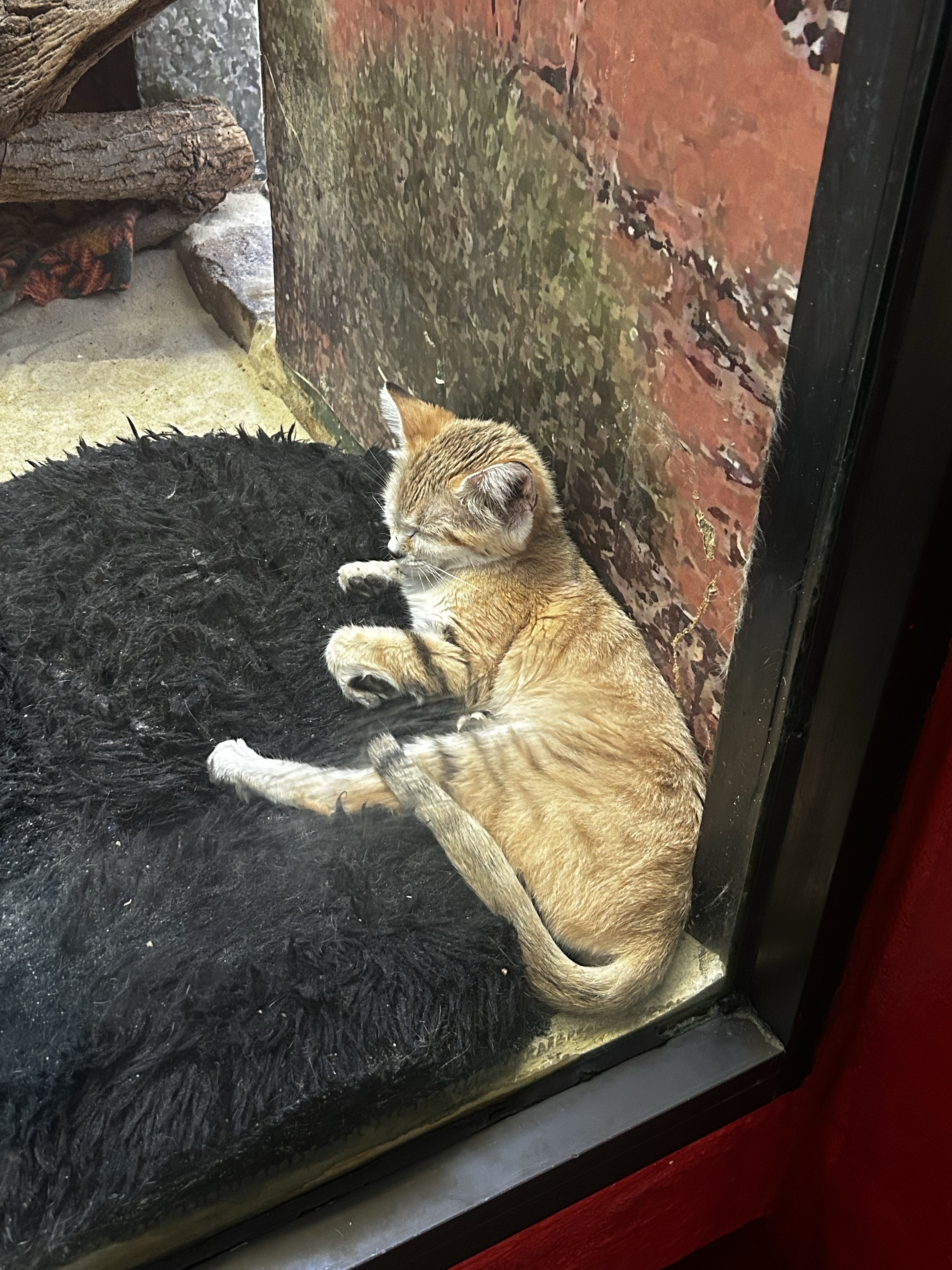
For my second building, my friends and I went to visit the small mammals house! We saw so many adorable animals, including a sand cat, tamarins, elephant shrews, lemurs, fennec foxes, and more! Similarly to the Amazonian house, the majority of information was small text blurbs that went over habitat, feeding, and other species information. Many of these plaques were also accompanied by a pictorial drawing of the animal, as opposed to the more cartoon representations in the Amazonian house. Again, I think this hall is aimed to be accessible and interesting to younger kids, especially with how the layout of the enclosures was structured to be easily seen for people who are shorter (aka. for kids). Many non-SGCers were reading plaques. I also saw several people with professional-esque cameras taking pictures of the species.
For my third building, we went to the reptile house. I like snakes, so it was cool to see the different snake species, such as the mangrove snake and false water cobra. There were so many turtles too, including the spotted and Mississippi map turtle. I also saw a prehensile-tailed skink, which was cool. Many of the plaques had the same basic information as previously discussed, but I noticed on these maps that showed were they live, as opposed to just having that in writing. There was a really cool display in the frogs section that showed the similarities and differences of human and frog anatomy. That definitely felt more aimed at people who had the background knowledge to understand it well (such as college bio students...) but also was designed to be fun for a child to see and learn about how anatomy works! We also saw a zookeeper feeding the salamanders, which was super cool to see! I saw a decent amount of people stopping to read the plaques or interact with the different displays!
Education
There were several different ways I saw education being implemented at the Zoo besides just informative plaques. For one, we passed several signs that listed times that zookeepers would be at the exhibit, either for some kind of interactive experience or just for questions. Interactive displays, such as the eel and anatomy ones mentioned early, help give people another way to interact with and learn about the animals. There were maps and pamphlets that also had a lot of really useful and neat information about the Zoo, as well as QR codes with information online
Animal Wellbeing
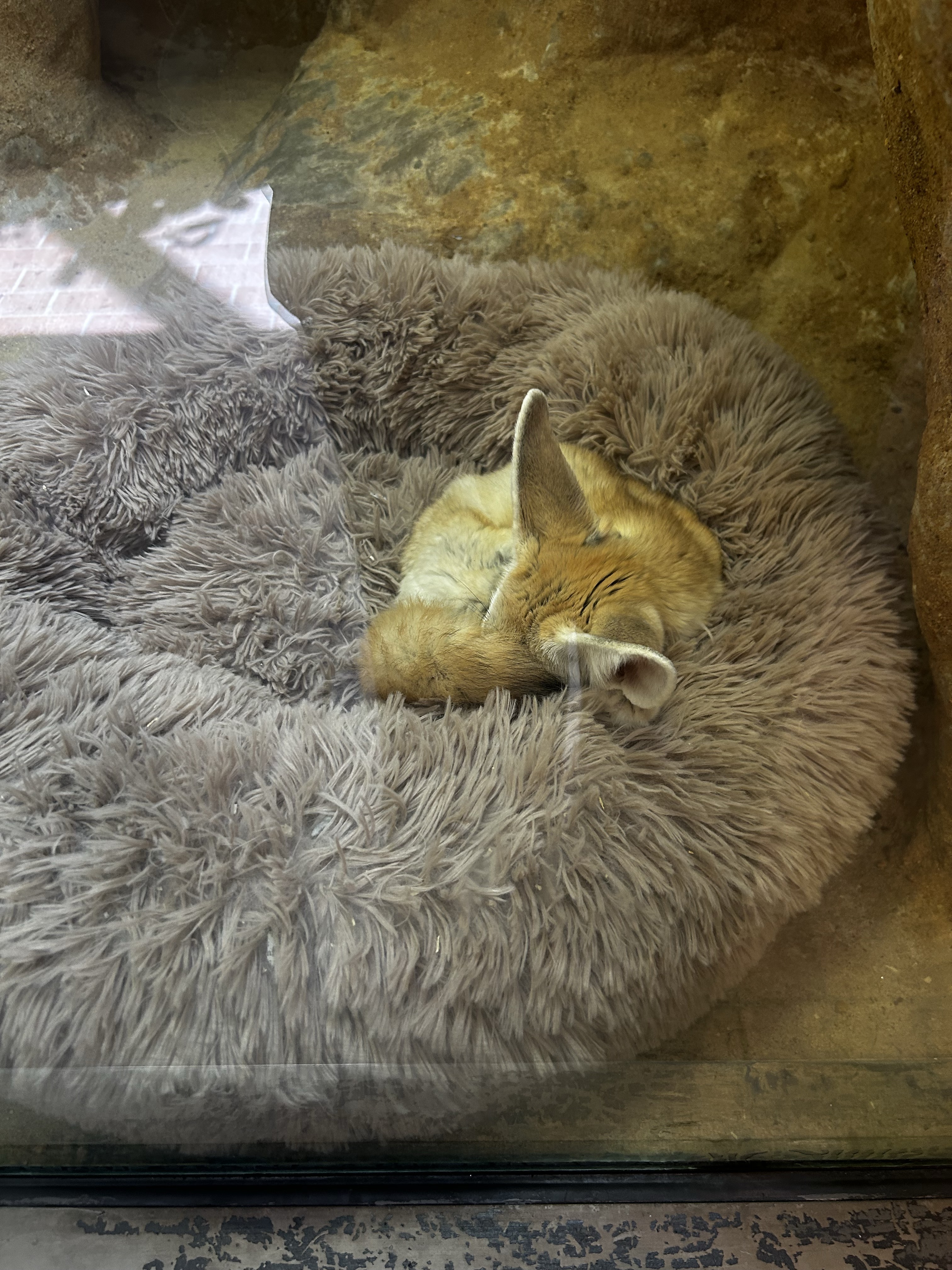
Zoos often feel "morally complicated" because seeing animals in captivity often feels "wrong." While there are Zoos that certainly don't provide the necessary environment for animals to thrive, there were several ways I saw at the National Zoo that were meant to support animal wellbeing. For one, the animals were not "forced" onto display. Each exhibit had signs that noted if you couldn't see the animals, it was likely because they were choosing to be in other parts of the enclosure. This autonomy is really important for animal wellbeing.
Additionally, all the enclosures had enrichment and efforts to recreate the habitat as best as possible. The Amazonian house rose to the technical challenge of "recreating a rainforest," the small mammals house had beds and blankets for the species that replicate individual spaces and dens in the wild, nocturnal mammals were kept in the dark during the day, and so on. All of these plus many more strategies are used in order to help support animals that are being kept in captivity.