


Impact - The End of the Age of Dinosaurs:
AMNH 4th floor, temporary exhibit - 10:30am
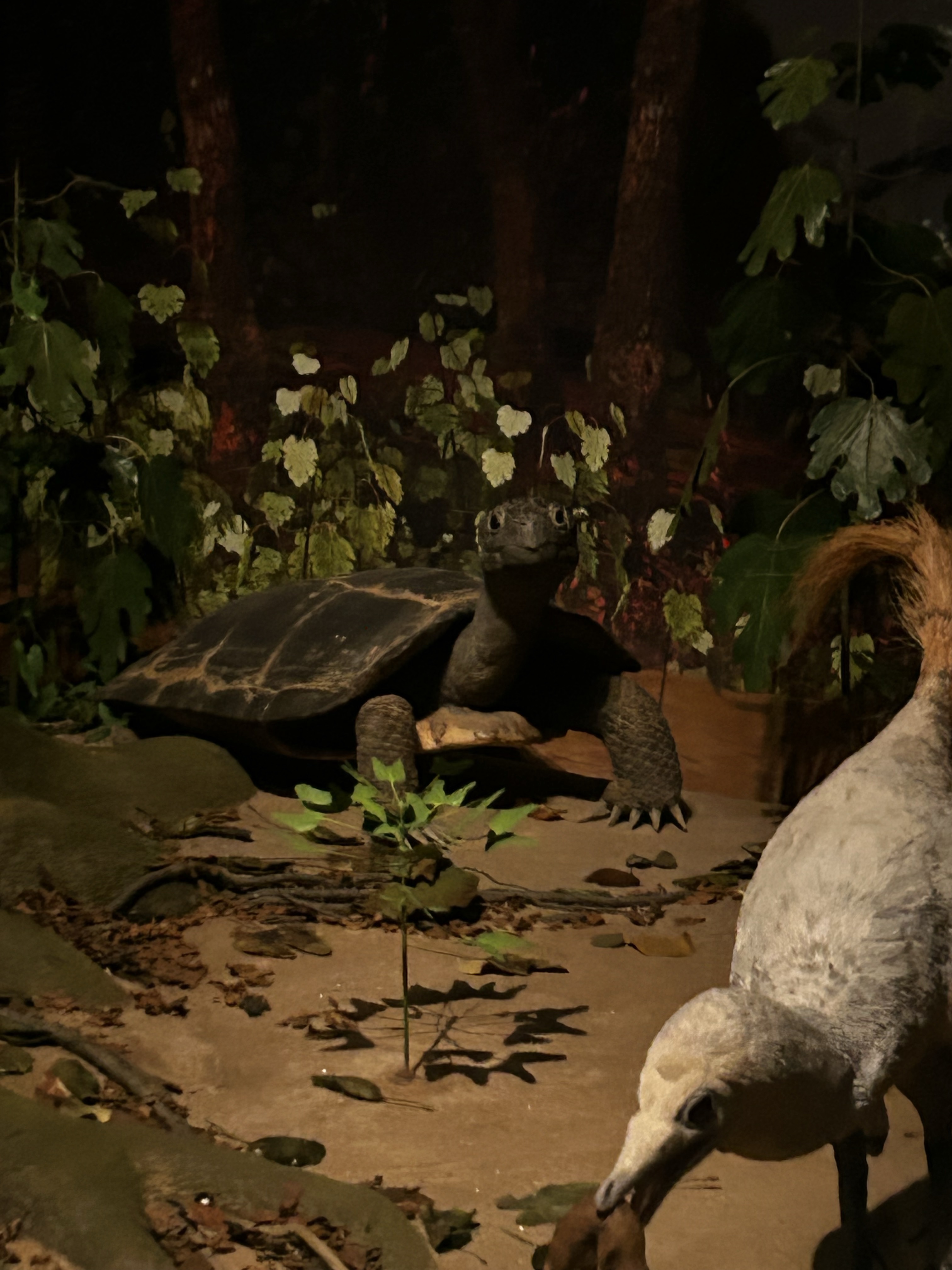
Self-Guided Observations:
AMNH North American Mammals Exhibit - 12:30pm
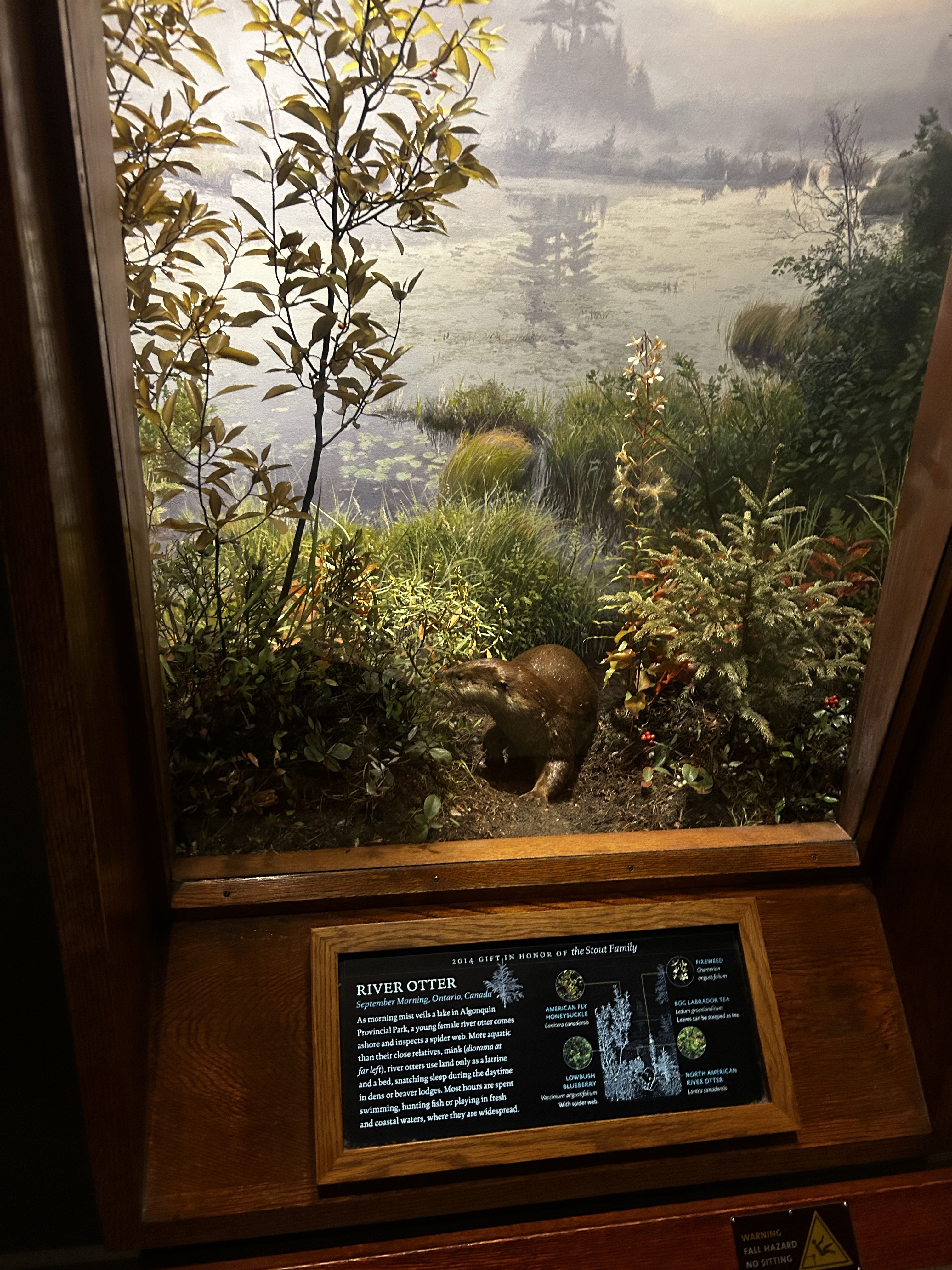
Concerning the Fossil Halls - Guided Tours
Hall of Vertebrate Origins - 2pm
For my second guided tour, I attended Dr. Merck's tour of the hall of vertebrate origins. The main thing I found interesting was how it was laid out like a Cladogram. Especially since in my BSCI207 class, we essentially had to memorize the same tree that I was walking on at the exhibit. However, this does present an issue when new information is learned. The exhibit is slightly outdated in certain areas when it comes to where they fall on the cladogram (like the turtles). While having the cladogram be based in the floor is cool because you get to actually "walk through it," it does make it tricky to update. Using strings above the exhibits, or projections on the floor instead of tiles would make it easier to update. However, the integrity of the cladogram would likely be lost with these methods, especially if they were constantly being switched around. Additionally, while displays can be switched around, it would take a lot of time and delicate effort to ensure that nothing gets broken or destroyed. This is the unfortunate part of designing an exhibit like a cladogram. Cladograms are dynamic and debatable, and so often one from 10 years ago won't be consistent with the knowledge we have today. Still, the exhibit was quite enjoyable. I really like all the hanging fossils, especially the ones that lived in water. It was a much different perspective than I was used to, and it was really cool to see some of the features I had learned about in class on display in person.
Space Show
Encounters in the Milky Way - 3:30pm
This year's space show was titled Encounters in the Milky Way, and focused on the origin, development, and present-day encounters of the Milky Way. Voiced by Pedro Pascal, the show took us through our solar system out to the edges of the Milky Way, and even to encounters we may have with other galaxies. To me, the images seemed to be a mix of accurate scientific measurements and designed by special studio effects. The combination of these things was likely to ensure that the presentation was engaging while still being relatively accurate to science. Again, space is something I am really interested in, so I had a general background on a lot of the information that was being presented. Still, it was really cool to see it visually. It's hard to comprehend just how many stars and galaxies and planets are really out there just from reading textbooks and articles. Having it visualized on screen really just made me appreciate how vast the universe is, and how tiny we are in comparison. It's a hard thing to wrap your head around, but an important reminder nonetheless.
General Thoughts
Overall, I found the AMNH to be an incredibly well-thought-out, engaging museum that did an amazing job presenting information for a general audience to be able to understand. Additionally, I noticed a few different ways in which the AMNH could accommodate all learners. Many of the exhibits are very open, which makes wheelchair access easier. There are also many elevators and ramps throughout the museum, which would allow anyone who has a mobility aid to be able to better access the exhibits. Many of the exhibits had visual, auditory, and sensory elements that would allow people with visual/hearing impairments to still be able to learn and experience the exhibits. Several of the interactive portions of the exhibit had options for other languages, and many of the maps/pamphlets also had Spanish. These accomodations are important not just in museums, but in any space to ensure accessibility to all.Overall, the excursion was incredibly enjoyable! Despite the early start, I had an amazing time visiting the museum as well as NYC. This was not only my first time at this museum, but my first time in Times Square, NYC. I'm incredibly grateful for this experience, and excited for the opportunities ahead!