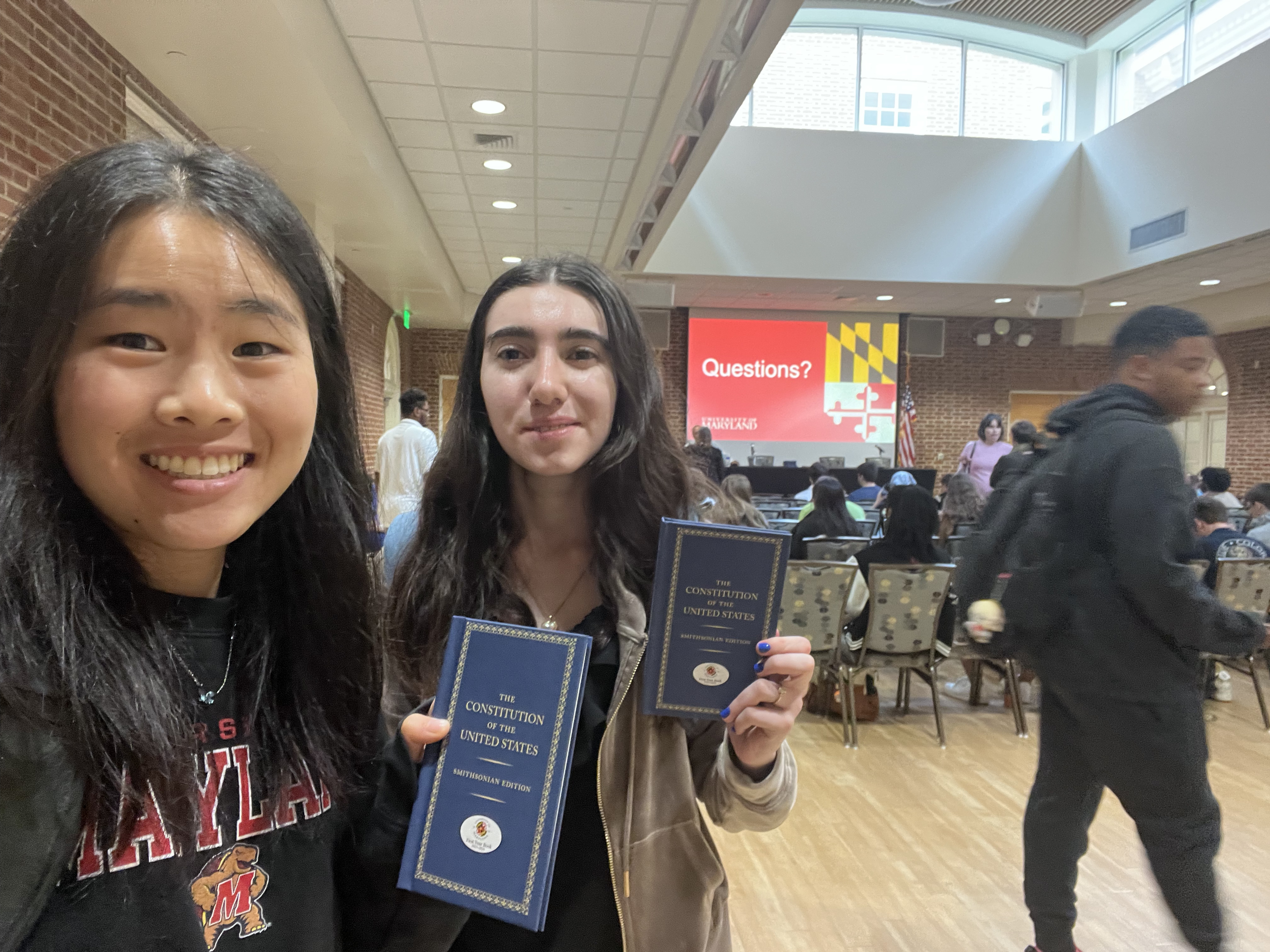


Constitution Day: The 14th Amendment, presented by Dr. Michael Ross
September 17, 2025 at Stamp Student Union
Main Points of the 14th Amendment
To give context behind the 14th amendment, it originally started back with the end of the Civil War, where Lincoln pushed for the ratification of the 13th Amendment and granting black suffrage. However, after Lincoln was assassinated, his predecessor, Andrew Johnson, didn’t hold his same beliefs. As a result, nothing much changed with the passing of the 13th Amendment. When Congress reconvened, they pushed for the ratification of the 14th Amendment to give African Americans the right to vote. However, with its passing, the application of 14th Amendment started to evolve and its scope extended beyond what the original intent was behind the legislation. Today, the Birthright Clause is under fire, with people in power pushing for a different interpretation of how citizenship should be granted. Another prominent clause of the 14th Amendment is the Due Process Clause, with corporations using it to defend what they believe should be their rights through the concept of “Liberty of Contract.” The “Liberty of Contract” was applied in the case of state imposed minimum wages and maximum hour laws, where private corporations argued that such limitations imposed on their rights. The fundamental rights that are protected by the 14th Amendment have also expanded to include the right to privacy, which are applied to same-sex marriages and abortions. Most importantly, recent uses of the 14th amendment has led to the debate of procedural due process versus substantive due process, which is the requirement that the substance of any legislation that has the effect of depriving a person of liberty or property must be fair and just.
Thoughts On the Presentation 💭
After attending the Constitution Day events, I found that I learned a lot more about the 14th
Amendment than I originally thought I would. There was a lot of background information about the way things
operate that I didn’t imagine I would have known beforehand, and it was fascinating to see the various changes
over time. Many of the main points are convincing; for example, I found the huge emphasis of the 14th Amendment
on the pressing issues of the time, trying to incorporate black suffrage and putting the people first,
fascinating, since the way that the 14th Amendment is applied has changed significantly over time. There were
some points that I didn’t find as convincing, however; one being that Lincoln specified that black suffrage
should be provided to the “intelligent” black people rather than being equitably distributed. However, given the
political climate during the time that Lincoln made his claim, I think it was understandable that his thinking
tracked in that direction.
Dr. Ross also brought up the idea of procedural versus substantive due process. To explain it further, procedural
due process is the examination of the process in which the legal process occurs. However, substantive due process
scrutinizes the contents of the law itself, which offers a more robust way of protecting fundamental rights and
forces the government to provide a compelling interest for why they made the decision that they did and give evidence
of how they narrowly tailored the law to achieve that interest. This is the topic of debate in recent times; since
the contents of the law are under debate, it makes the ruling on certain laws more dependent on the views of the judges,
meaning that the decision on whether a law gets overturned or not is heavily dependent on the makeup of the court.
What is largely missing from the main points is the lack of deep discussion on more contemporary issues, such as the
debate of the Birthright Clause and the Due Process Clause. I also feel like Dr. Ross skimmed past what is considered
as the fundamental rights that all people are entitled to under the federal government, especially since these
essential rights are one of the most hotly contested issues throughout the history of the country. Most of the focus
was on the past, and while it is important to know the history of the 14th Amendment, it would have made a more
relevant and convincing point if some of the past cases were more heavily connected to the present. What I noticed
that would have made the points that Dr. Ross brought up more compelling is the mention of how precedence is set up
each Supreme Court case, and the process required to set a new precedence for how cases in the future should be decided.
For example, Dr. Ross could have brought up the overturning of Roe v. Wade with Dobbs v. Jackson Women’s Health
Organization and related it to substantive due process to emphasize the significance of this term.
Overall, I found this an enlightening and rewarding experience, and it was nice to refresh my memory on the
history of the Constitution as well as learn about some ways that the 14th Amendment is being applied today.