


Event name: Smithsonian Environmental Research Center (SERC)
Event time and place: Edgewater, MD October 24, 2026
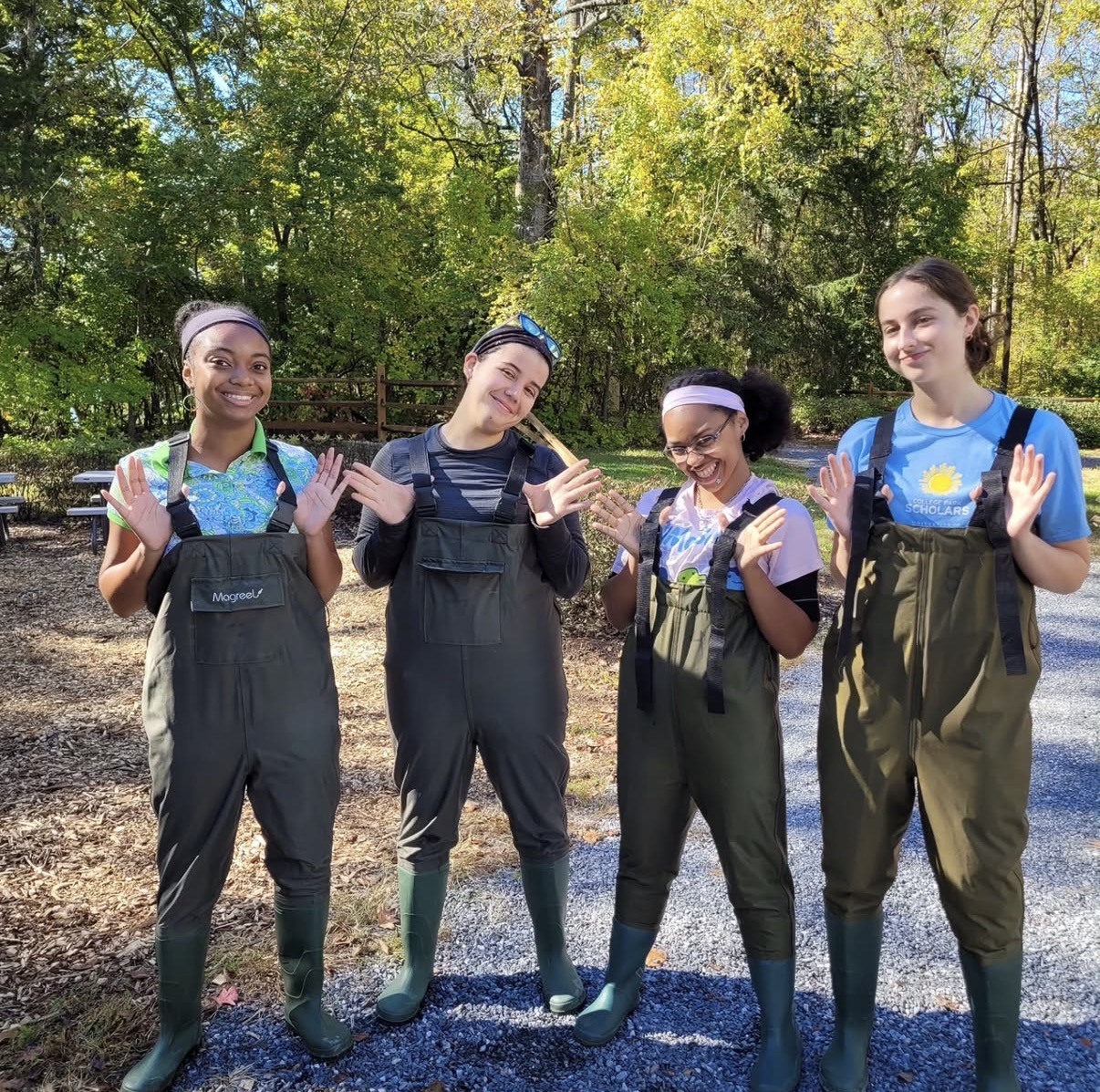
Me and other Science and Global Change Scholars in waders about to go seining!
The research that is done at SERC centered around oyster rehabilitation is really fascinating. Oyster reefs are an essential to the Chesapeake Bays survival due to all of the water that oysters can filter and the habitats they provide for other animals, but due to climate change, oysters aren’t as abundant as they used to be and it now it takes longer for oysters to filter the bay and some animals habitats aren't as present as they used to be. To simulate oyster reefs in the bay, crates of carefully constructed oysters nets are dropped into the bay. This method of oyster rehabilitation is more suited for bodies of water that are experiencing a drastic decrease of oysters so this type of research tackles local issues like the Chesapeake Bay.
The other form of research that SERC does is centered around the biodiversity of the Bay. As the seasons and weather changes, different species of marine life can be observed. Methods like seining, which is where nets are casted into the water to catch different animals in the shallow parts of the bay, are used to observe how the change in climate can cause more marine species to be more active than others. This method is more effective in areas with shallow water so this could be applied on a more global scale to study biodiversity as long as shallow water is being studied.
We also saw two different types of local habitats at SERC, marshes and forests, and due to human activity, these marshes and forests have been negatively impacted. For the marshes, the introduction of invasive species like phragmites smother native plants in the bay just off of how much this invasive species spreads. For the forest, soil pH imbalances due to pollution are slowly killing off these trees which are not only prevalent carbon sinks, but they also help stabilize the coast of the Chesapeake Bay.
These environmental challenges caused by climate change are dire to local environment that surrounds the Chesapeake Bay, but as a publicly funded institution, SERC is able to reach out to the community and educate them by having teachers participate in professional development courses, allowing people to volunteer at the center, and even hosting field trips for students of all ages.
Ultimately these means of outreach are effective to the community as a whole because it encourages the local community to care and take interesting in their environment and the challenges it faces due to climate change.