


Event Name: SERC Excursion
Event time and place: Smithsonian Environmental Research Center in Edgewater, MD on 10/4/2025
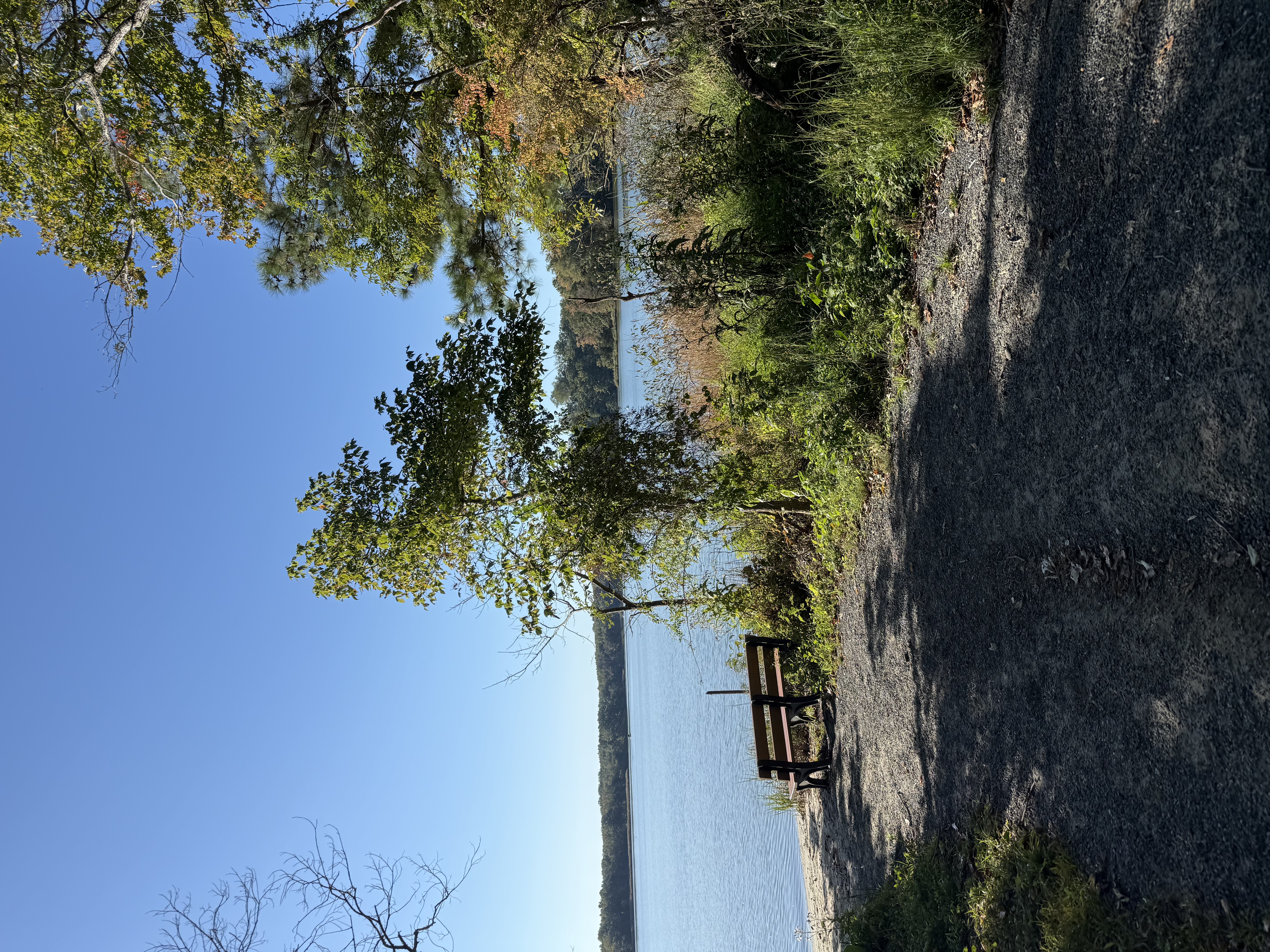
Scenery on our hike through SERC's grounds.
The mission of SERC is to perform research on coastal environments, specifically the Chesapeake Bay, and to apply their scientific knowledge to issues of global change and sustainability. SERC also aims to educate the public on the environment and share the beauty of nature to inspire people to care for the planet.
One example of research being done by SERC involves using manual band dendrometers to measure the growth of tree trunks. Dendrometer bands are devices that wrap around trunks and can precisely measure changes in the tree’s diameter, providing a much more accurate measurement than the more commonly used tape measure. From this data, SERC analyzes how changes in the weather and the environment affect tree growth. On a local level, SERC uses this data to monitor how local conditions impact the trees in their surrounding environments. On a broader level, SERC researchers learned that trees are very sensitive to change and therefore can be used to reflect how forests respond to various changes in climate.
SERC also studies the biodiversity of marine ecosystems using a technique called seining. Seining involves dragging a long net along the bottom of a body of water to catch the marine life in the area. Researchers identify and record the different species found before returning them to the water. On a local level, SERC uses these findings to monitor the biodiversity of the Chesapeake Bay and to understand how various factors affect the population size of these species. On a broader scale, SERC can use their data as a guide for how similar ecosystems would react under similar conditions.
While on our hike, we stopped to admire the marshes surrounding the trail and learned how this habitat acts as a nursery and protects coasts from damage and erosion. Humans are harming marshes by generating agricultural and industrial runoff, introducing nonnative plants and animals to the ecosystem, and clearing away marshes for human development. We also saw the habitat of the Chesapeake Bay’s brackish water and discussed the organisms that reside there such as oysters, shellfish, jellyfish, and crabs. We specifically discussed the important role oysters play in filtering the water and providing a habitat for other organisms. Humans are impacting the Chesapeake Bay habitat by overharvesting oysters, polluting the water with trash, generating runoff, and overfishing.
SERC reaches out to the community through education, structured programs, volunteer opportunities, and by opening their site to the public. SERC educates youth by providing field-trip opportunities for schools, which allows students to learn about the center and their research. Additionally, SERC offers a variety of programs such as hiking excursions and STEM demonstrations which also engage the public in their research. SERC provides volunteer opportunities for those who want to become more involved, and SERC’s grounds are open for the public to enjoy hiking and various water activities. I believe that the different means of outreach are effective because they allow for people of all ages and backgrounds to engage with the center to the extent that they wish, and these opportunities provide an easy and fun way for the public to enjoy nature and learn about the center’s research.