


Smithsoian National Zoo:
May 2nd, Washington DC:
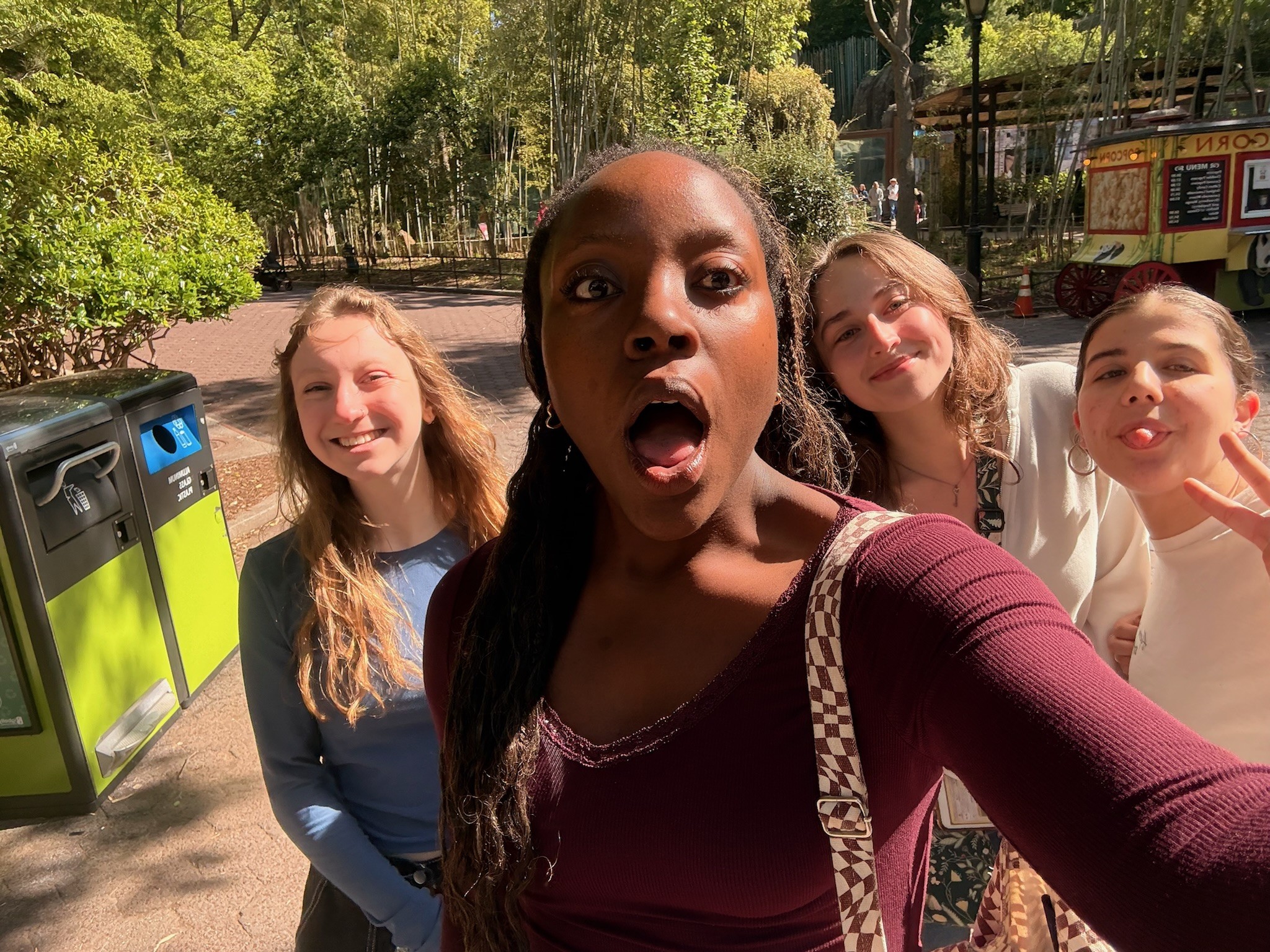
On the bright, very cold, and early May morning of the trip, my group and I clamored into the Metro, buzzing and excited for what the day had in store. Unfortunately, our excitement was slightly subdued as in a beautifully tragic start to the trip…the red line train was delayed. This caused me and the rest of my group to walk all the way from Dupont Station to the Zoo… Nevertheless, we got to see more of DC, and it was very nice outside. After a delayed start to our morning, we made it inside the Zoo!
We set a course straight for the Bird House, but of course along the way, we were distracted by the various animals of the Asian continent. Our plan to beeline was thwarted by the sloth bear, the pandas, and our unfortunately (unsuccessful) search for the baby elephant. Finally, around 45 minutes later, we made it to the Bird house. In the first room we were greeted by the Atlantic coast. Coastal birds flew around the exhibit, seaweed was littered on the basin of the water tanks, and sandy dunes were placed above the tanks immersing us into the beach environment. We even saw the notoriously not-bird horseshoe crab. Diagrams were plastered along the walls and models of the underbelly of the horseshoe crab provided some information about these organisms. Walking into the next biome, we made it to the Arctic, here we saw the bufflehead bird gliding along the water. In the next room we made it to the forest. In this exhibit was the Magnolia Warbler, and the Baltimore Oriole. There were interactive buttons visitors could press that would play the sound of the birds, and many people were engaged in the information in the exhibits. Due to the interactive activities, and the small synopses, I believe this hall is aimed at elementary school and above.
After traversing the biomes of the Bird house, we embarked on a journey to Amazonia. Along this route, we passed through North America, passing by the bald eagle, and sea lions of California, we made it to the lush Amazon. We started our expedition along the Amazonian river where the freshwater stingray, electric eels, and sideneck turtles live. Near the electric eels, there was an interactive activity that allowed visitors to make the electric eel model vibrate when touched on both sides. Further after the canopy roop, there was a display of buttons to demonstrate how vulnerable amphibians are to chytrid based on their temperature. With all of the interactive and captivating experiences, I believe that this hall is aimed at ages elementary and above. Once again, with how deep the immersion was, many people were very interested in the displays. Other animals in this house included the panamanian golden frog native to the rocky mountain streams, and waterfalls of the jungle.
On the last of our expeditions, we made it to the Reptile house, where we saw the shingleback skink, the northern blue-tongued skink, the african plated lizard, and the kimberly rock monitor. Skulls of the animals were displayed in front of the habitats so we can see their teeth and determine if they were carnivorous or herbivores. There was also a light up display about the organ system of a lizard. This hall was probably aimed for middle schoolers as there was more info in the word blurbs than others, and the exhibit was not as immersive since the reptiles need to remain behind glass. Many non-sgc people were reading the info and displays, and since it was reptile week there were tables positioned around exhibits with more information about the reptiles. At the end of the hall in a small semi-aquatic tank, we saw a turtle desperately trying to surface. This was a slightly scary experience, so we moved on in hopes that the turtle was okay. After the reptile house we enjoyed our lunch and reflected on our fun experience at the zoo.
The National Zoo is a very mesmerising place, and helps contribute to public understanding of animals whether through hosting timed demonstrations, or having interactive displays. In order to maintain the mental wellbeing of the animals, the zoo immersed the animals in their natural habitat. For example they placed kelp and rocks in the sea lion pool to make the landscape more interesting, and housed compatible species together, with their biomes, natural vegetation and water type. Furthermore, the Smithsonian Zoo is a conservation zoo which means they protect wildlife and house endangered species. This trip to the zoo was very exhilarating and I am happy I was able to go.