


The National Zoo in Washington DC
May 3rd, 2026
After a Metro ride that turned into a last-minute sprint for the next bus, which then became a 30 minute walk, we eventually arrived at the National Zoo in Washington DC on the morning of May 3rd. Our group first chose to visit the Bird House, an exhibit containing many species of shorebirds, waterfowl and songbirds found in the Americas. The first area in the house was modeled after an ocean shore with water pools, sand, and shells. It also had horseshoe crabs, along with life-sized models of horseshoe crabs so that viewers could see what they look like out of water. This room, like all of the others in the bird house, also had a simple flip book with pictures showing all of the organisms that shorebirds eat. We then went into the second area of the house, which contained waterfowl such as the Redhead and the Bufflehead.
This area was also modeled after aquatic areas ducks and other waterfowl inhabit, but was more similar to a lake ecosystem. Lastly, we entered the songbird section of the house, containing species like the Baltimore Oriole and the Magnolia Warbler. This section also had buttons that you could press to hear the song of individual bird species in the exhibit, which makes sense considering these birds are known for their distinct sounds. This house appeals to many different ages and education levels, and I would say it is generally suitable for kindergarten students and up as it mainly relies on visuals instead of text. There were many younger kids in this exhibit, and their parents often helped them read the information on the signs/booklets.
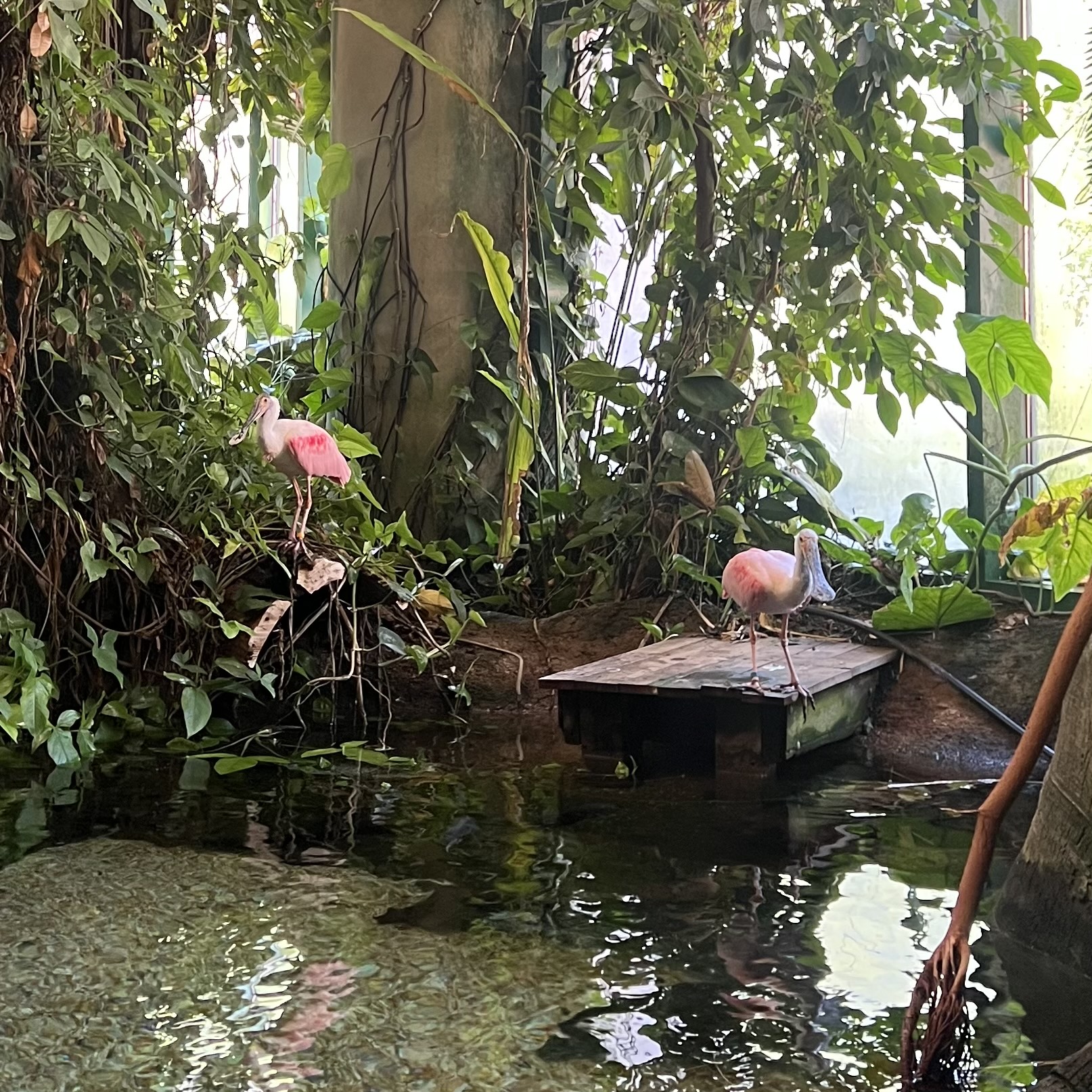
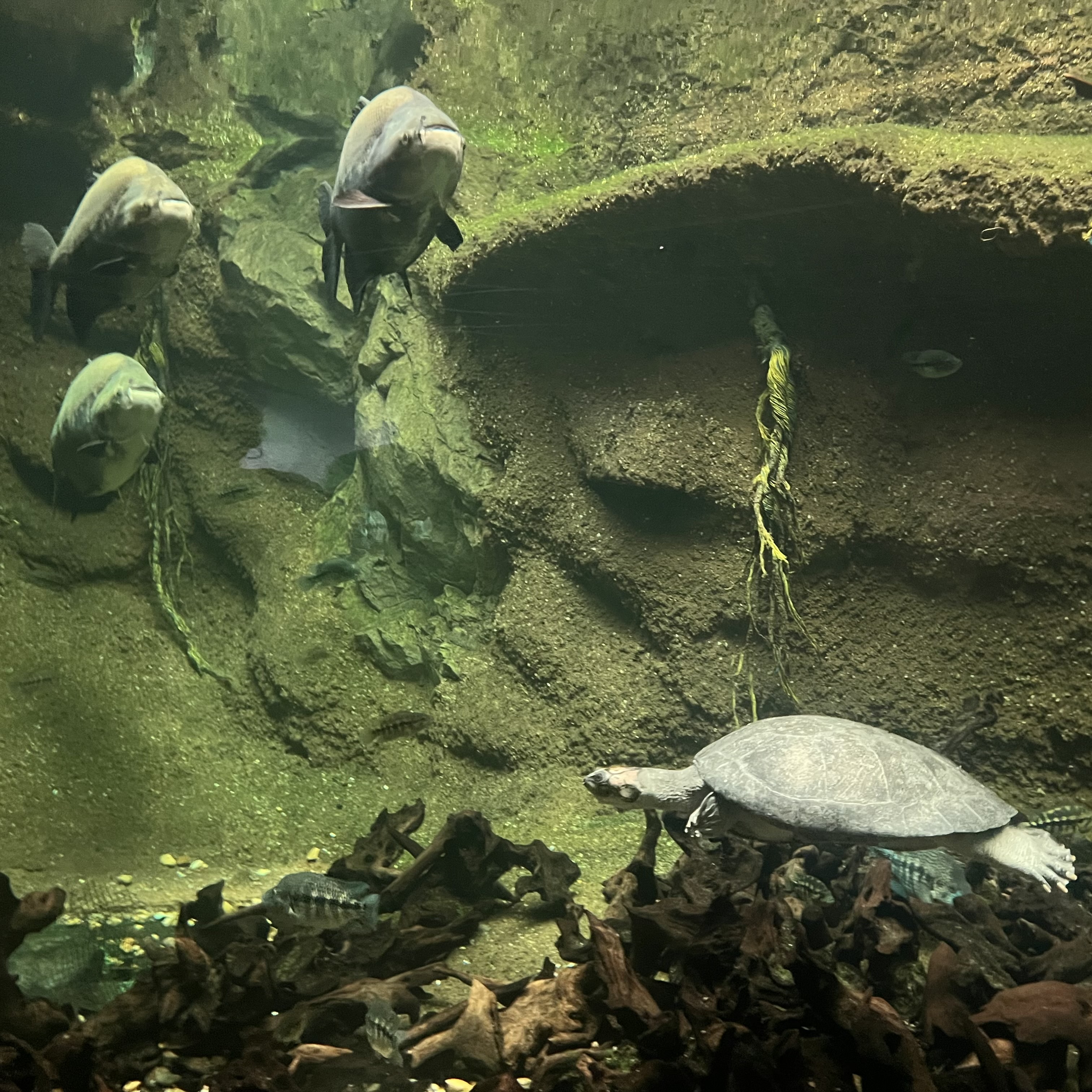
Our group then headed over to the guided tour of the Amazonia House, given by Dr. Holtz and Dr. Merck! This exhibit had many rooms housing animals from the Amazon, including freshwater stingray, an arapaima, lungfish, and roseate spoonbills (one of my personal favorites from the day). They also had some endangered amphibian species, including the Panamanian golden frog, which we focused on in the first semester of colloquium when we read The Sixth Extinction . In the aquatic area, there was an interactive electric eel statue that helped model how this species generates an electric charge for prey capture. This was displayed at a low height to encourage younger children to interact with it. Another unique interactive activity in this house was a display in the amphibian section that allows people to press buttons corresponding with different temperatures to read about how susceptible different amphibians are to disease at varying temperature points.
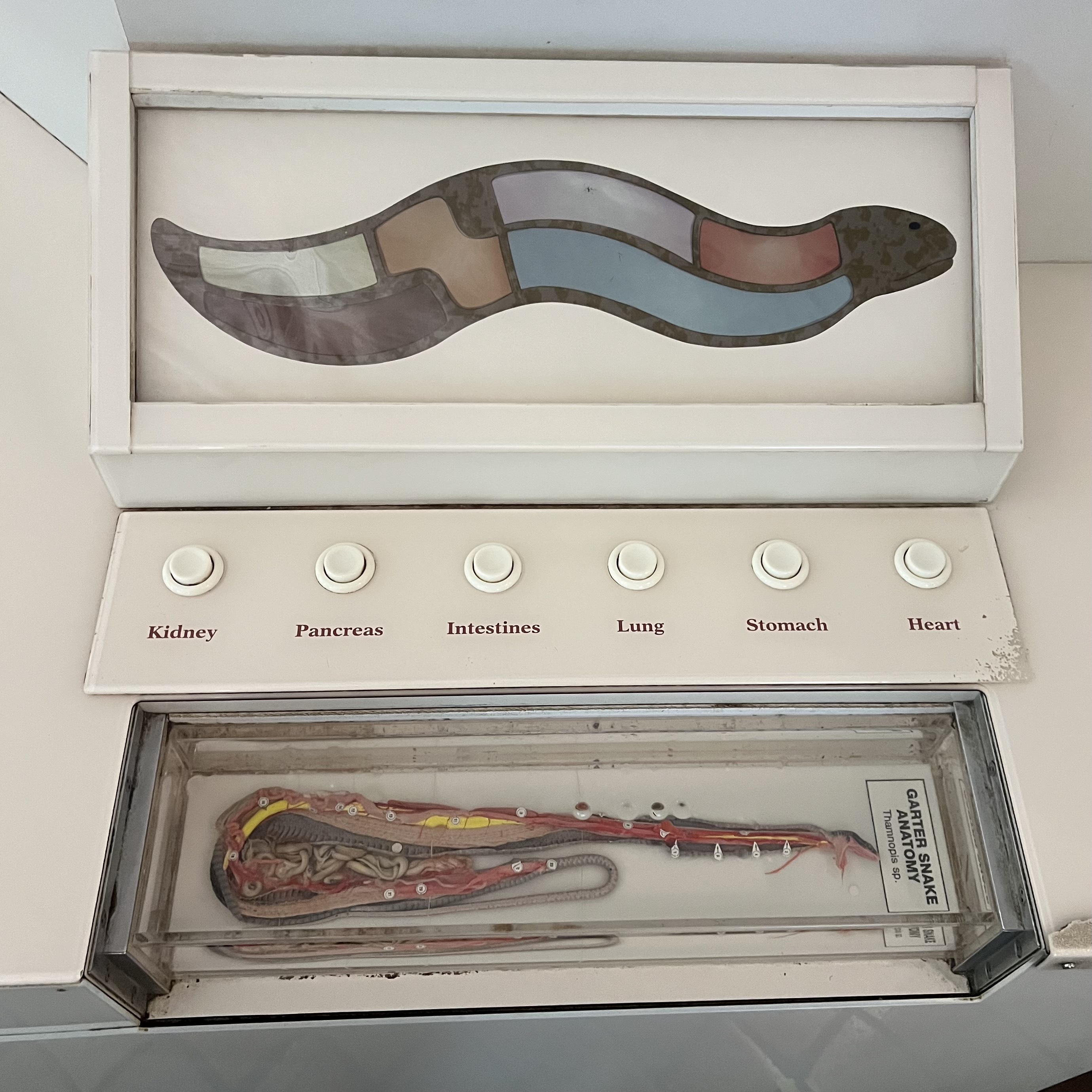
Despite the many interactive elements, I generally found this exhibit to be more text-heavy than the Bird House, making it better oriented toward late elementary and middle school students and up. Still, younger kids were seen enjoying the animals on display. Finally, our group visited the Reptile House (Reptile Discovery Center), which contained species of reptiles and amphibians found across the globe. Some of these species included the Kimberly Rock Monitor, Fly River turtles, Shingleback skinks, and huge Aldabra tortoises. Going beyond simple text displays, this house utilized replicas of some of the displayed species so that viewers could observe their unique jaw structures and teeth. The Reptile House also included a life-sized model of human anatomical structure and organs compared to those of a lizard so that people can observe evolutionary similarities and differences, as well as a light-up display showing where different organs are found in reptiles. There was more information on anatomy and physiology displayed in this house, but it was mostly communicated through visual, interactive displays. Because of this, I would say this exhibit is mostly geared towards elementary school students and above, and more complicated topics might only be understood by older age groups. A lot of people were seen reading the text displays and interacting with the visual activities.
⭐ Educational Efforts:
Zoos are extremely important educational centers for all age groups, and they allow us to be exposed to and learn about species we aren’t likely to find in our backyard or local parks. This builds appreciation for the diversity of nature, which can also generate a curiosity around zoology and geographical diversity.
By having free entry and accessibility by buses and the Metro, the National Zoo makes this education more accessible to everyone. Accessibility is also ensured by using resources outside of printed information to communicate knowledge. Because we visited during Amphibian Week, there were many stands near and inside of the Reptile House with amphibian-themed games oriented toward younger children. This allowed children to interact with new information about amphibians in an engaging way, and parents would often also play along. Another way the Zoo communicates information past printed materials is through the use of animal and skeletal replicas, showing visitors the unique anatomies and appearances of different animal groups and species.
⭐ Animal Welfare:
It is important to acknowledge that the animals in the National Zoo, like any other zoo, are being held in captivity, and they are more used to the expansive environments and complex ecological dynamics of the wild. In recent years, ensuring the mental and physical well-being of animals has been a primary concern for the National Zoo, and this is mainly done through replicating the complex natural settings these animals are adapted to. All of the exhibits we visited today used types of vegetation native to the animals’ natural habitats to create more engaging areas. Rocks and kelp were used in aquatic habitats to create more interest. These exhibits are also all climate-controlled, replicating the temperature and humidity of different habitats to help animals feel more comfortable. These efforts to replicate natural habitats both help animals feel more comfortable and aid in educational efforts.