


SERC Excursion
10/24/26, Smithsonian Environmental Research Center in Edgewater, MD
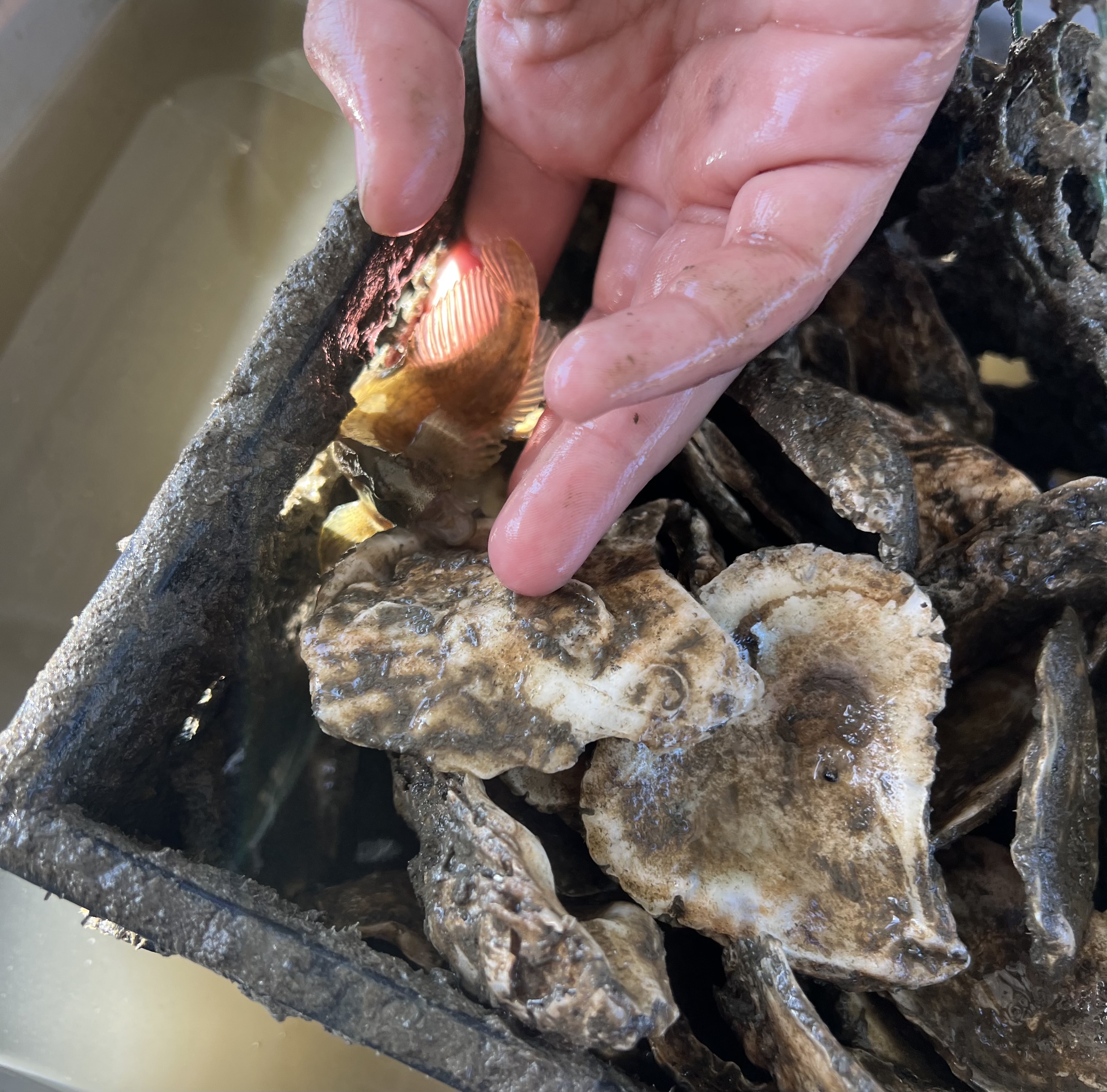
Using oyster nets to see how species depend on reefs for shelter/nurseries.
For this semester’s Excursion, I attended the SGC visit of the Smithsonian Environmental Research Center (SERC). The mission of SERC is to understand how global climate change is impacting our environment through many research projects focused on important ecosystems, as well as to communicate the process and findings of environmental research through public outreach.
One area of research we engaged with on our trip is the studying of benefits of healthy oyster ecosystems and oyster rehabilitation. This testing is specifically done in the Chesapeake Bay by dropping oyster nets into the water to test what densities of oyster shells help maximize oyster growth and survival, but this is intended to address the significant reduction in oyster reefs in many areas by developing techniques for coastal management and oyster reef construction. Another area of research we engaged with was the study of Chesapeake Bay biodiversity as a variable impacted by many seasonal and climate factors, which involves the use of seine nets to sample marine critters in shallow waters. This is used to study a particularly vulnerable habitat, shorelines.
Two habitats we observed were tidal marshes and forests. Human destruction and conversion of marshes (by draining, damming, etc.) has led to physical degradation and shrinking of these vital habitats. The marshes, as well as the animals that rely on them as hiding areas or nurseries, have also been impacted by agricultural and urban runoff that contributes to harmful algal blooms, the introduction of invasive species like Phragmites, and fishing practices. These marshes are essential for coastline flood protection and carbon sequestration, and the negative impacts of industrial and agricultural activities on these habitats will be especially harmful to native marsh grasses and animals, as well as coastal communities.
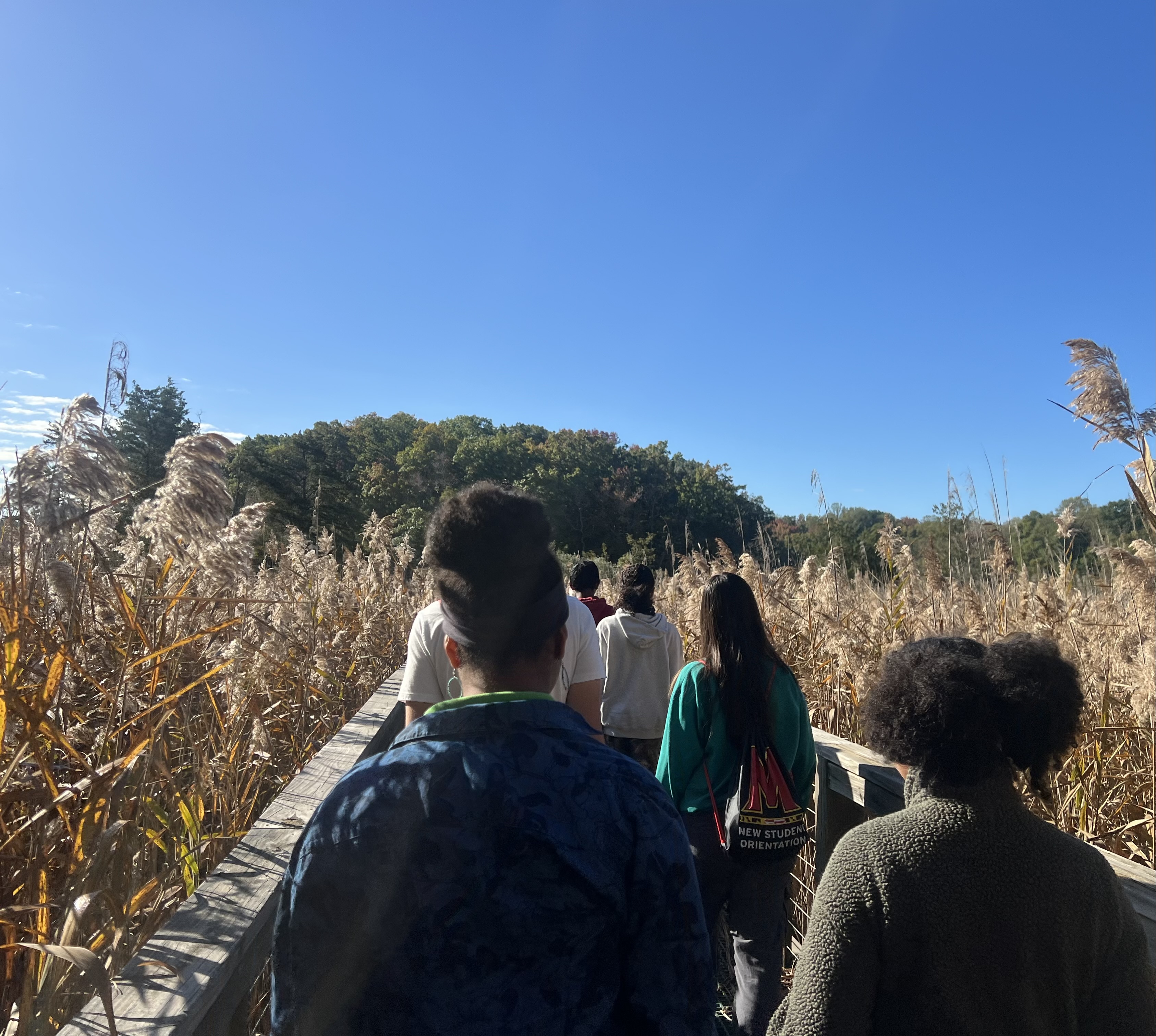
SGCers on our walk through the coastal forest to the marshes.
Forests have also faced the burden of harmful human activity, such as forest clearing for housing development, agriculture, and logging. Increasing atmospheric carbon and disturbances to soil pH due to pollution have also disturbed healthy forest growth. Forests are another essential carbon sink, and the roots of these trees play a role in stabilizing coastlines.
As a publicly-funded institution, SERC reaches out to the community in a number of ways. By hosting field trips such as ours, they can generate interest in a large range of ages by having them “act as scientists.” I think this is a very effective way of encouraging interest in environmental sciences, and provides insight into not just what research is being conducted, but why and how.
We also saw a lot of spaces where the local community could get involved in citizen science, which helps people feel connected with SERC’s work. The public is also welcome to access the campus for hiking and outdoor recreation, allowing SERC to serve the community directly while also addressing longer-scale, local and global questions.