


American Museum of Natural History Field Trip:
New York City, 11/22/25
💥 Impact: The End of the Age of Dinosaurs 💥
The first exhibit we visited after arriving in New York City was about the catastrophic asteroid collision 66 million years ago, causing a mass extinction that preceded the rise of mammals. Throughout the exhibit, there is a focus on communicating information through interaction and the senses. The main organizing principle of the exhibit is the stages of extinction with information generally being divided into three parts: before the mass extinction, during the mass extinction, and the aftermath and implications of the mass extinction.
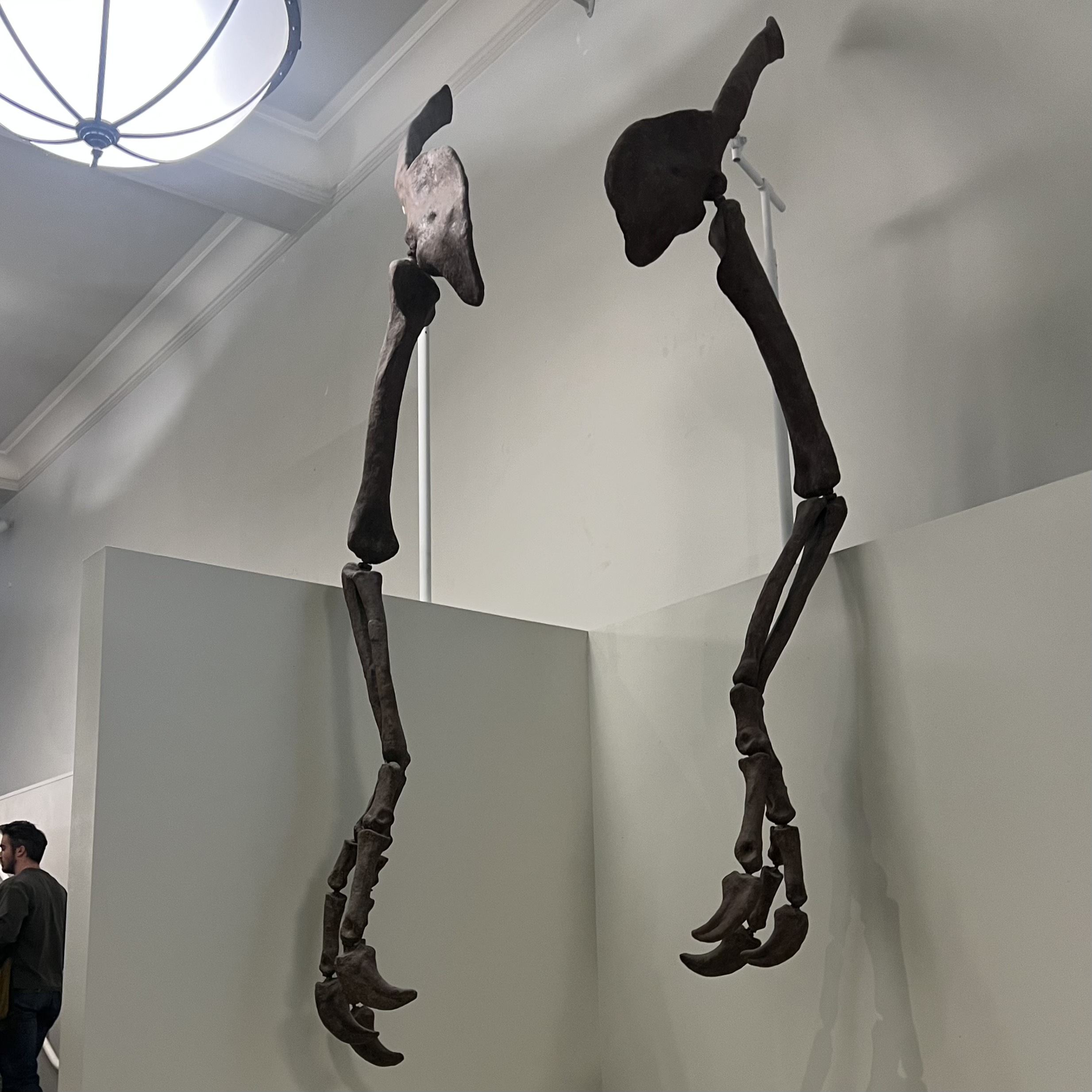
One type of display used in the exhibit were life-sized models of species that went extinct due to the asteroid collision, including species Paraceratherium, the largest land animal known to have existed. The purpose of these models is to allow visitors to interact with these extinct species and comprehend the immense size of them, as well as convey scientific hypotheses of the appearances of extinct species in a way that is accessible to more visitors, especially children. They can also help contextualize where certain species may have lived, their diets, and more. Another type of display used were digital interactive displays, such as the game where one can determine what extinct species they are based on their personality, and learn if the ancestral lineage of their species survived. These interactives were accessible to all age groups, and act as a fun way to communicate information to a younger audience while displaying both how many ancestral lineages were ended by the asteroid impact and how many modern species tie to ancestors from over 66 million years ago. These interactive displays can also help visitors form more personal connections to the information being communicated.
When communicating information in exhibits, it is important for scientists and curators to organize them in a way that can be accessed by groups of wide ranges in age and previous knowledge that enter the museum without overgeneralizing information and thereby creating misunderstanding. I believe that the Impact exhibit achieved this by presenting information in many forms and using clear language, rather than complex scientific terminology, to communicate the same facts. The Impact exhibit makes an asteroid collision that occurred 66 million years ago relevant to people today by displaying both the causes of mass extinction and the long term impacts of extinction, allowing visitors to draw parallels to current issues of climate change and biodiversity loss, while also displaying the resilience of Earth's ecosystems.
🦖 Concerning the Fossil Halls 🦖
The main organizing principle of the Fossil Halls is the evolutionary tree of life on Earth, with the organization of the specimens in the exhibits following a cladogram-like structure. The floors of the rooms have lines between specimens displaying their connected ancestries, and large graphs are used to display the lineage of Theropods, Sauropods, and Ornithischians.
Dinosaurs are classified as reptiles yet, unlike the typical reptile anatomy, dinosaur legs are positioned directly under their bodies rather than sprawling out to the side. This can be attributed to the origination of dinosaurs as bipeds with arms, which later became front legs, and this anatomical structure helped to support their large weight. Seeing the dinosaur specimens in person allowed me to better comprehend just how large some species were and the necessity of certain anatomical structures to support them. Also, according to modern science, most species of dinosaurs were born very small relative to their matured size, and species usually took around 30 years to grow to their immense sizes. This growth would have required a very active, efficient metabolism.
Because assembling specimens, gathering information, and curating exhibits like those in the fossil halls takes a long time, new knowledge can arise during their installation, and this information may contradict the information included in the exhibits. One outdated feature of the exhibit is a graph showing the trait of the grasping hand on the lizard-hipped side of the tree as this trait was later found to be a general trait of dinosaurs of either classification. Another outdated feature is a Prosauropod model that shows the front hand bones oriented sideways in a way that was later found to be anatomically impossible for that species.
🏺 Concerning the Collections Core 🏺
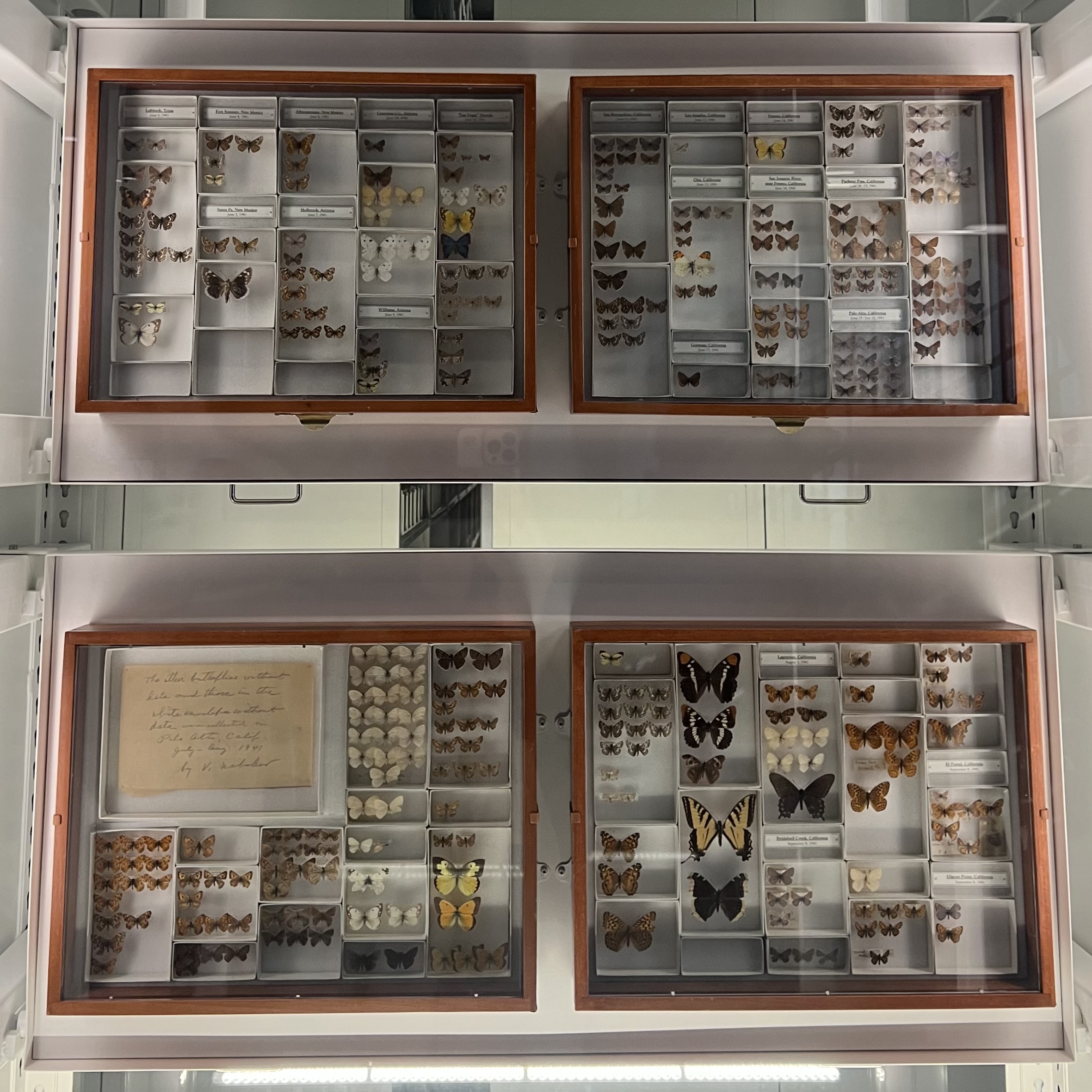
Because a single specimen can only represent what a species looked like at one specific place and time, collecting different specimens across time and space is necessary for scientists to understand variation in species based on the location, age, and evolution over time. One type of specimen we saw on the tour of the Collections was insects. These specimens were collected through field methods such as hand collection or net collection, and preserved mainly through dry mounting. The insect specimens are spread in a standardized way to allow for easier comparative measurements between species, and tiny labels with the date and location of collection are placed next to each specimen. Another type of specimen displayed in the Collections Core are horns and antlers. These specimens were mainly collected in field expeditions of the early 20th century as the collection of these large specimens is now more strictly regulated by wildlife laws. After collection, these specimens were cleaned to remove dirt and stains and displayed together to allow for study of the similarities and differences in antlers and horns across species. Specimens like these are preserved in the controlled environment of the Collections to prevent decay or cracking.
When collecting natural history specimens, a major ethical consideration, especially for rare and endangered species, is whether or not the benefit of gaining new scientific information through the collection of a specimen balances the cost of harming an organism or potentially disturbing the stability of a population. For example, the Collections hold specimens of rare coral that, in the wild, serve as important habitats that support marine biodiversity. In collecting rare specimens that serve an important role in an ecosystem, scientists have to weigh the scientific value with the moral implications.
💎 Hall of Gems and Minerals 💎
My group took our self-guided tour through the Gems and Minerals Hall. This hall is organized into three main rooms, one for minerals, one for gems, and one for temporary exhibits. Within these rooms, specimens are further organized by optical and physical properties and by how they formed. While progressing through the hall, a storytelling effect is caused by the focus on how the formations of different specimens relate to Earth's geological history and the use of an interactive display to demonstrate processes of mineral formation.
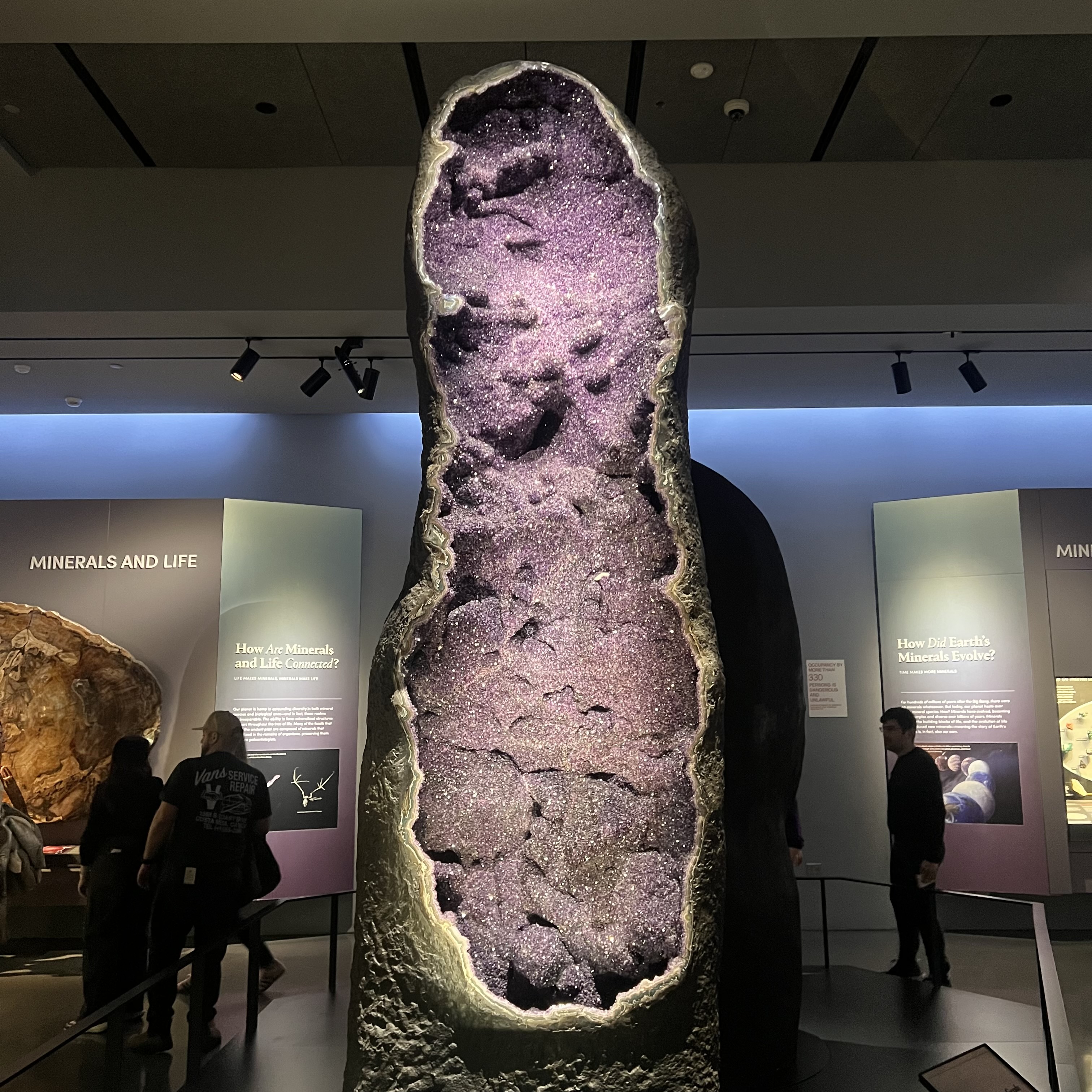
One specimen on exhibit was a giant amethyst geode. This specimen is from Uruguay, where it would have formed in cooled lava. Another specimen we saw was the Star of India, a blue star sapphire found in modern-day Sri Lanka. The hall also housed many emerald specimens, including the Patricia Emerald found in Colombia. While information on the general location of formation of all of these species was given, I do wish there was more information on the precise rare conditions needed for these specimens given in a visual form.
⭐ Space Show: Encounters in the Milky Way ⭐
The focus of this year's space show at the American Museum of Natural History was our solar system's journey through the galaxy and how it has been impacted by interactions with and the movement of other cosmic elements. The show explored the history of the Milky Way and current occurrences in the universe, such as the ongoing collision of the Sagittarius dwarf galaxy with the Milky Way (which I did not know about until this experience!), using data from the ESA's Gaia mission, a project to create a 3D map of our galaxy. While the show uses special effects and impressive visuals, the accuracy of the information presented is ensured by the museum's collaboration with scientists and curators and use of data from groups such as NASA and the ESA in the making of the space show.Final Thoughts
Museums are an essential way of providing the public access to scientific information and generating public interest in different areas of knowledge, and because of this it is important that museums accommodate people of different ages, languages, educational levels, and ability. The museum made information accessible to younger children and non-English speakers through visuals and interactive displays, such as the fossil specimens. Accessibility for those with different levels of mobility was provided by the mostly open-floor layout of the museum and access to elevators throughout the building. The museum's presentation of information in different forms and with clear, concise language is also important to increasing access to information across the wide range of groups entering the museum.