

Smithsonian Environmental Research Center (SERC)
8am-3pm, SERC
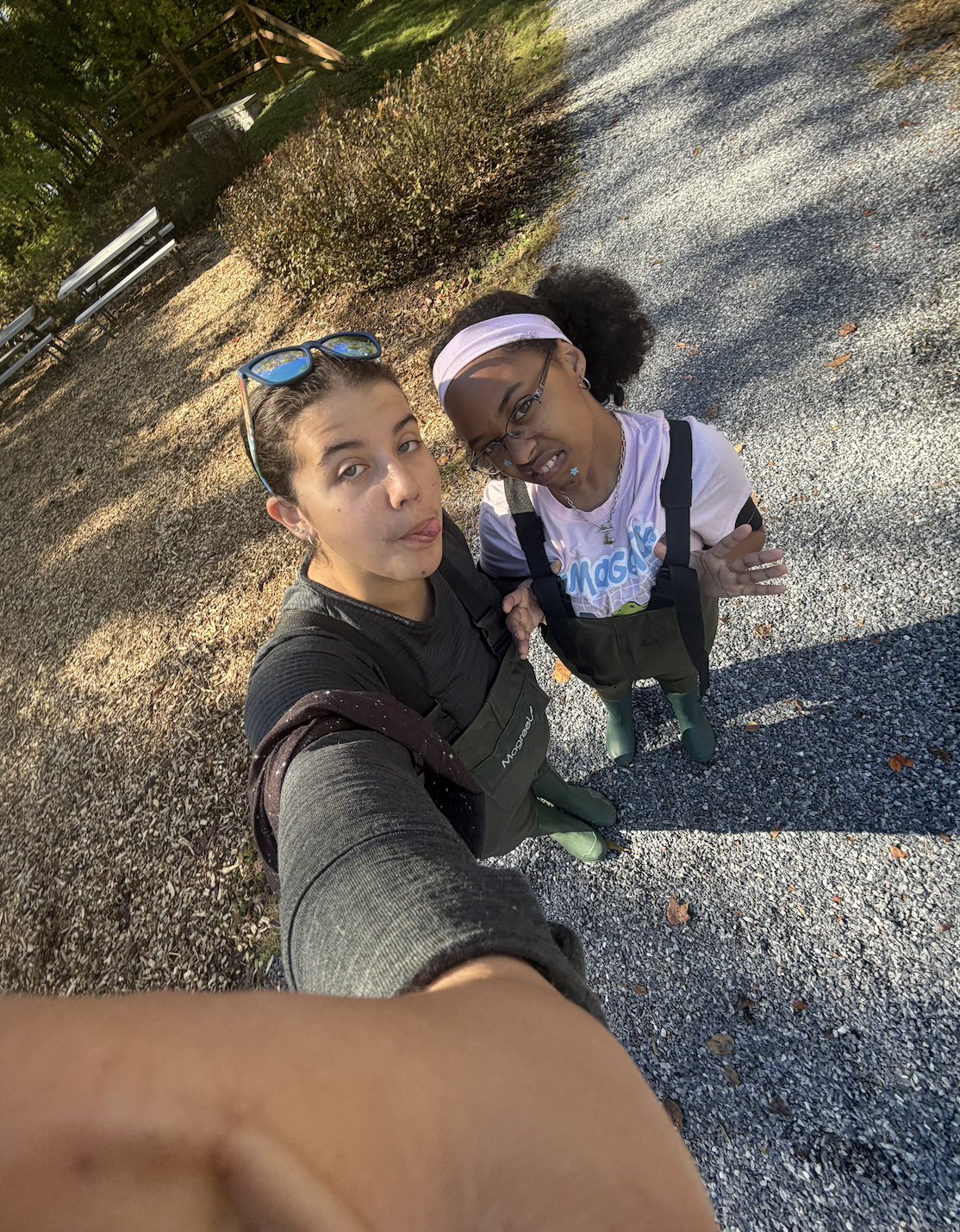
Charlotte and SGC friends at SERC.
The Smithsonian Environmental Research Center (SERC) focuses on understanding the relationship between people and the environment through scientific research. Its mission is to study environmental issues and use what scientists discover to help protect ecosystems. One example of research being done at SERC is studying nutrient pollution in the Chesapeake Bay. Scientists examine how fertilizers and runoff from farms and developed areas enter waterways and affect water quality. This research is important locally because it helps protect the Chesapeake Bay, but it can also help scientists understand and address water pollution in other parts of the world. Another example is research on forest ecosystems. Scientists study how trees and forests respond to climate change and how different species affect the health of an ecosystem. This research helps us understand how forests support wildlife, store carbon, and respond to environmental changes.
Two different habitats found at SERC are forests and wetlands. Forests are affected by human activities such as logging, farming, and development, which can remove trees and destroy habitats for wildlife. Even when forests grow back, past human activity can continue to affect the soil and the types of plants that grow there. Wetlands are also affected by human activity, especially pollution from fertilizers and runoff. Excess nutrients can cause algae growth and lower oxygen levels in the water, which can harm fish and other aquatic organisms. Climate change and rising sea levels also threaten wetlands by changing water levels and making it harder for certain plants to survive.
SERC reaches out to the community through school field trips, educational programs, volunteer opportunities, guided tours, and public events. Students can participate in hands-on activities and learn about water quality, wildlife, and local ecosystems. SERC also shares its research and discoveries through educational resources and programs for teachers and community members. I think these outreach methods are effective because they allow people to learn about the environment through actual experiences instead of just reading about it. Hands-on activities can make scientific concepts easier to understand, especially for younger students. I also think giving community members opportunities to participate in research helps them feel more connected to the environment and understand why protecting local ecosystems matters.