


National Zoo Excursion
10:00am-2:00pm, National Zoo
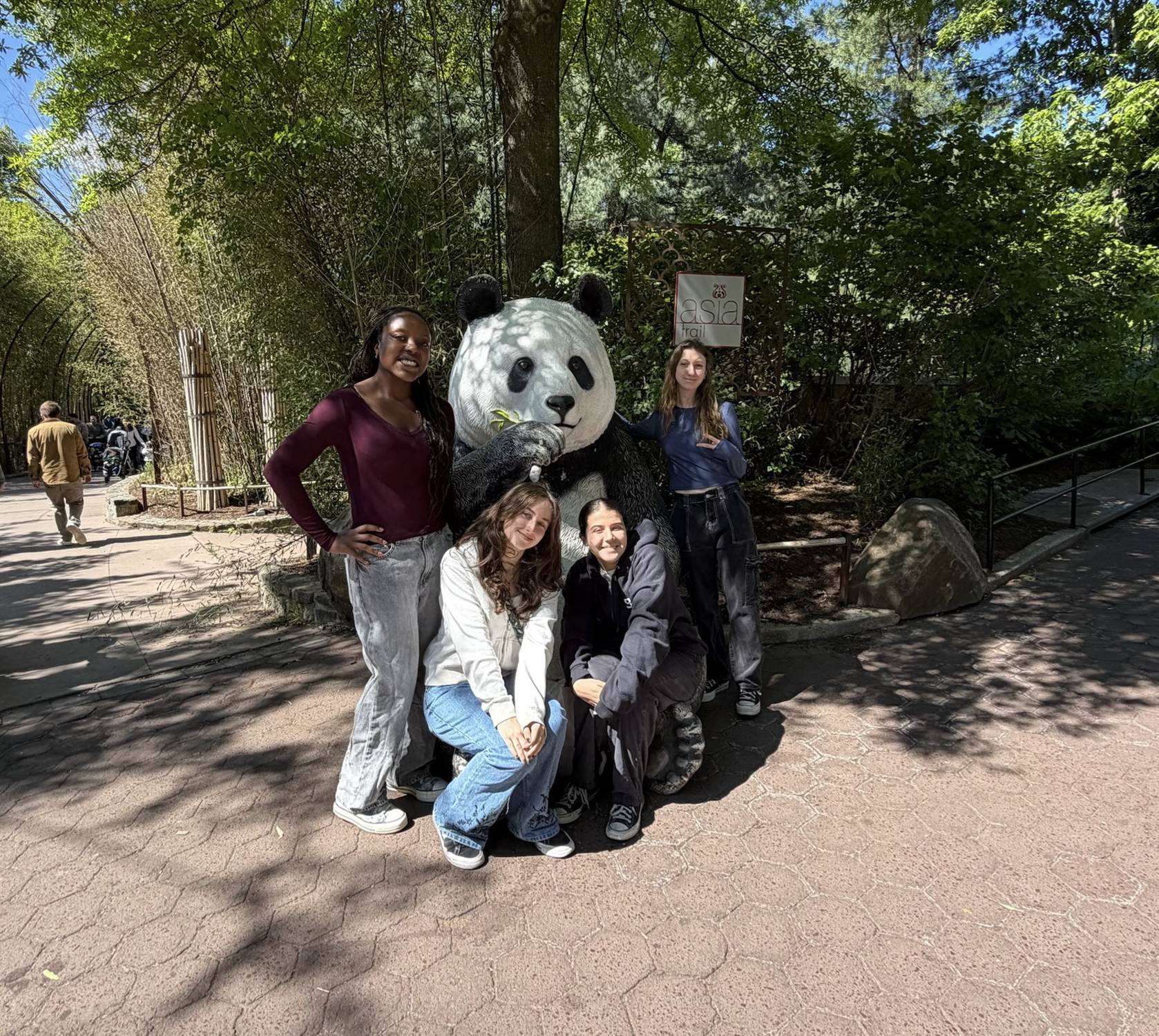
Charlotte and SGC friends at the National Zoo.
Introduction:
On May 3, 2026, I went on the SGC field trip to the Smithsonian National Zoo in Washington, DC. We met at the Connecticut Avenue entrance at 10 a.m. and spent the day exploring different animal buildings around the zoo. These buildings grouped animals by habitat or type and included both informational signs and interactive displays.
Reptile Discovery Center
In the Reptile Discovery Center, each species had information about its habitat and diet, along with where it lives. The signs helped connect each animal to its role in the ecosystem. Some species I saw included the Kimberly rock monitor, hinge-back tortoise, Fly River turtle, emperor newt, shingleback skink, Weber’s sailfin dragon, northern blue-tongued skink, and African plated lizard. There were also interactive displays, like animal skulls that showed teeth so you could figure out diet, and a light-up organ system display for reptiles. These were helpful because they made the biology easier to understand. This building seemed aimed at elementary to middle school students, but it was still interesting for older students. I noticed that a lot of people were actually stopping to look at the displays.
Amazonia (Guided Tour)
I went on the guided tour of Amazonia, which made the experience more detailed. The displays focused on rainforest habitats, including information about ecosystems and conservation. Some species included freshwater stingrays, electric eels, arapaimas, sideneck turtles, and the Panamanian golden frog. There were a lot of interactive features here, like an electric eel model that vibrated when touched and a display showing how temperature affects amphibians’ risk of chytrid fungus. These were really engaging and helped connect the science to real-world issues. This exhibit worked for all ages, and a lot of people were actually using the interactive elements.
Bird House
In the Bird House, each species' display included habitat, diet, and migration information. It focused a lot on different bird environments. Some species I saw were buffleheads, Baltimore orioles, magnolia warblers, and even a horseshoe crab. There were interactive features like bird call buttons, flip books, and a model showing the underside of a horseshoe crab. These made the exhibit more hands-on and interesting. This building seemed aimed at elementary and up, and I saw a lot of families reading the signs and interacting with the displays together.
Education Beyond Signage
The zoo uses more than just signs to teach people. One example is the interactive exhibits, like the electric eel model and bird sound buttons, which make learning more engaging. Another example is tours, like I saw one walking through the otter and sea lion area with families. I think that having someone explain things and answer questions makes it easier to understand the bigger picture, especially about conservation.
Animal Mental and Emotional Welfare
The zoo also showed clear effort toward improving animal welfare. One example was the sea lion enclosure, where kelp and rocks were added to make the space more interesting and natural. Another example was how most exhibits tried to replicate natural habitats using plants, water conditions, and even grouping compatible species. This helps animals behave more naturally and makes the environment less stressful.