
Climate Art Workshop
6:00pm-8:00pm, Cambridge Community Center
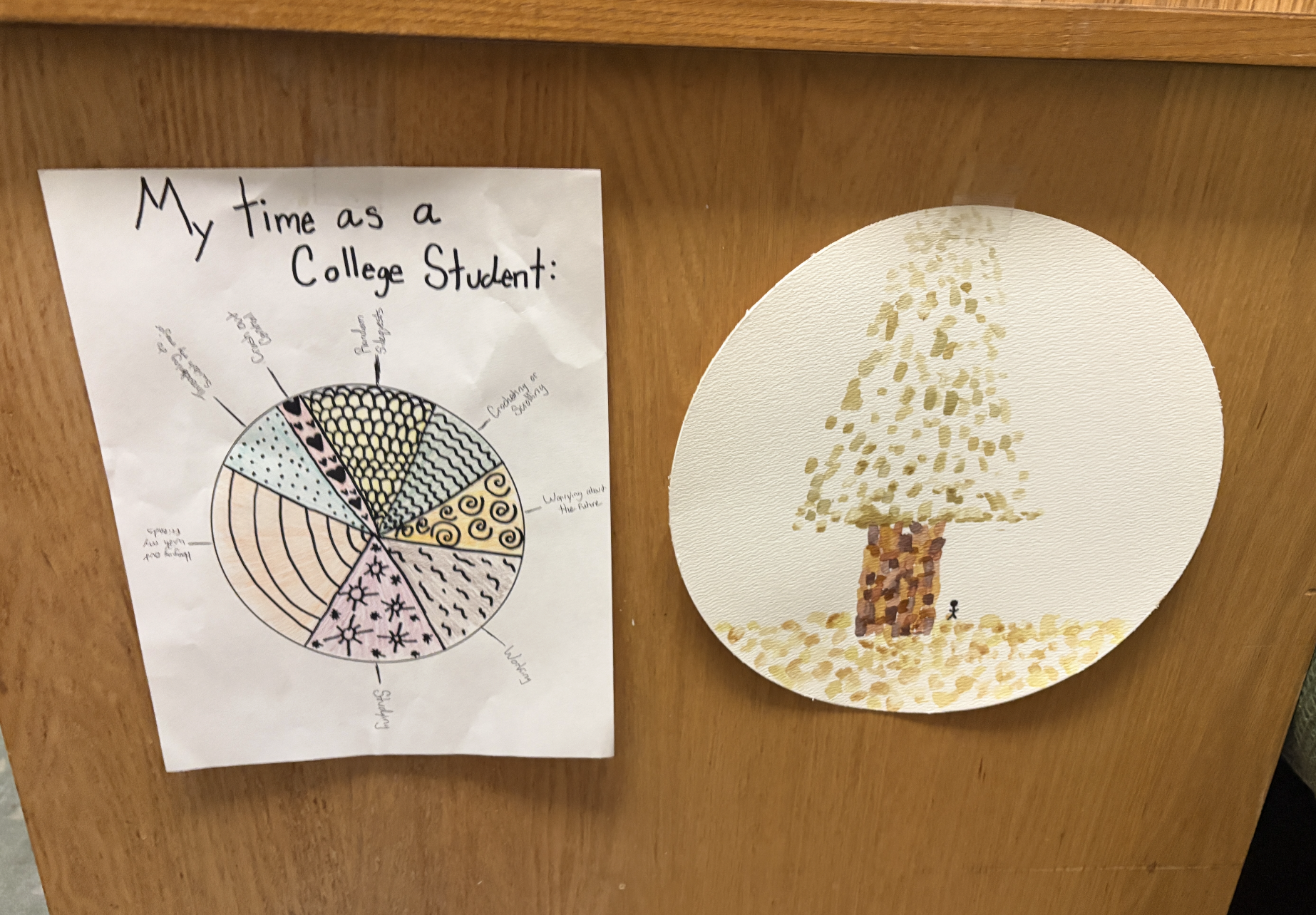
Artwork created by Charlotte at the 2025 Climate Art Workshop.
The Climate Art Workshop showed us how creative expression can be used to communicate climate issues and process emotions around environmental change. The presenters from the Office of Sustainability explained their role on campus, including some projects that reduce waste and help students get involved in sustainability work. Throughout their presentation, they focused on the idea that art can communicate climate information in ways that scientific language sometimes can’t. Instead of only using data or graphs, art can reach people emotionally and make climate issues more relatable. We looked at different types of climate-focused art to see how each one tells a story. The presenters emphasized that you don’t need to be a skilled artist to make climate art. At the end, we made our own small art pieces based on the feelings or experiences we have with climate change. Hearing about the Office of Sustainability’s projects on campus also strengthened their argument. It showed that this workshop wasn’t just theoretical. UMD is already doing real sustainability work, and climate art is another tool that can support that mission by getting more students involved and aware. Overall, the workshop highlighted art as a tool for both communication and personal reflection.
I did find the main points convincing, especially because they connected to my own experiences studying environmental science and working with the Anacostia Watershed Society. I already know that climate issues involve a lot of emotion, and the workshop made it clear that art gives people a way to express those feelings when words or data fall short. Not everyone responds to scientific information, but most people can connect with an image, so it made sense that art could reach different audiences. One idea I especially agreed with was that art helps people process their emotions about climate change. That felt true to me. Volunteering along the Anacostia, I’ve seen both the beauty of the river and the damage from pollution. Sometimes it’s hard to express how that feels. The workshop showed me that art can help translate those emotions into something meaningful instead of letting them build up.