

Our trip was part of a Scholars event called "Scholars in Philadelphia," organized and led by Dr. Marilee Lindemann, the executive director of the Scholars Program. The event was open to all Scholars students, not just those in the Science and Global Change program, which made the group a mix of different living-learning communities. On Saturday, October 18, we traveled from campus to Philadelphia for a full-day experience running from 8:00 a.m. to 10:00 p.m., including travel time. The main part of the day took place in the historic Old City (old town) area of Philadelphia, where we went on a guided walking tour focused on sites connected to the founding of the United States.
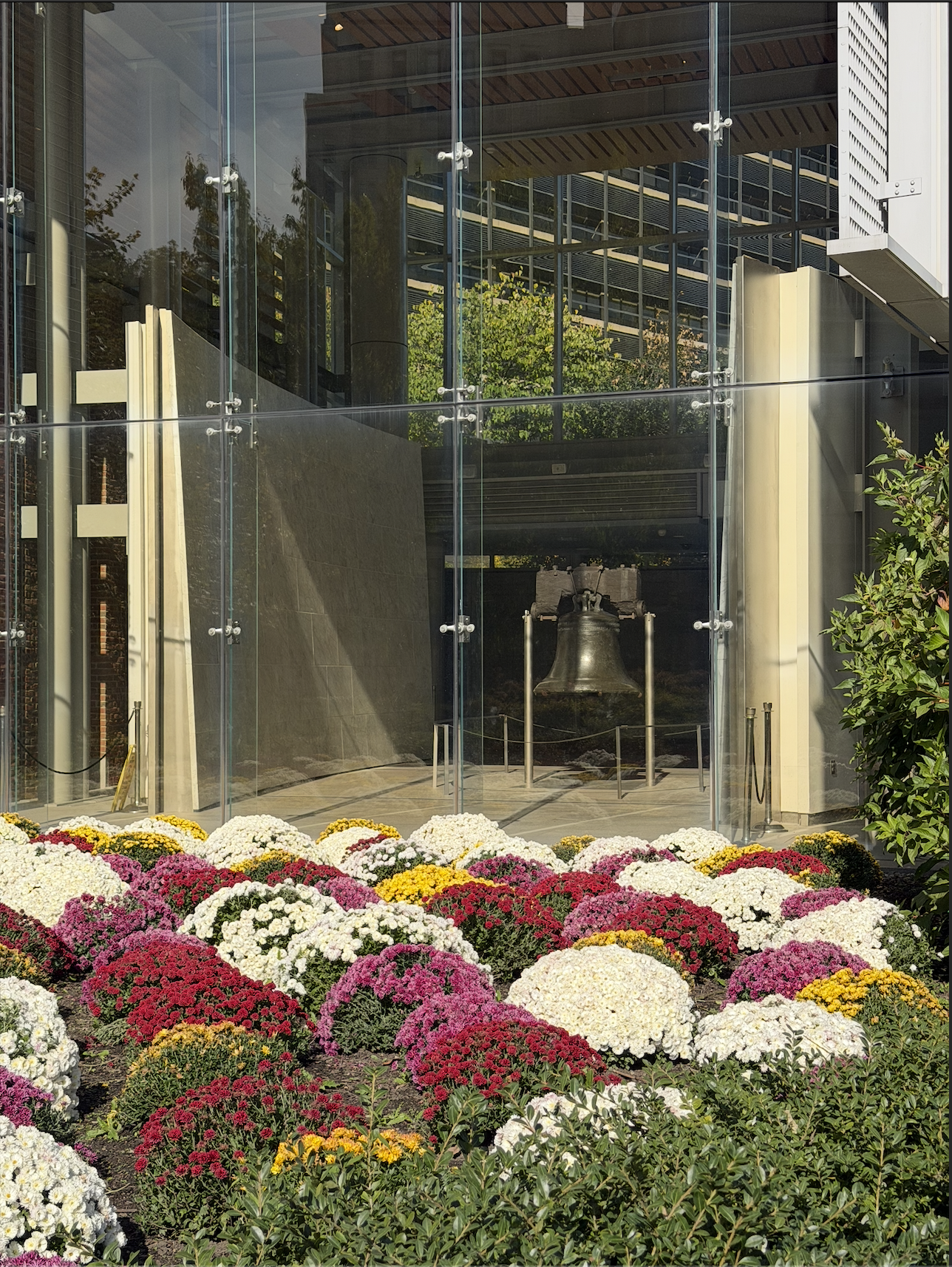
When we got to Old City, we met our guide and started the walking tour near Independence Mall. The Liberty Bell Center was the first big stop. There, we learned about the bell's original use in the Pennsylvania State House and how it later became a symbol of independence and protest. The guide said that the Liberty Bell's famous crack has helped make it a symbol of freedom and protest. The Constitution doesn't say anything about the Liberty Bell itself, but the bell was used to talk about how symbols can shape how people think about rights and what "liberty" means in the United States.
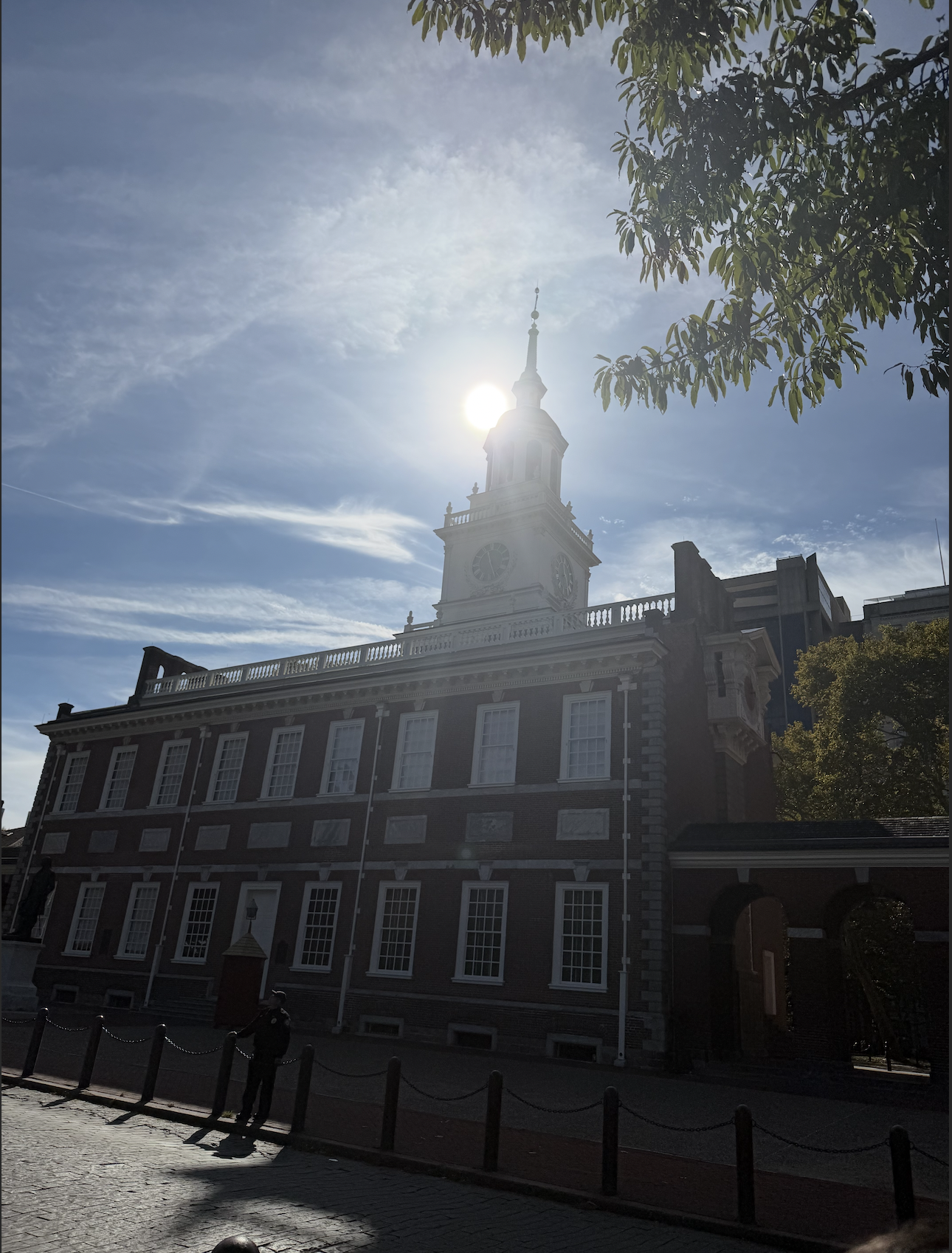
The tour then went to Independence Hall, which was a main attraction of the visit. Instead of just pointing out that this was the meeting place for the Constitutional Convention, the guide talked about some of the arguments that happened inside, like how Congress should be made up and how power should be shared between the national government and the states. It was said that the delegates were trying to make the central government stronger while still avoiding anything that felt like a king. The Constitution was described as a compromise, with each side getting some of what they wanted.
As the group kept moving through Old City, the Constitution was talked about in simpler, broader terms. Instead of going line by line through the document, the guide focused on how it sets up the main branches of the federal government and divides power between them. Questions about rights, equality, and who counts as part of "the people" were mostly just touched on, not fully unpacked. Because of that, the Constitution was presented more as a starting point that later generations have argued over, added to, and reinterpreted, rather than something that settled every issue back in 1787.
A few other historic buildings were pointed out along the way. The group walked past the Second Bank of the United States and heard a brief explanation of how early leaders tried to manage the country's money. We did not stay at Carpenters' Hall for long, but it was mentioned as another important meeting place from the Revolutionary era. The President's House site was also pointed out as the home and workplace of presidents like George Washington when slavery was still legal. These quick stops linked the big ideas of the Constitution to real places where people were making decisions about government and everyday life.
The main points of the Philadelphia walking tour were that the Constitution was made as a compromise, that it was meant to keep power in check between different levels and branches of government, and that it has had an effect on American politics ever since. The guide talked about arguments over how Congress should be set up and how power should be shared between the states and the national government at places like Independence Hall. The Liberty Bell and the buildings around it were used to show how ideas about "liberty" and "rights" were linked to real people and places in Old City. In general, the tour showed that the Constitution was carefully written to keep the country together while also stopping another monarchy.
I found a lot of these points convincing, especially the idea of the Constitution as a compromise. From classes and readings, it is clear that delegates from large and small states had very different interests, which explains why we ended up with a House based on population and a Senate with equal representation. The tour's focus on balancing power between the states and the federal government also lined up with what I already knew about federalism. The guide's explanation of why people feared a strong central authority made sense, especially so soon after breaking away from Britain. In that way, the tour supported and reinforced what I have learned before.
At the same time, some parts of the big picture felt incomplete. The tour mentioned conflict and compromise, but issues like slavery, Indigenous land, and the lack of rights for women and non-white people were only lightly touched on, if at all. From other sources, it is known that the Constitution originally protected slavery in several indirect ways and did not give basic political rights to most people living in the country. Because of that, the story of the Constitution as a mostly successful solution can feel a bit too positive. The document was presented as if it mainly had to solve disagreements among white male elites, while the impact on everyone else was not really discussed in depth.
In terms of critical thinking, there were not obvious logical fallacies, but there was some oversimplification. The tour sometimes slid into a "great men and great documents" narrative, where a small group of wise leaders came together, argued, and then produced a system that mostly worked. That version of the story leaves out how much pressure, protest, and struggle came later from people who were not in the room in 1787. The Constitution was sometimes talked about as if its later "successes" were built in from the start, which can be a kind of hindsight bias. It made the founding period look more neat and intentional than it actually was.
Even with those limits, the tour still helped make the Constitution feel more real and grounded. Seeing Independence Hall, the President's House site, and the surrounding buildings made it easier to picture how these debates were connected to daily life and real power.