


Event name:
CPSG101 Science & Global Change Colloquium Excursion: National Zoological Garden
Event time and place:
May 3, 2026, at the National Zoological Garden in Washington, DC.
For my CPSG101 Science & Global Change Colloquium field trip, I visited the National Zoological Garden in Washington, DC, on May 3, 2026. During this trip I visited a number of zoo buildings and observed how the exhibits provided information about animals, ecosystems, conservation and animal welfare.
Small Mammal House
I went to the Small Mammal House for my first building, which featured smaller mammals from various regions and habitats. Species displays usually included the common and scientific names of the animal, its range, habitat, diet, and a short description of an interesting behavior or adaptation. Among the animals I saw were the brush-tailed bettong, prehensile-tailed porcupine, screaming hairy armadillo and fennec fox. The plaques were simple but still contained useful scientific information. For example, the screaming hairy armadillo demonstrated that it does not roll into a ball for protection. Instead, when threatened, it screams to distract predators and buy time to flee. The display on the brush-tailed bettong also connected the species to conservation by explaining how introduced cats and predators have decimated its population.
In addition to the basic plaques, the Small Mammal House had other exhibits. One wall display, titled "Mammal Moves," used illustrations and X-ray-style images to demonstrate how small mammals move, including hanging, running, digging, and paddling. The information was clear and visually attractive but not overly technical, therefore the building seemed to be designed for a general audience, especially families and students. Most of the non-SGC visitors seemed more interested in locating the animals in the exhibits. Many people just glanced at the plaques and did not stop to read them.
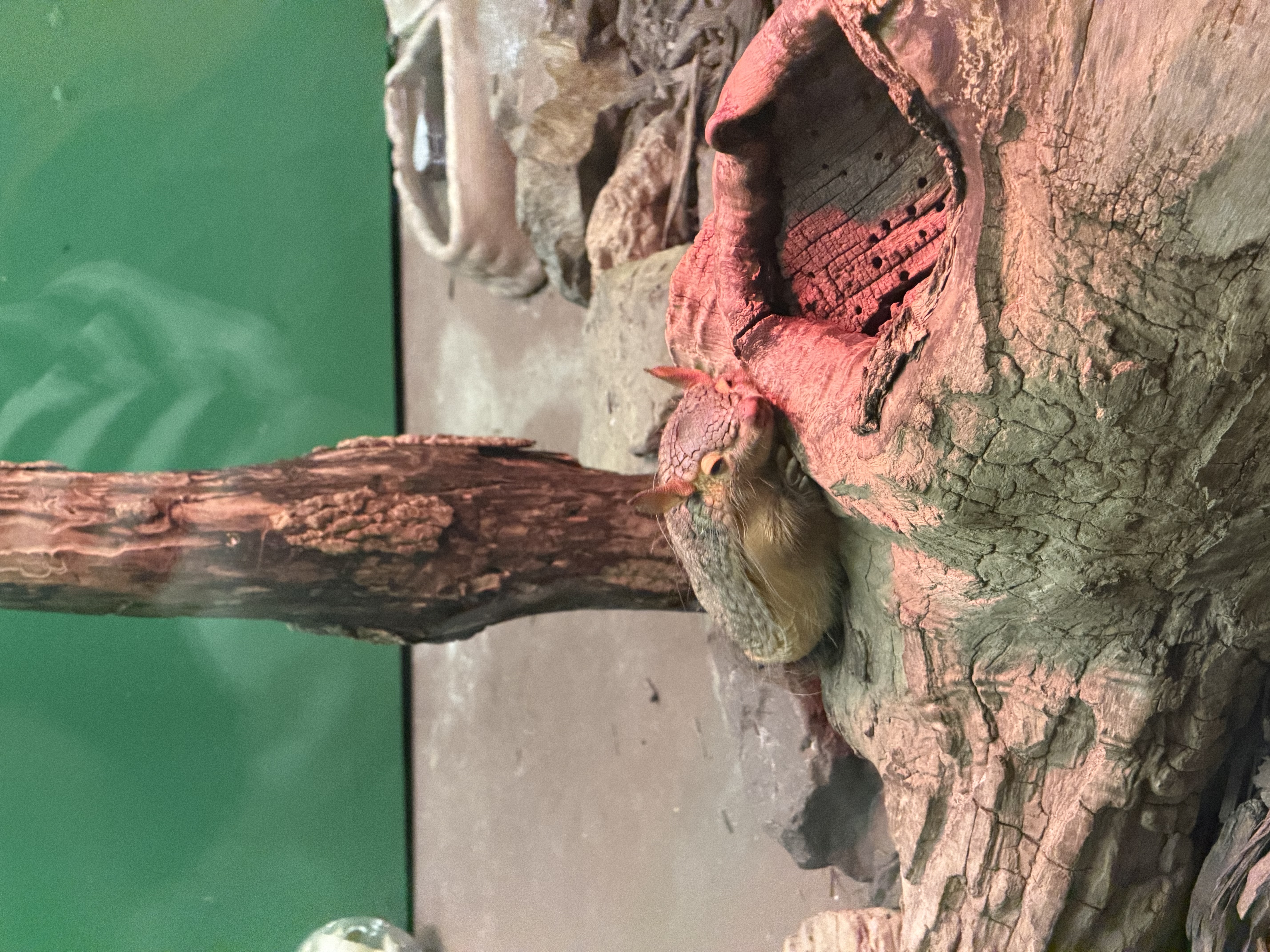
Screaming hairy armadillo display in the Small Mammal House. |
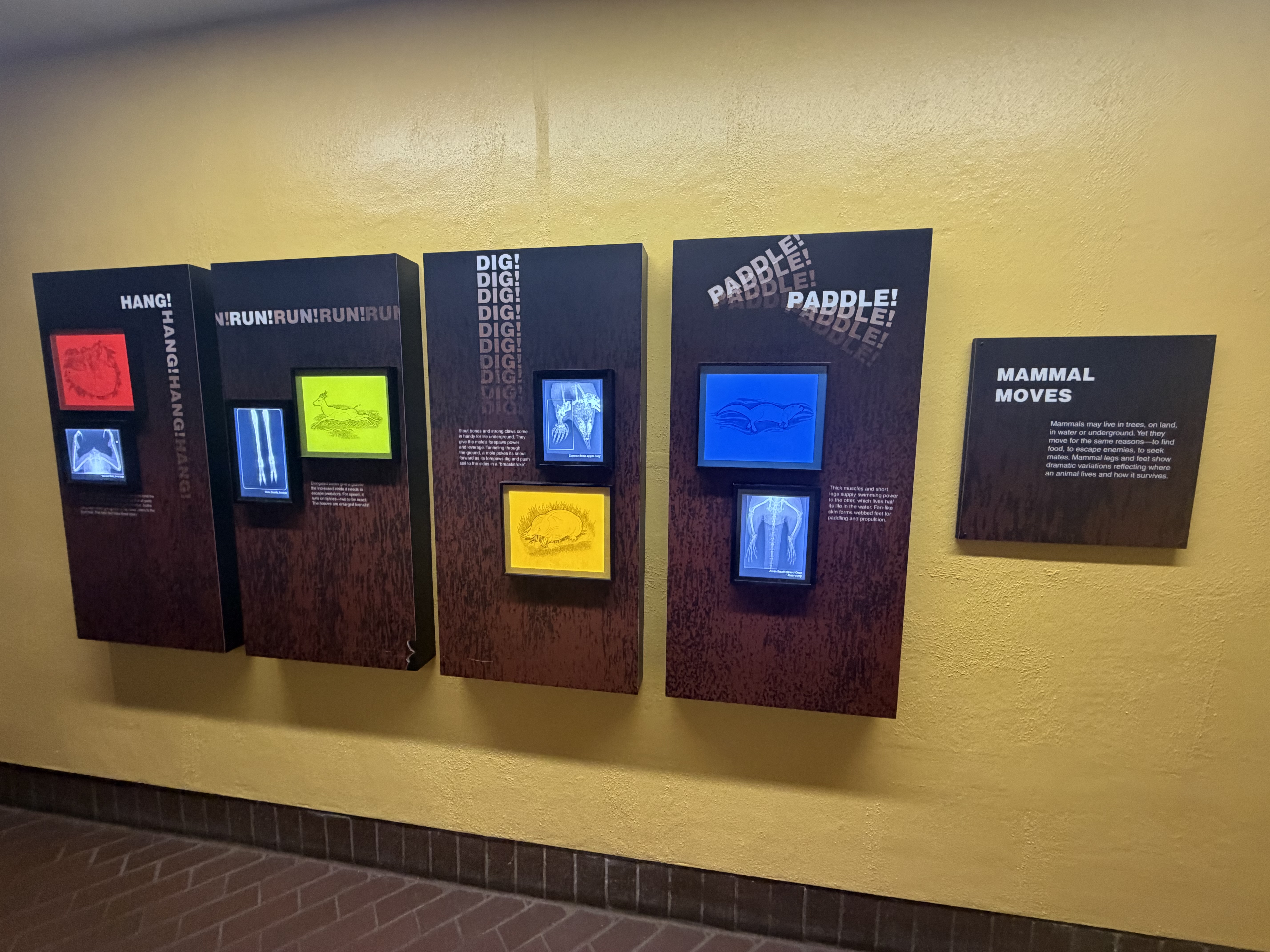
"Mammal Moves" display showing how small mammals move. |
Reptile Discovery Center
For my second building, I went to the Reptile Discovery Center, which focused on reptiles and amphibians from various environments. Usually, the species displays include the animal's common name, scientific name, range, habitat and sometimes behavior, body structure or conservation status. The exhibit featured Weber's sailfin dragon, Timor python, Panamanian golden frog, boa, Gila monster, Grand Cayman iguana, yellow-spotted Amazon river turtle, snake-necked turtle, and Aldabra tortoise. Some of the plaques connected physical traits to survival, such as the ability of Weber's sailfin dragon to run on its hind legs while still underwater.
Besides the plaques, the building also had a variety of displays. One display included a Burmese python skull with the jaw opened and closed to demonstrate how snakes consume prey too large to swallow. Another exhibit was of the insides of human and reptile bodies. The visuals assisted in understanding the information. The building appeared to be aimed at a broad audience, particularly families and students. Similar to the Small Mammal House, most non-SGC visitors were more interested in looking for the animals than reading the plaques. The most attention of people was attracted by the reptiles that were large or in motion.
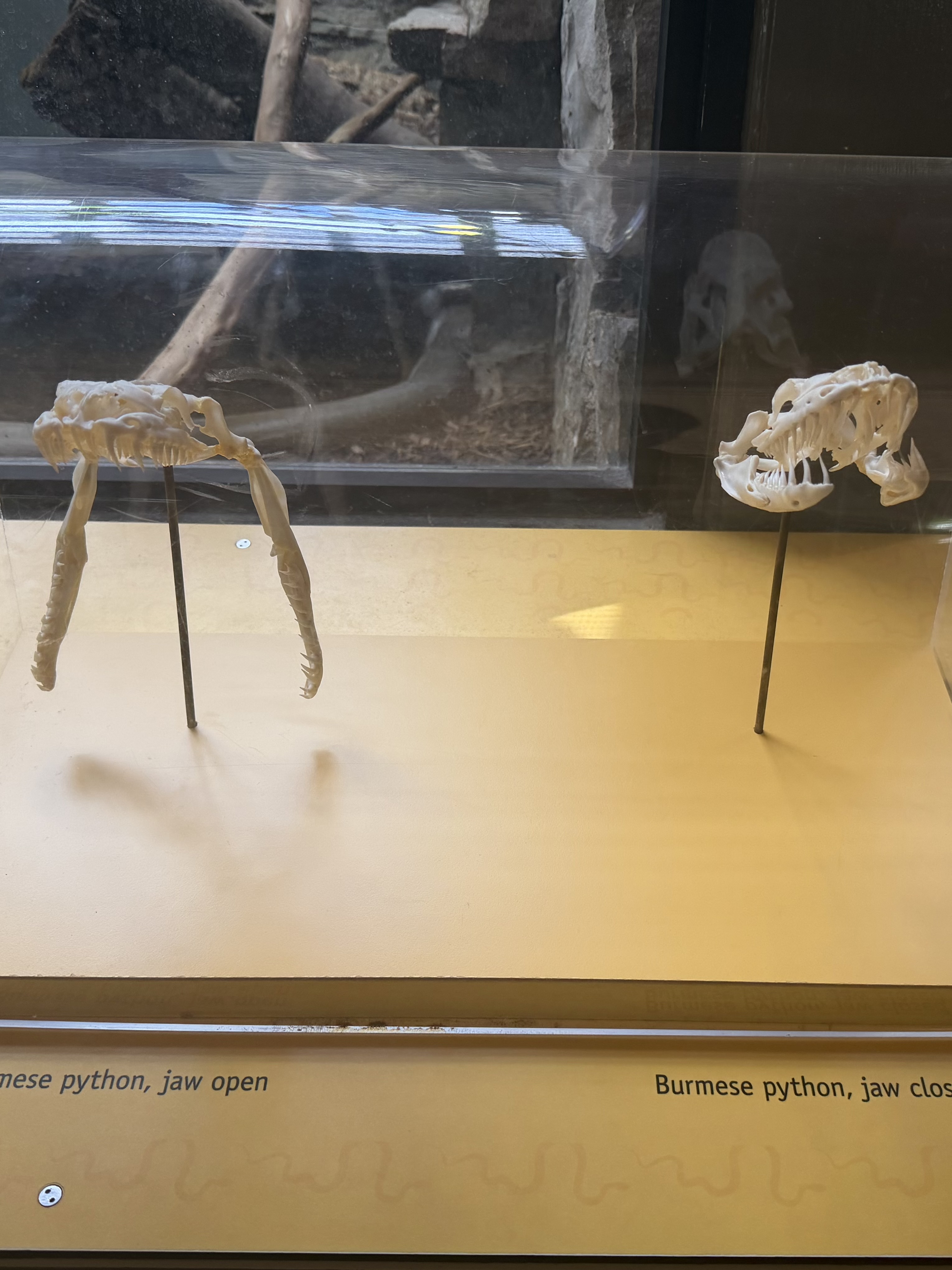
Burmese python skull display showing the jaw open and closed.
|
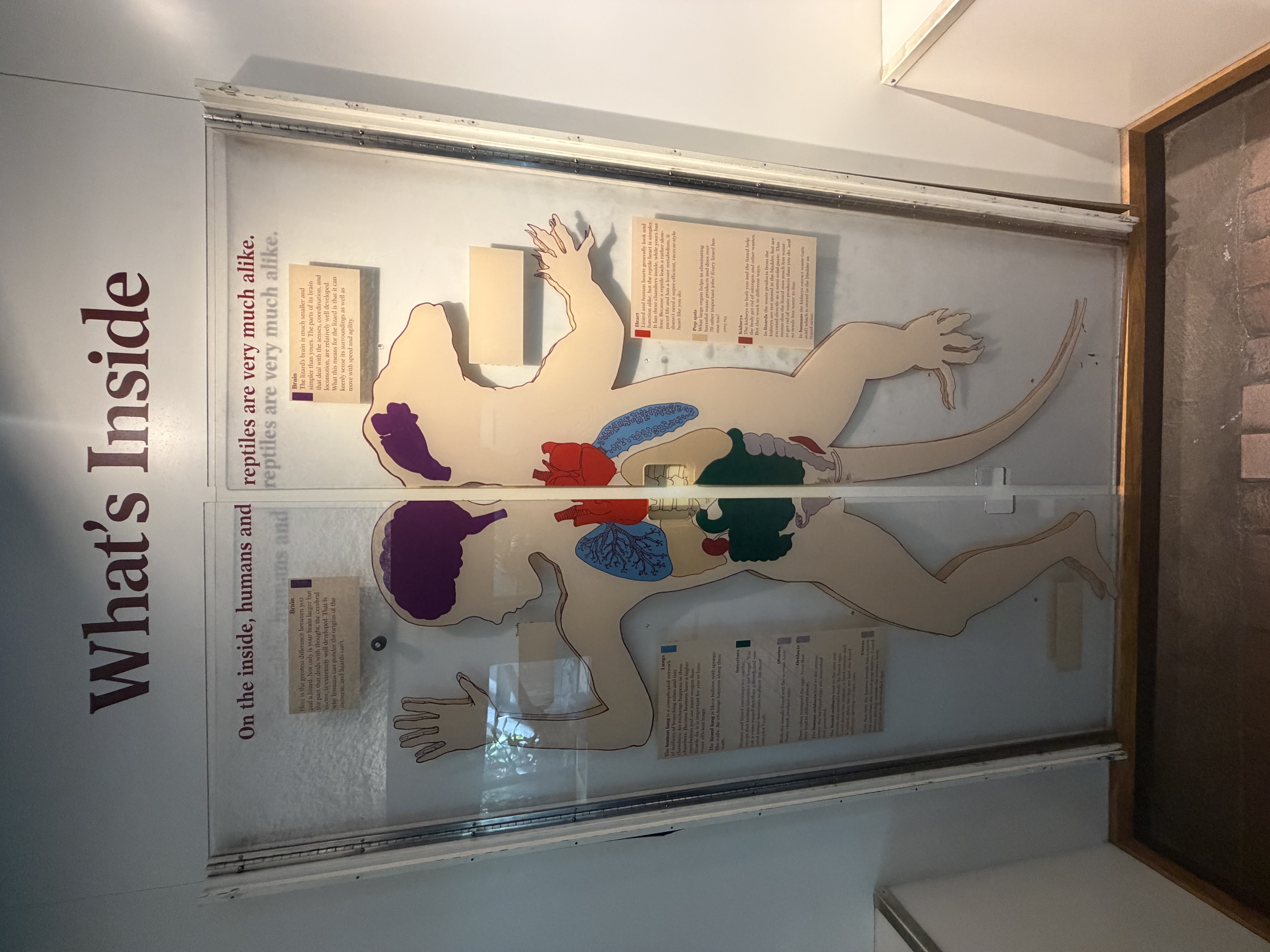
Display comparing the inside of humans and reptiles.
|
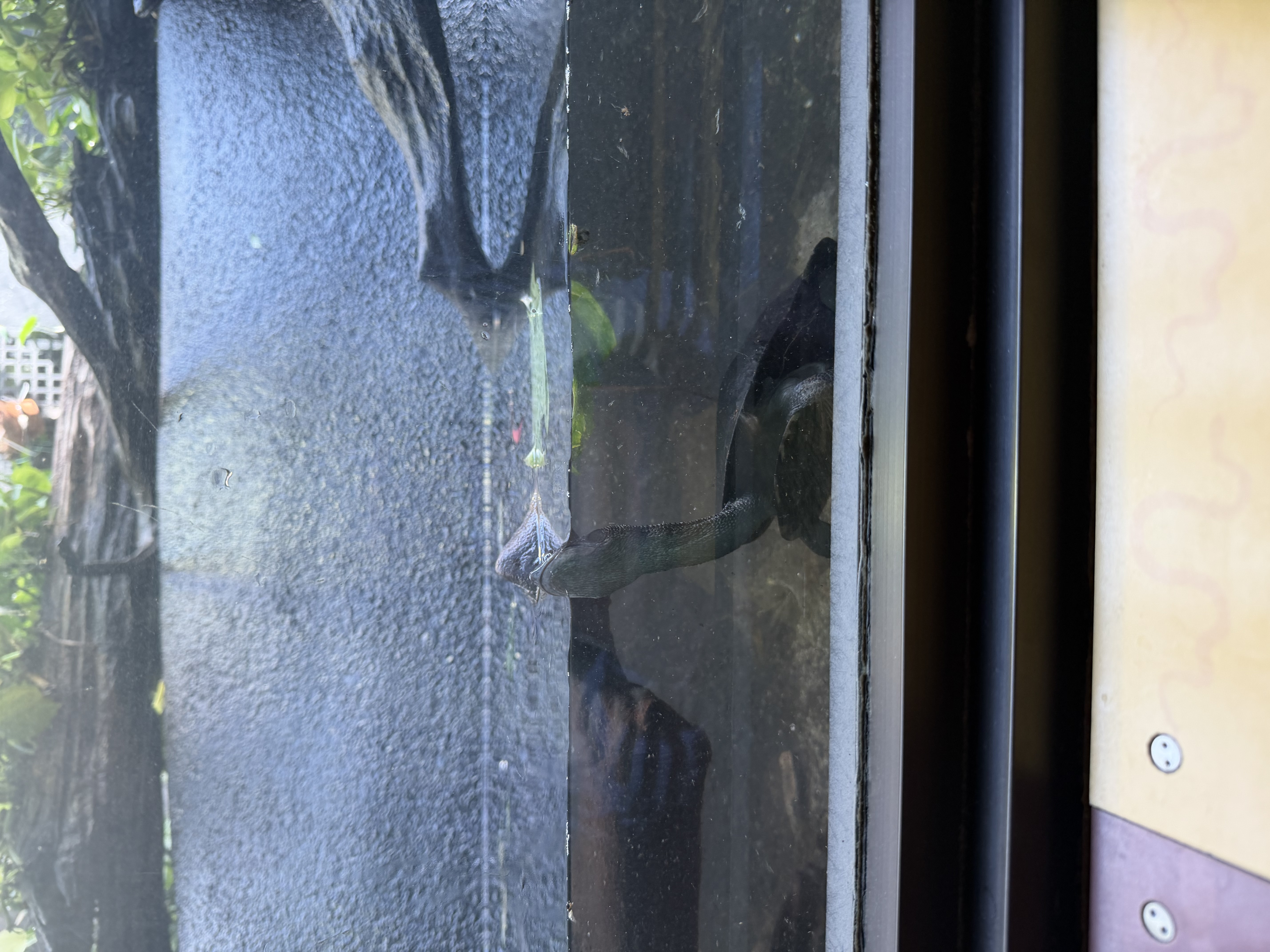
Snake-necked turtle extending its long neck near the water surface.
|
Amazonia
For my third building I went to Amazonia, which was about animals and ecosystems that had to do with the Amazon. Species descriptions usually list the common name, scientific name, and a short description of the animal's characteristics or behavior. I saw guinea pigs, freshwater angelfish, red piranhas and matamatas. The red piranha display showed that color patterns and sizes are different from place to place and with age. The guinea pig display also had information on their diet, reproduction and natural habitats.
One exhibit had a large model of a dolphin. This helped connect the aquarium area with larger Amazon animals and showed that the Amazon ecosystem includes more than just fish and small animals. Another exhibit allowed visitors to touch a fake replica of a coral skeleton and explained how ocean acidification impacts corals, making it more difficult for them to build strong skeletons. The building also had an open area where animals could roam around and visitors could see different plants up close. It helped the space feel more like a living environment and not just a typical indoor exhibit. Once again, all the information inside the building was visual and easy to understand, so it seemed like it was aimed at a general audience. Most of the non-SGC visitors seemed more interested in observing the animals than reading every item on display, though the bigger displays and open habitat areas attracted the most attention.
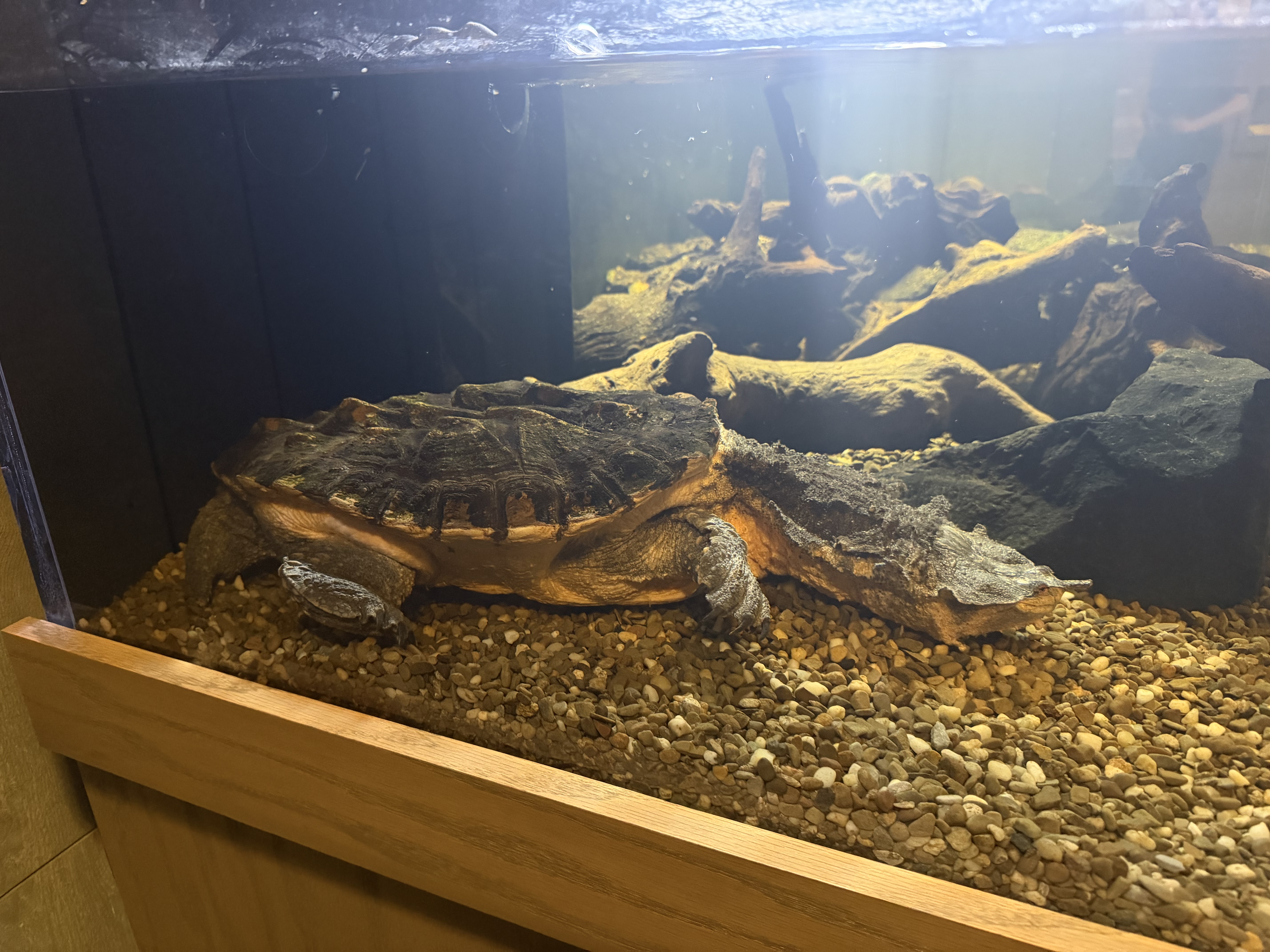
Matamata display. |
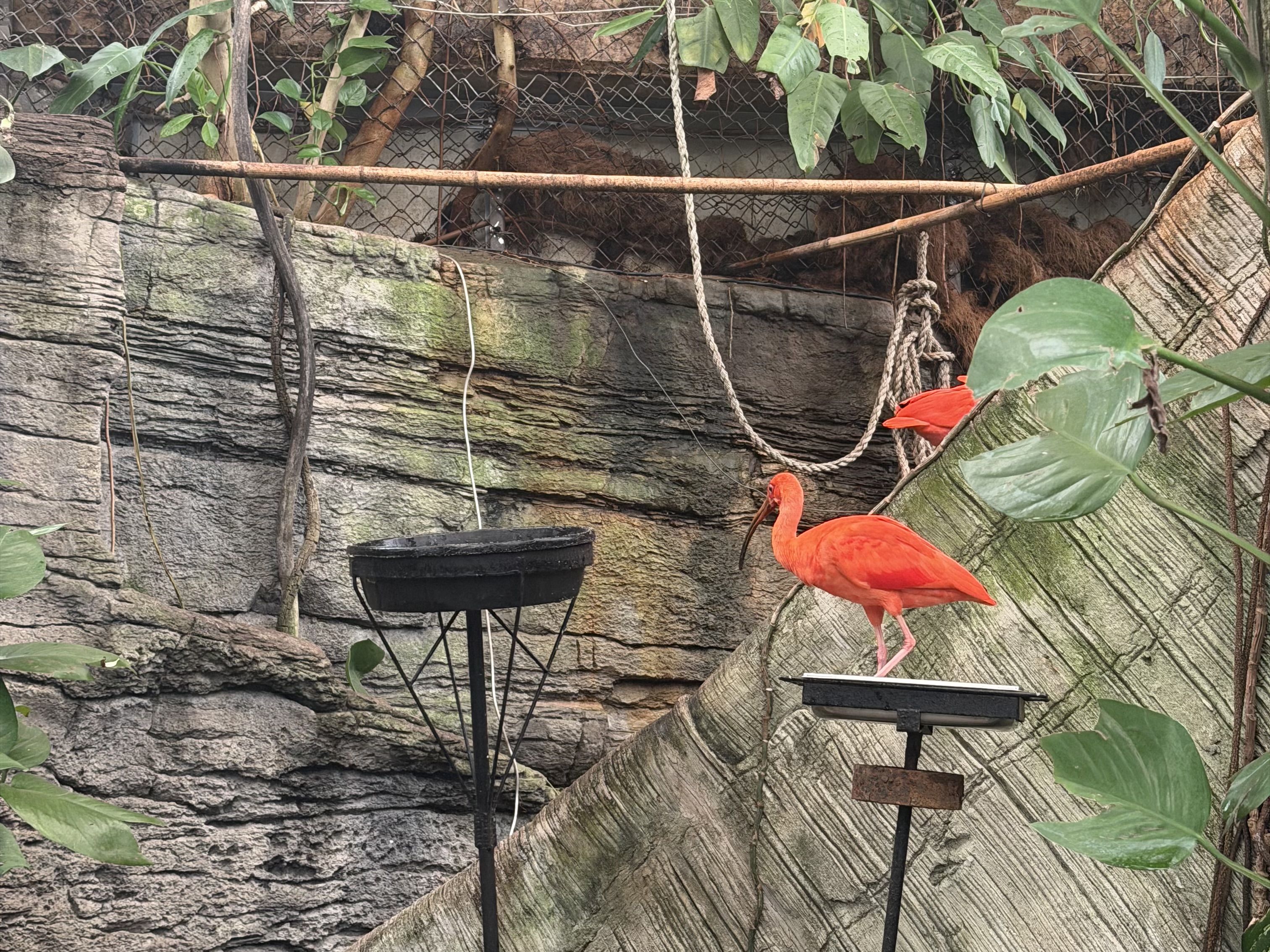
Scarlet ibis in Amazonia's habitat-style exhibit |
Education
Zoos help visitors learn beyond plaques. One example was the large video screen in Amazonia, which gave movement and sound to the exhibit. I don't remember what the video was about, but it seemed useful because it gave visitors an alternative way of learning other than reading text. It also was more visually striking, potentially catching the eye of passers-through the building.
Another example is the big beetle artwork from Amazonia. The outline was a Grant's stag beetle from Chile, but it was made from a lot of smaller beetles. Visitors could then better appreciate the beetle's actual size and the display became more memorable. Other displays, such as the coral skeleton touch display and the X-ray style “Mammal Moves” wall in the Small Mammal House, helped give a more visual understanding of animal structures and ecosystems. These examples helped make the information more understandable as visitors could see or interact with the material as opposed to just reading it.
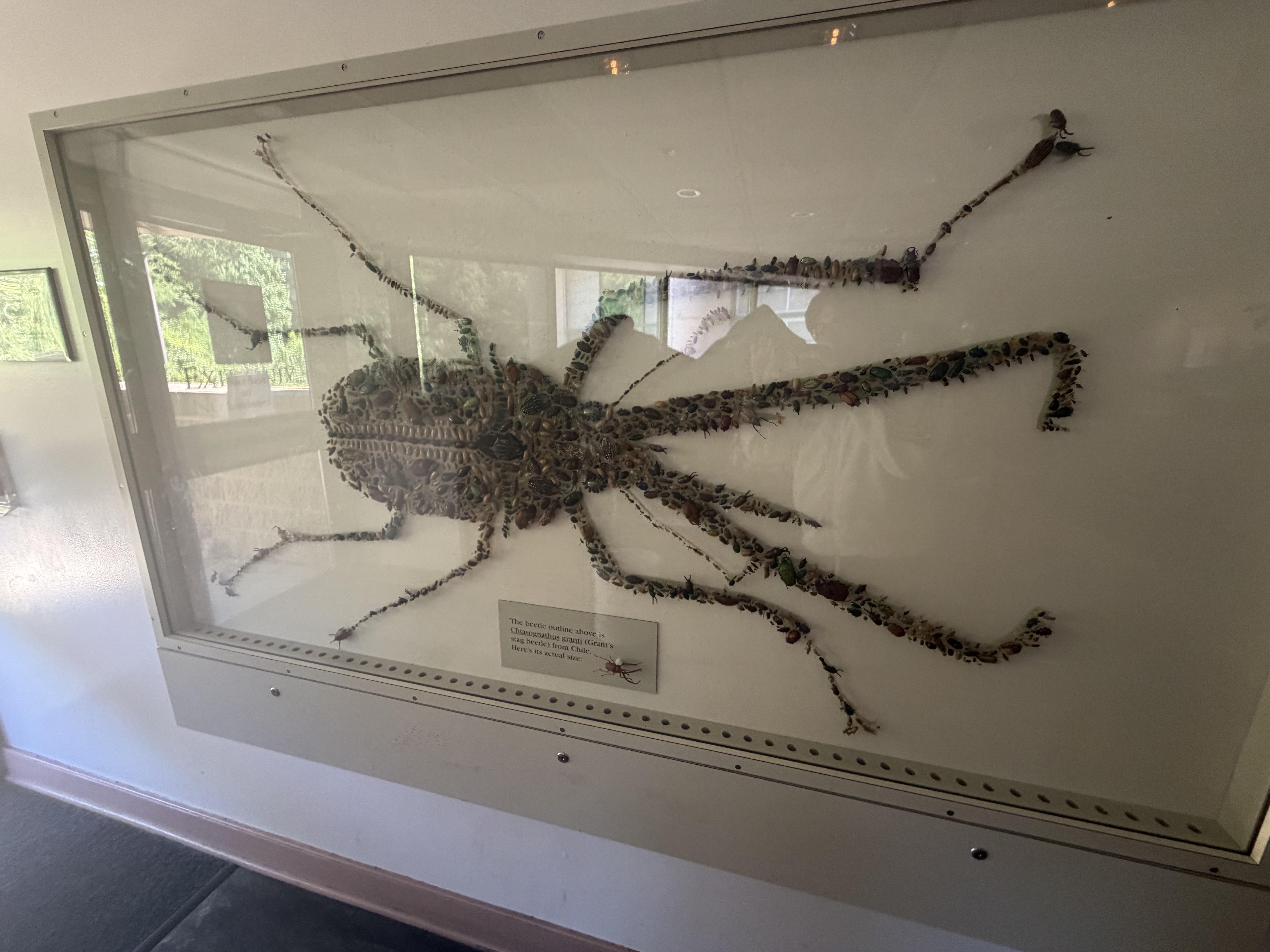
Large beetle artwork made from many smaller beetles in Amazonia.
Animal Mental and Emotional Welfare
For the mental and emotional well-being of animals, I noticed that some exhibits were designed to resemble natural habitats rather than plain cages. One example was the Moonlight Exhibit in the Small Mammal House. It used a reverse light cycle, so the exhibit appeared dim during the day. This allowed visitors to see nocturnal animals while also providing the animals with an environment that corresponded to when they are typically active.
Another example was the way many enclosures were designed to look like the animals' natural environments. The exhibits included rocks, branches, plants, hiding spaces, and different ground textures instead of empty cages. In Amazonia, some animals were also able to roam freely in certain areas, which made the building feel more like a habitat than a display case. These features seemed important because they gave animals more space and stimulation. Furthermore, on my way to Amazonia I stumbled upon a donation box for Asian elephants. It made clear that the zoo supports conservation programs aside from the exhibits, including efforts to track wild elephants and reduce conflict between elephants and people.
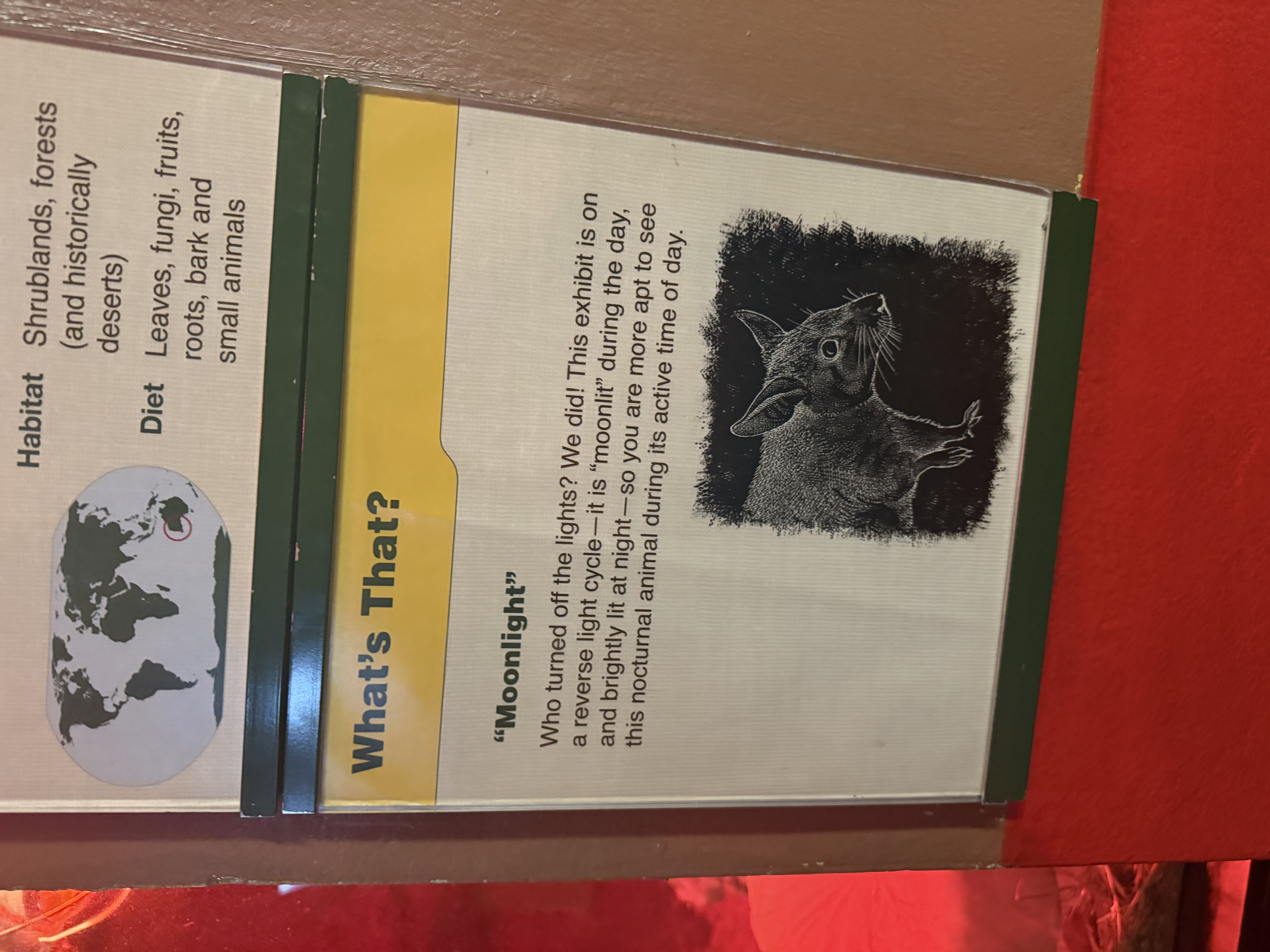
Moonlight exhibit using a reverse light cycle for nocturnal animals. |
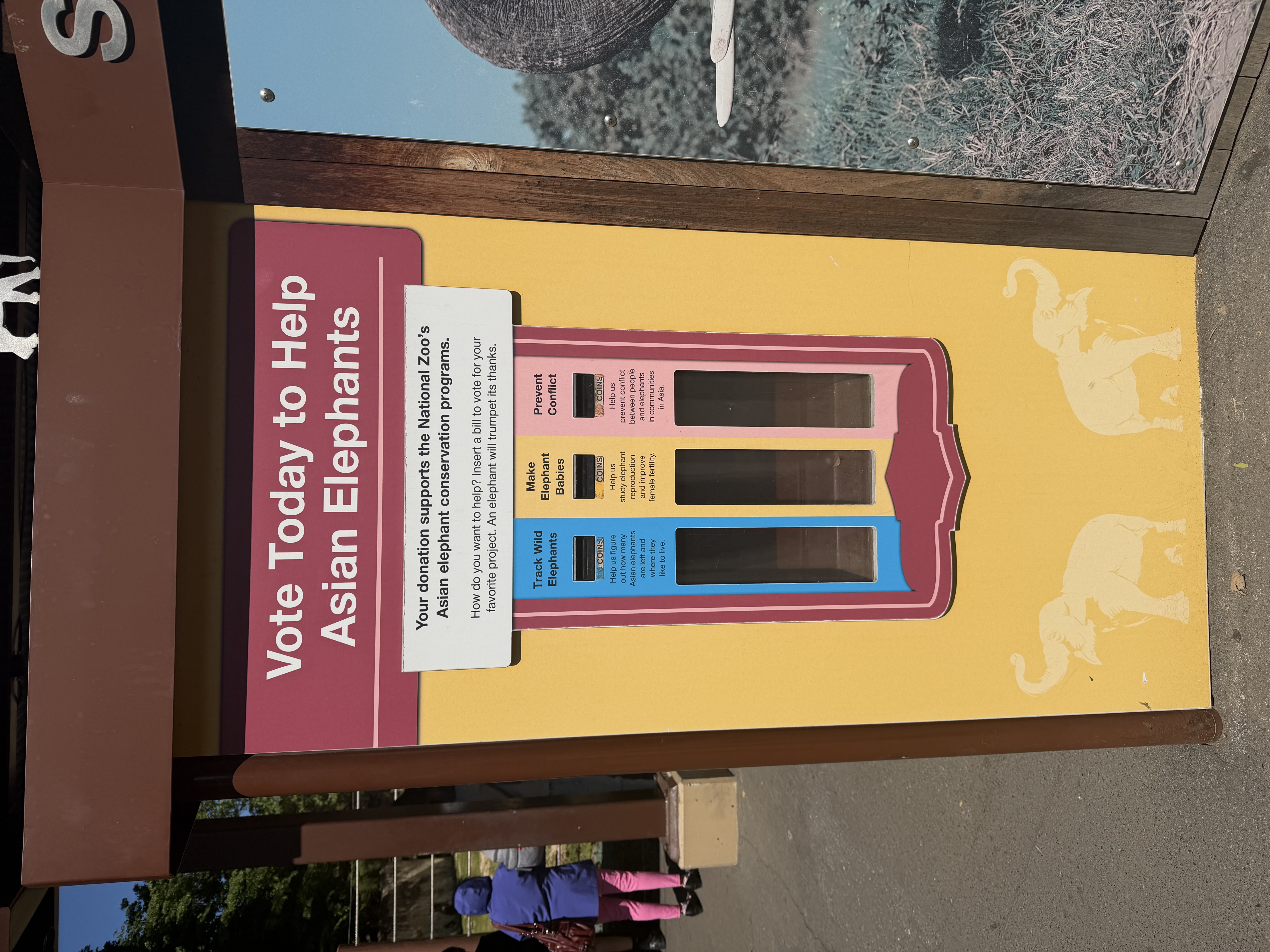
Elephant donation box. |