


Horn Point Lab and Underground Underwater
The Eastern Shores: 8:00 AM - 8:00 PM: 4/18/2026
I went on an excursion to the Horn Point Laboratory on the Chesapeake Bay's Choptank River. One of the main projects of the laboratory is to restore the oyster population in the Chesapeake, as they are a keystone species for the bay that filters the water and supports the biodiversity of the bay. The oyster population has been in significant decline in recent years, mainly due to overharvesting from people. At the laboratory, they monitor oyster population metrics for the different areas of the bay, and have produced tons of new baby oysters to repopulate the bay. They have already successfully repopulated and restored 5 of the bay’s tributaries to similar levels as to what they were at before they were harvested. Another project at the laboratory is measuring and improving hurricane forecasts. Horn Point sends autonomous gliders into the water that measure water temperature (which can indicate if a hurricane is forming and its intensity) and relay the data back as conditions change, making the data extremely reliable. Another major project that Horn Point has undertaken is the restoration of marshes and wetlands. Many coastal habitats such as marshes and wetlands have degraded due to sea level rise. The laboratory does research on impacted areas and uses living shorelines to help protect the marshes and other coastal areas in a sustainable manner.
The Horn Point laboratory uses various clever strategies to inform people about what they do and why they do it. For example, the scholars trip I went on (along with other open houses that they host) is one way that they inform people about the work they do at the laboratory. People interested in their work will go to the laboratory, listen to presenters talk about the Chesapeake, and hopefully talk about what they have learned to others. For example, after I went on the trip, my parents and friends wanted to know what I did on the trip, so I explained what the Horn Point lab is and what they do there. The laboratory is very open about all of the work that it does, and it encourages people to come and learn about their work. They make the information very digestible for a casual audience, and overall they try to make the tours very enjoyable for everyone.
For the second part of the trip, we took a guided tour of the Underground Railroad around the Eastern Shore, particularly with regards to Harriet Tubman. During the tour, we learned that Harriet Tubman grew up along the Eastern Shore marshes, so she knew the land very well. When helping slaves escape from slavery, she used her extensive knowledge of the land to navigate a safe path for escape. The marshes were an especially good route to take, due to the amount of foliage and general cover there. Unfortunately, these marshy areas are now at very high risk of being impacted by climate change, especially due to sea level rise. Sea level rise has been eating away at the history of the Underground Railroad by covering up the paths Harriet Tubman and other heroes took to escape from slavery.
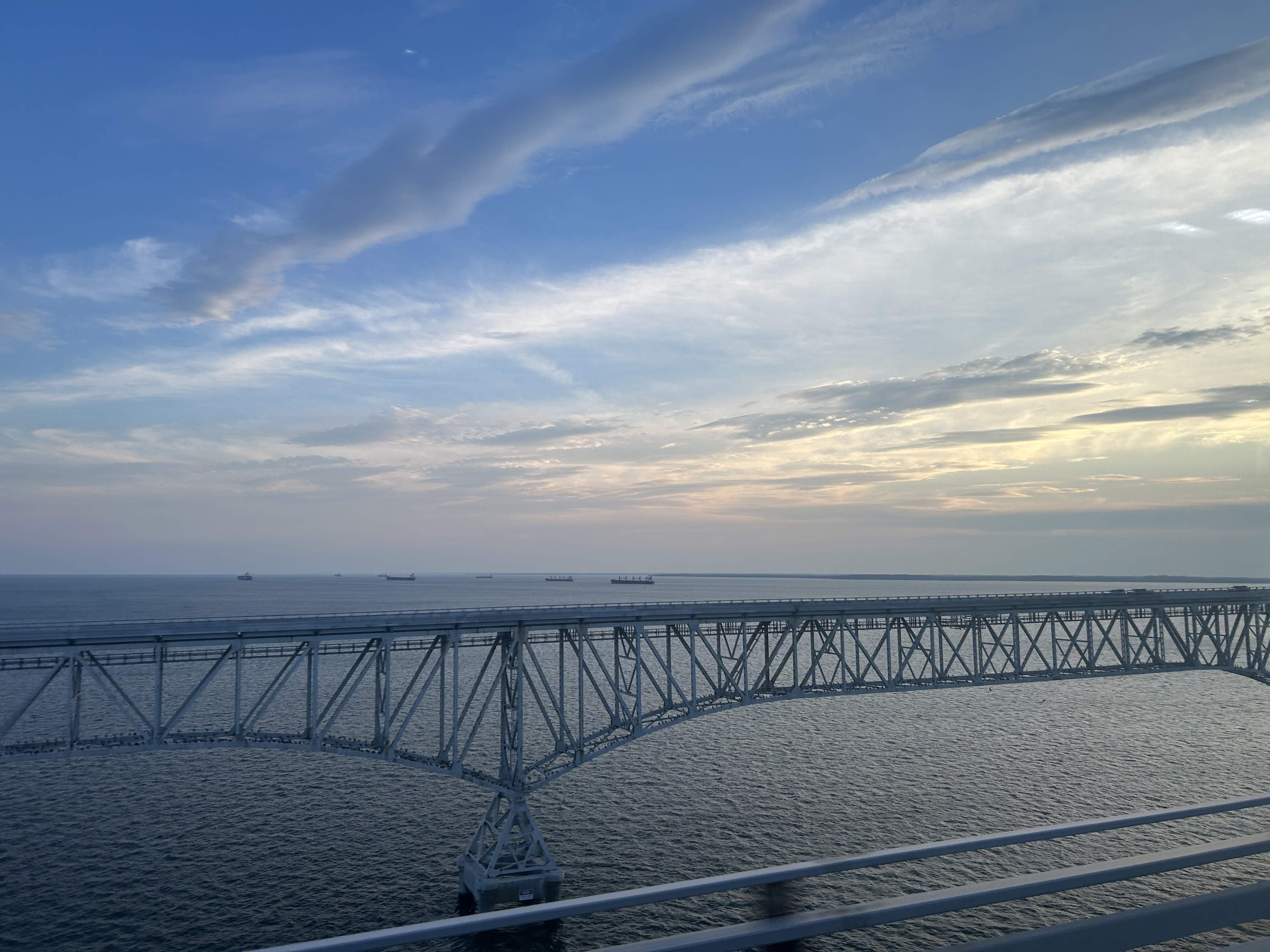
A photo of the bridge we crossed to back from the eastern shores