


Reflection Park Natural Burial Ground
16621 New Hampshire Ave, Silver Spring, MD 20905 on October 03 from 9 AM to 12:30 PM
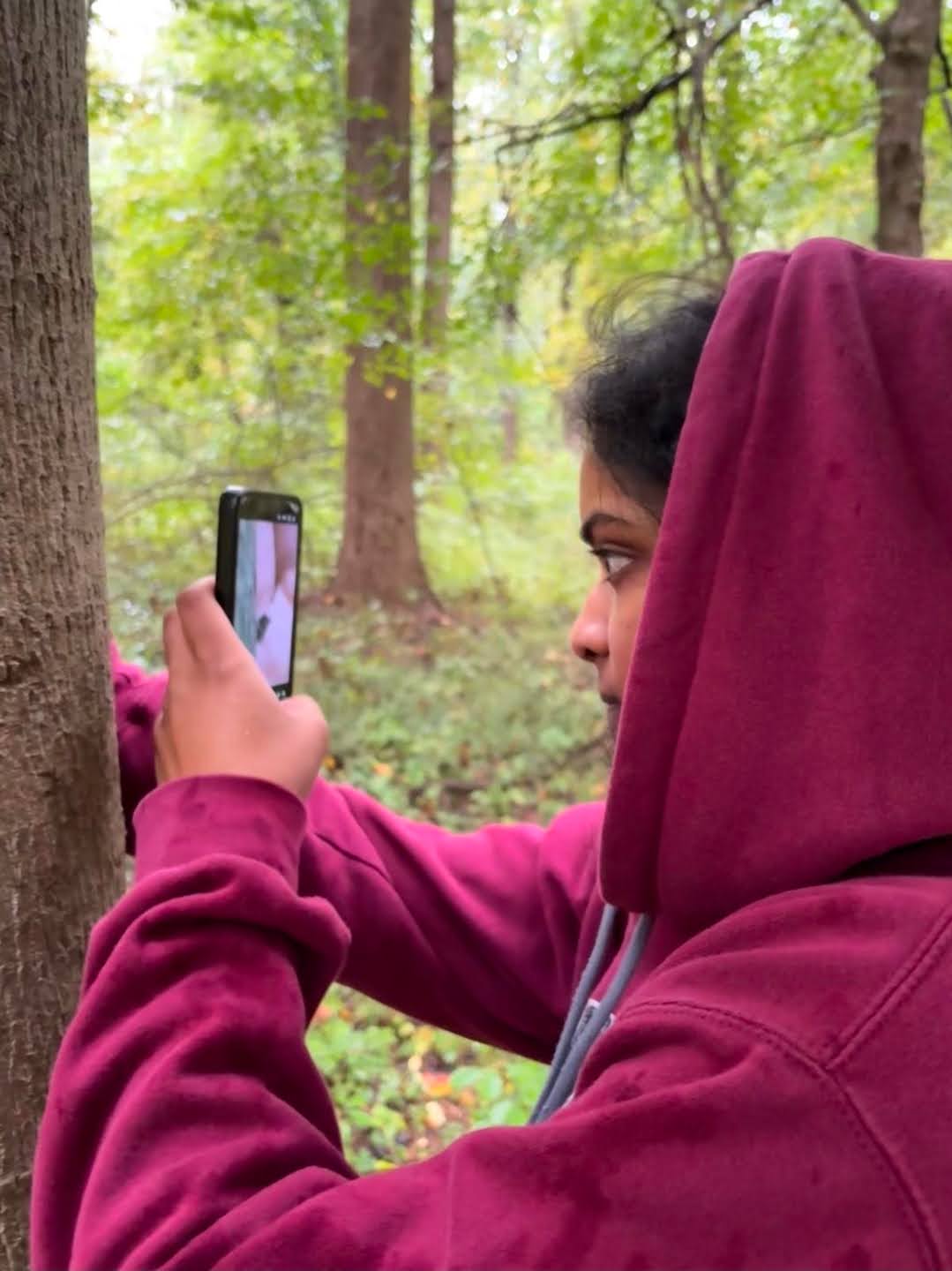
Photographing a citrus flatid planthopper
The lead volunteers split us off into groups to start in different areas; there was the forested trail, stormwater swales, and open space. I went with one of the two groups that went to the forest trail and we headed over as a group of about 10 people. As we started on the trail and continued further down, the tree canopy became denser overhead. It was raining pretty hard and the path was muddied, but the sound of the soft patter on the leaves made it worth it. Our group split off as we got to the loop part of the trail, with half of us going clockwise and the other half going counterclockwise. Although we had a lead volunteer with us, everybody was encouraged to go at their own pace and we all separated. My friend and I took photos on our camera apps to later upload to their iNaturalist project, as the service out in the woods wasn't great. Walking very slowly and intently, we began observing life around the trail.
Immediately, I spotted a toad that hopped away before I could take any photos. Throughout the walk, I took detailed photos of approximately 25 species of plants, animals, and fungi. To make sure other people were able to identify the organisms later, we took photos zoomed out, up close, and from all angles. As we walked, we often ran into the lead volunteer. We asked her all sorts of questions about things like identifying the invasive plants at the site, poison ivy, and all the fungi we found. She showed us invasive species like Japanese stiltgrass and wavyleaf grass, and pointed out vines of poison ivy growing up some of the trees. Poison ivy, though negatively stigmatized because of its irritating effect on our skin, plays a crucial role in the ecosystem, such as in the diets of birds and animals. This, and the many plant seeds that stuck all over my clothes, made me think about how all organisms are just trying to survive and they do so through adaptive technologies to their respective niches. In addition, our lead volunteer told us about the features of the trail, including a stream and a wind phone.
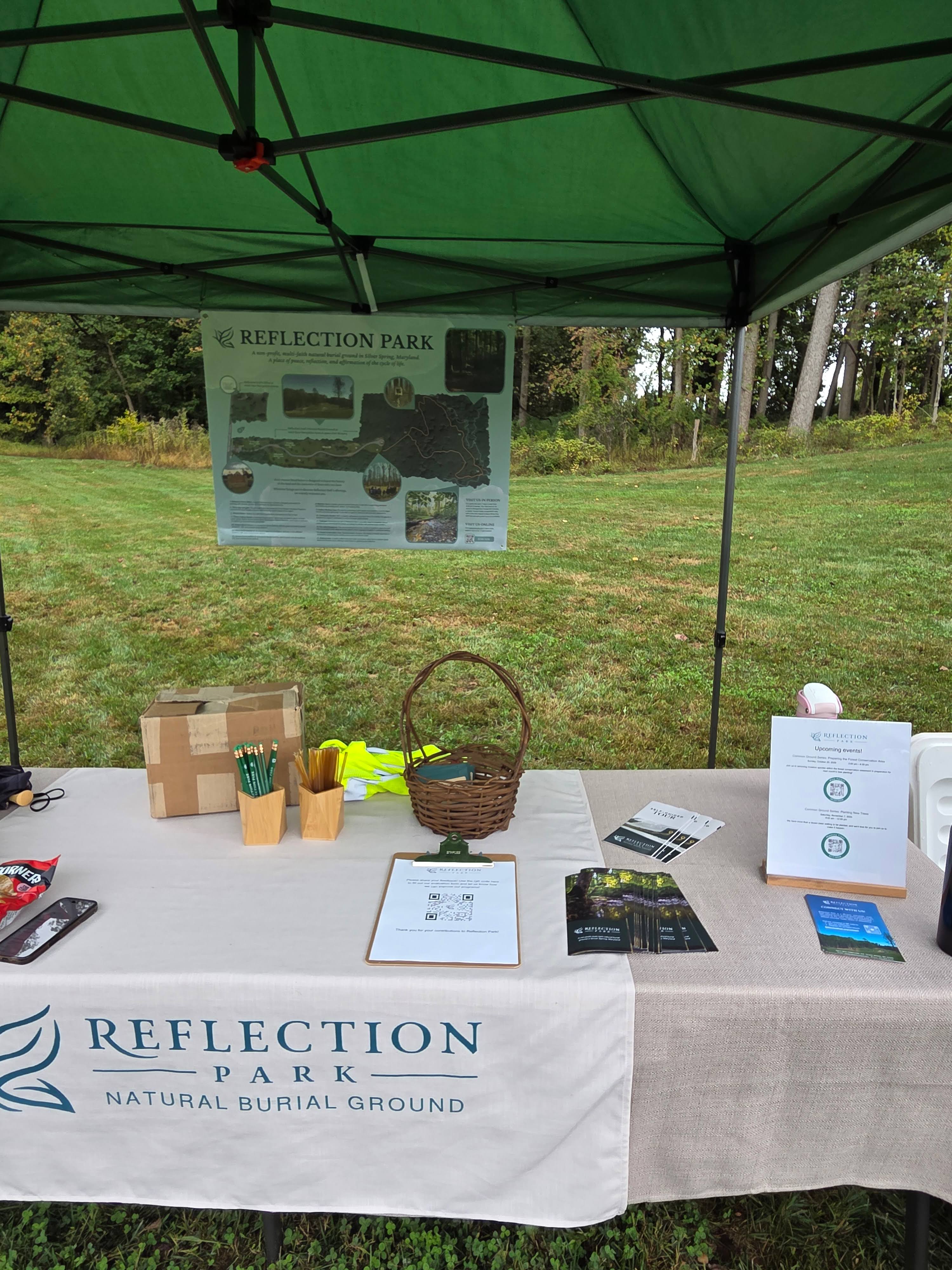
The welcome stand for volunteers
The stream appeared closer to the other side of the loop and we ran into other volunteers there, who said they spotted a turtle earlier and found some salamander under the rocks. We weren't able to find either, but we enjoyed listening and watching the running water gracefully pass us. We found a lot of fungi in this area especially, including some beautiful shelf mushrooms that were tinged green potentially from algae growth. All the organisms we found helped to capture a sense of the great biodiversity in the area and share it with the community. All the volunteers were able to come together and collaborate to collect data. More than that, we were able to take in the beauty of the environment and tackle grief together in the embrace of nature. We passed by a couple of the volunteers who were reflecting at a bench by the stream about the people they've lost. I stopped by the wind phone to write a small note in the journal they kept there. The wind phone was a wooden stall with an unconnected, corded telephone for people to talk to whoever they wanted. I would love to both visit Reflection Park and do another bioblitz again. I was able to immerse myself in the calm and beauty of nature while doing something meaningful. This event was a great experience for learning and introspection.