{{ mission }}
We build the algorithms, the robots, and the courses for autonomous scientific discovery — closed-loop labs that design their own experiments and explain what they find.
AI that reasons about mechanism, not just data
Each of these runs a real experimental campaign. They decide what to measure next, and they build the physics into the decision.
CAMEO
The first AI to autonomously discover a best-in-class material — a phase-change memory alloy. It learns a material's structure–property map on the fly and picks the next sample to measure.
Read the paper →SAGE
Learns how a material's synthesis, structure, and properties connect all at once, so the lab can steer toward better materials with fewer experiments.
Read the paper →BaxterAI coming soon!
Combines large language models with rigorous probability to propose and test candidate physical mechanisms — not curve-fits, but explanations.
ANDiE
Autonomously runs neutron-scattering experiments at national facilities, answering questions about magnetic structure roughly 5× faster by building the physics into the AI.
Read the paper →AMASE
A multi-agent system that couples autonomous synthesis and characterization to explore materials more efficiently.
Read the paper →MULTITASK
An operating system for autonomous labs: it coordinates many AI agents and instruments under real resource limits, letting simulated and real tools work side by side.
Read the paper →MAD
Multi-instrument Autonomous Discovery — one model fuses live data from several instruments at once, so structure mapping and property optimization run in the same closed loop.
Read the paper →Robots that run the whole loop
Self-driving measurement and synthesis platforms — from a 3D-printed liquid handler that costs a few hundred dollars to beamlines at national facilities. Same closed loop at every scale.
HERBIE & LEGOLAS — teaching platform
A Raspberry Pi, load cells, and printed PETG. HERBIE (LEGOLAS v2) runs closed-loop liquid-handling experiments with no human in the decision loop — cheap and open enough that a classroom can own one.
LEGOLAS paper →Multi-tool autonomous lab
Through multi-agent AI collaboration, multiple autonomous tools are run in concert to accelerate exploration, discovery, and optimization.
Multi-agent AI paper → Human-in-the-loop → MAD paper →Phase maps
Autonomous diffraction campaigns at the Stanford synchrotron, driven by CAMEO — mapping which phase forms where across a composition spread.
CAMEO paper → AMASE paper →Magnets & superconductors
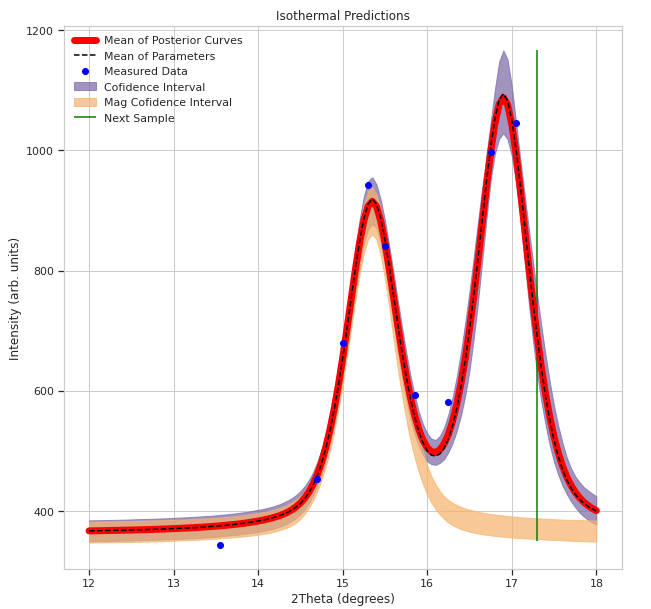
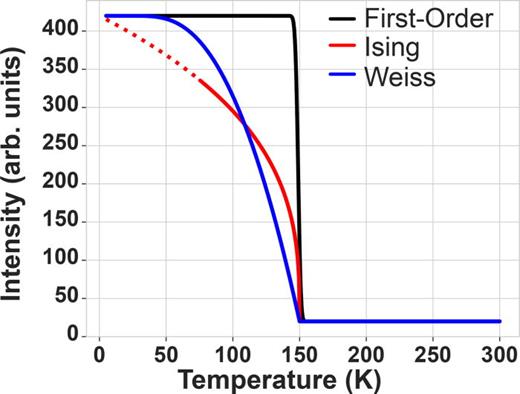
ANDiE takes direct control of beamline instruments at NIST NCNR and ORNL HFIR, resolving magnetic structure roughly 5× faster.
ANDiE paper →Epitaxial growth
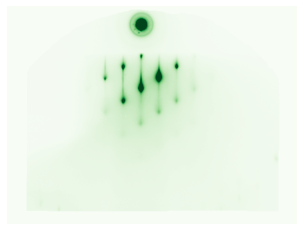
Pulsed laser deposition with the diffraction pattern read live, so the AI can adjust growth while the film is forming.
Paper →Quantum computer in the loop
The kernel that decides which experiment to run next, computed on a quantum computer. Running on IonQ's Aria trapped-ion hardware with diffraction data from an Fe–Ga–Pd composition spread, a quantum kernel can navigate phase space on less training data than its classical counterparts.
Paper →Soaps, adhesives & more
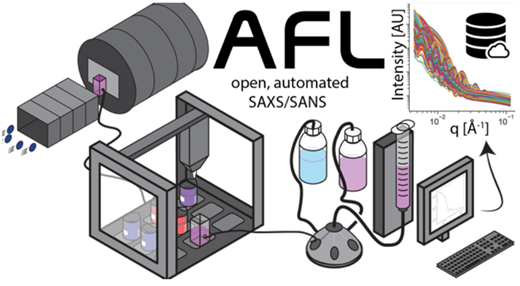
A full automated formulation platform for complex liquid products — mixing, measuring, and reformulating in a loop.
Autonomous Formulation Lab → Paper → Second paper →3D-printed alloys
Laser-directed energy deposition builds and repairs high-value metal parts, but qualifying a new alloy normally means costly trial and error. Here in-situ X-ray imaging feeds a Gaussian-process active learner directly: thin walls of the nickel superalloy Mar-M247 are printed across laser power and scan speed, an ML pipeline finds the cracks, and a single metric scores both geometric and structural conformity. The loop converged on the "Goldilocks" window in 14 iterations — far fewer than a conventional design of experiments.
Paper →Alloy design
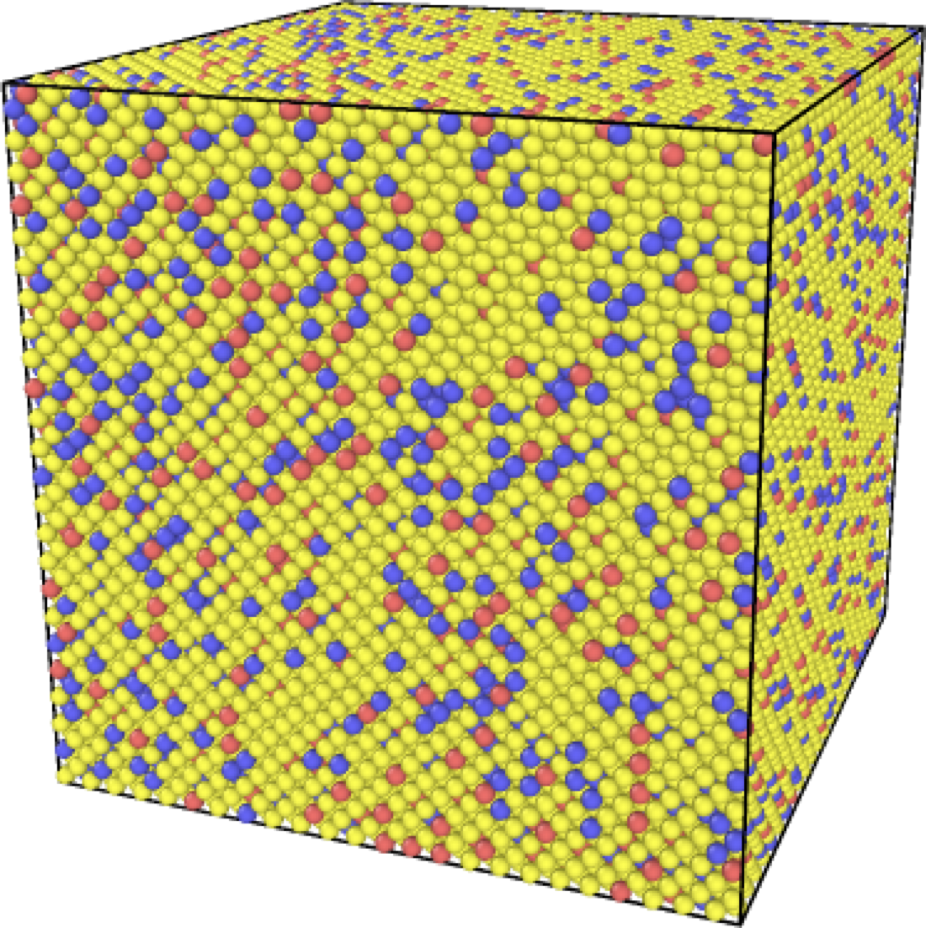
Spectroscopy steered by the AI toward the local structure that governs alloy behavior.
Direct air capture sorbents
Metal–organic frameworks synthesized and screened in a closed loop, searching for sorbents that pull CO₂ from air.
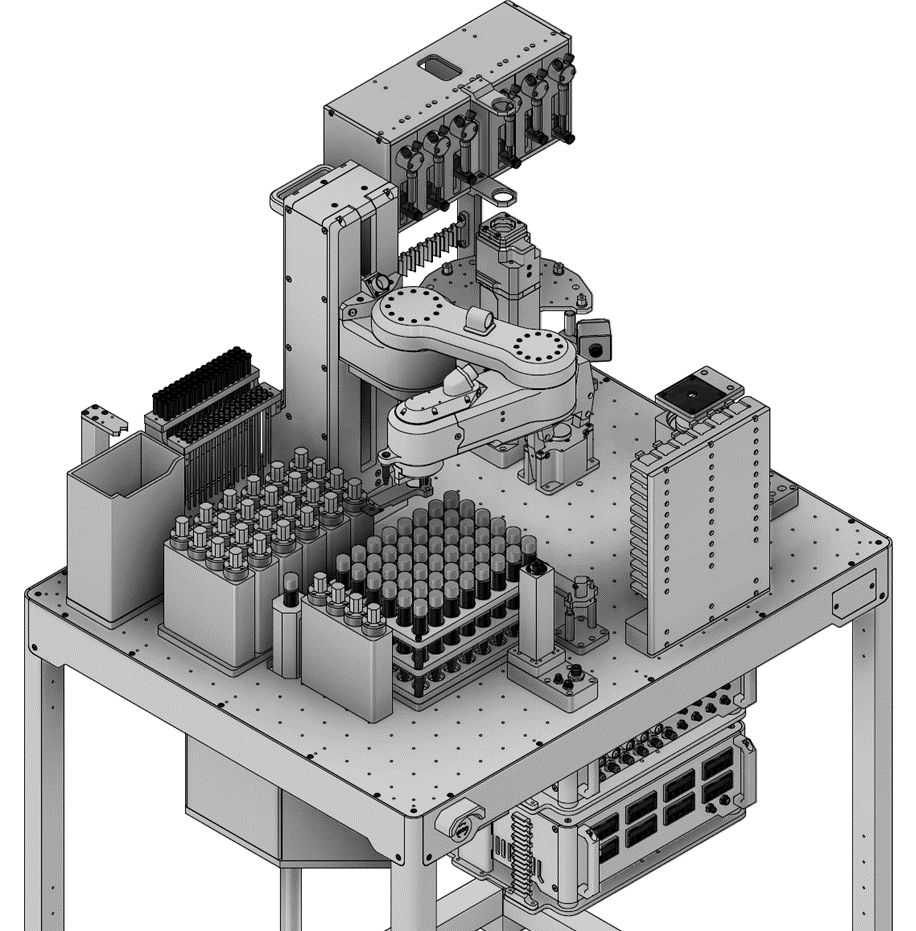 System paper →
Model paper →
System paper →
Model paper →
Corrosion-resistant films
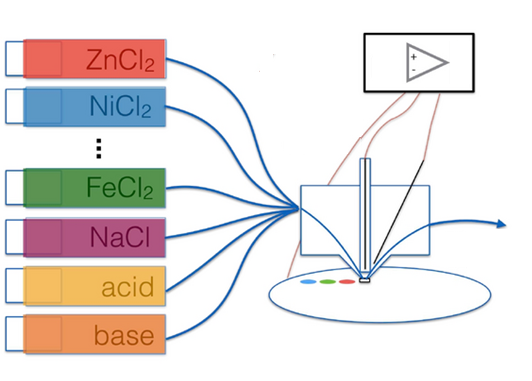
Electrochemistry one droplet at a time, testing thin-film compositions for corrosion resistance without cutting up the sample.
System paper →Teaching autonomous science, hands on the hardware
Because the robot is cheap and open, a course can own one. Students close the loop themselves — design, execute, analyze, decide.
Machine Learning for Materials Research Bootcamp
Five days for researchers who need ML to work on real materials data — not toy datasets.

UMD courses
Year 6 for undergraduate and graduate courses on autonomous physical science built around the low-cost kit. Course numbers to be confirmed.
Materials Informatics Competition since 2021
Industry-relevant AI challenges in materials discovery, exploration, and device protocol optimization, among others.
Tutorials & outreach
Delivered at MRS, APS, TMS, MLSE, and NSF meetings. The kit is built to be adopted — by other schools, other labs, other classrooms.
The group
Machine Learning
ML + Materials Science
Selected work
Adams, Zhu, Steuerman, Kusne, Takeuchi · APL Quantum 3, 016115
Preprint · arXiv:2605.18033
Liang et al. · Science Advances 11, eadu7426
Kusne, McDannald, DeCost · Digital Discovery 3, 2211
Adams, McDannald, Takeuchi, Kusne · Matter 7, 697
Kusne, McDannald · Matter 6, 1880
McDannald et al. · Applied Physics Reviews 9, 021408
Saar et al. · MRS Bulletin 47, 881
Kusne et al. · Nature Communications 11, 5966
Beaucage, Martin · Chemistry of Materials 35, 846
DeCost, Joress, Sarker, Mehta, Hattrick-Simpers · JOM 74, 2941
Preprint — citation to be added
Preprint — citation to be added
Sorbent platform — citation to be added
Sorbent model — citation to be added
Where we think the field is going, and what still stands in the way.
Communications Materials
Annual Review of Materials Research
Matter
Preprint — citation to be added
In the news
We're recruiting for Fall 2026
Postdocs and PhD students who want to build autonomous labs — and undergraduates who want to get their hands on the hardware. If you're interested in AI that reasons about physics, write to us.
University of Maryland, College Park