


Event name:
Climate Art Workshop
Event time and place:
6 p.m. November 13, 2025 in Cambridge Community Center 1100The Climate Art Workshop began with a presentation by Dyani Frye, an alumna of UMD and currently the Sustainability Associate in the Office of Sustainability on campus, where she introduced the members of her team and described their contribution to sustainability at UMD. Some of the most notable items she mentioned in her description of the Office of Sustainability were the presence of data reporting for climate-related issues on campus and the Sustainability Fund of $800,000 to be allocated annually toward students' climate-related projects.
Frye described "climate art" as a form of creative expression inspired by climate change. Influenced by a climate class she previously attended that prescribed a 30-day art challenge related to climate change, she explained that the purpose of our workshop was to produce climate art of our own. With art used as a way to express emotion, she wanted us to connect to our complex feelings of climate anxiety without needing to put it into words. Frye discussed the various principles behind effective artistic communication: anecdotes, humor, and entertainment were some of her suggested alternative methods to communicate data through art.
We were finally ready to begin. There were three stations: zines, colored pencils, and watercolors; with the room split into three groups, we each took roughly 15-minute turns at each station, creating whatever climate-related art piece we wanted. Below are some of the works I made in the time allotted, focused on the beauty of the environment and the climate issues at stake.
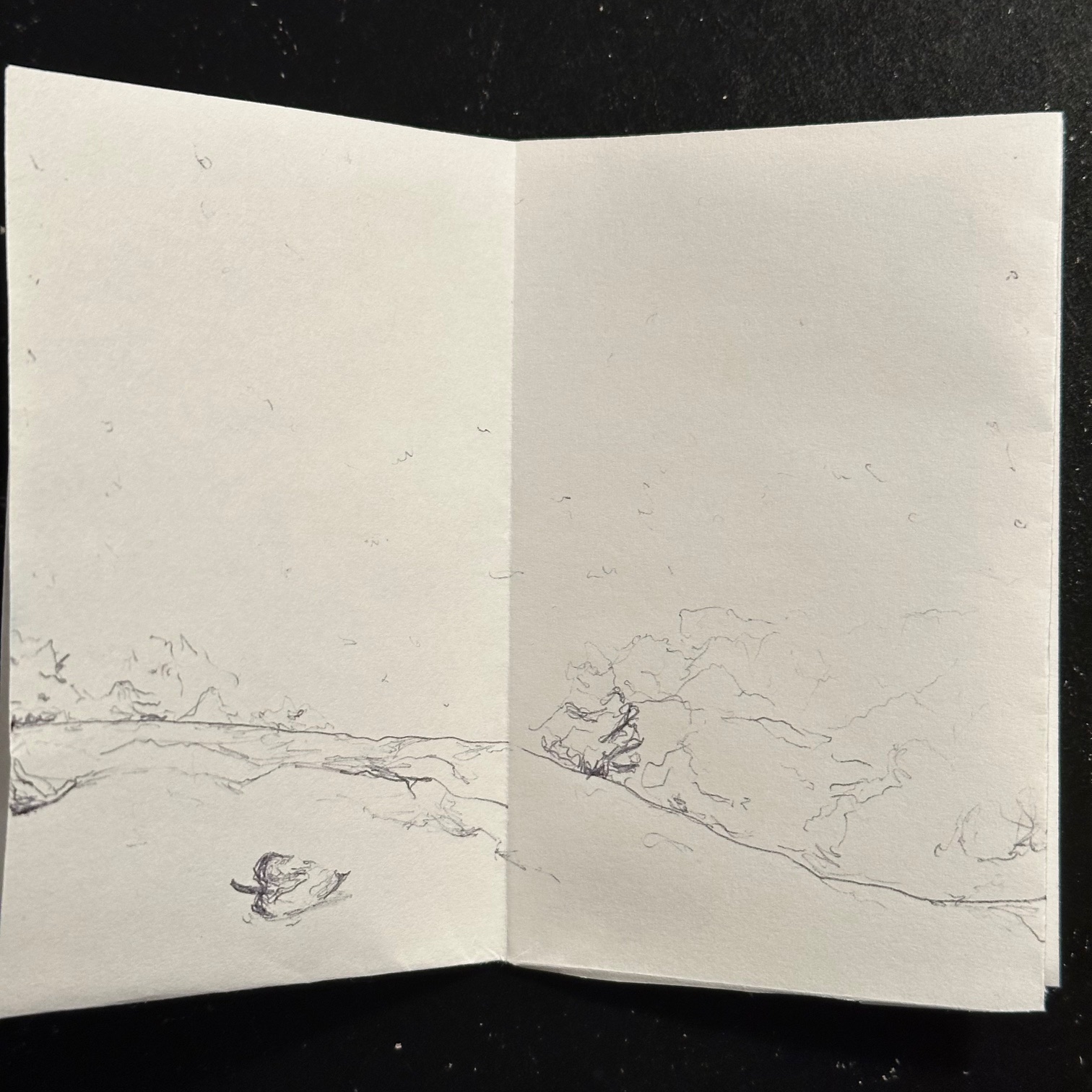
Climate Zine
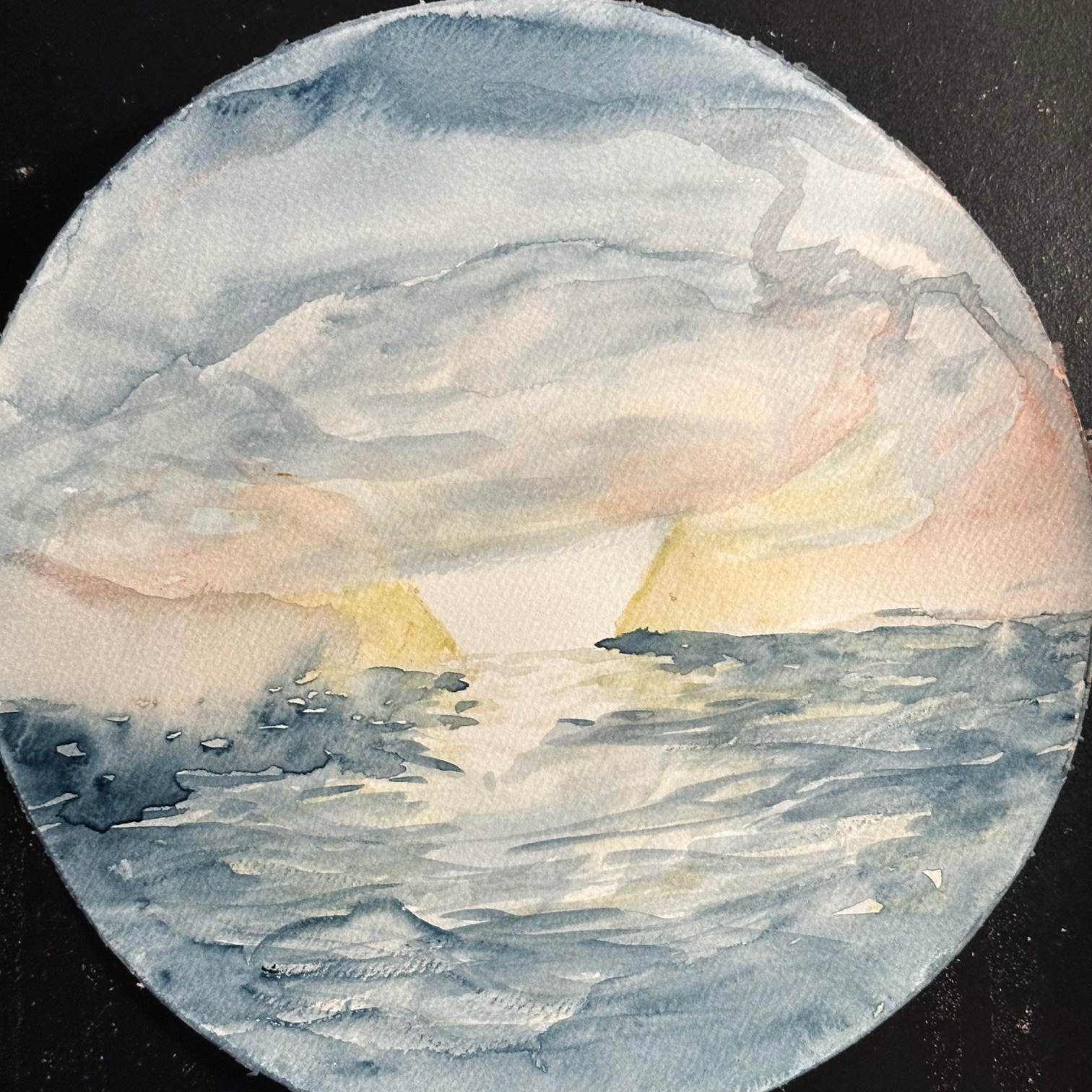
Watercolor Piece
I found Frye's suggestions for using artistic direction to communicate science extremely compelling. As someone who has been creating art since childhood, I've always wanted to find an outlet for it that contributes positively to society in some way, and hearing that my passion can be channeled through climate art to increase awareness or public outcry of climate change inspired me to want to create again. The feeling that being creative can actually make a difference toward climate change, even if in a small way, drove me to create pieces I felt passionate about that day.
Her example, about anecdotes rather than graphs communicating data better to a general audience, really resonated with me when she showed us the difference in clarity between data showing ice caps melting versus a graphic of a frozen landscape thawing and dripping that leaves an emotional resonance. I felt the difference somewhere deep that I couldn't explain, and realized that despite the importance of the objectivity of science, people are more easily communicated to through the subjective.
Since her points relied on subjective experience backing it up, my emotions aligning with exactly what she said they would when showing different examples of climate art demonstrated to me the validity of her arguments. Hence, I realized the power of art for science communication through this presentation.
Something that didn't resonate with me as much was the focus on decompressing from climate anxiety. While Frye established art as an effective coping mechanism for complex feelings beyond just communication, it felt out of place in the same presentation we were instructed to create art that sends a message about climate change, for her to offer us to alternatively use the time to decompress in any way, regardless of the kind of art we make or its relation to climate issues.
Complexly, as an artist and a STEM student, I'm a big proponent of thinking outside the box and getting things done uniquely; however, I contradictorily felt uncomfortable with the lack of structure in the actual art-making process. Rather than focusing on one medium of choice and creating a single effective piece of climate art as Frye introduced to us, we were assigned stations randomly and only spent 15 minutes at each station to think up and complete our art pieces.
I was lost at the zine station, for instance, unsure what to make with the lack of direction. I asked Frye what I should make, and she told me to make whatever would best express what I was feeling about the environment. So I folded the paper up as instructed and drew a landscape covered in snow, inspired by her ice cap examples and the tranquility of nature at stake in our changing climate. I was unhappy with the final product because the amount of time it took to make the zine elements took away the time I could have spent expressing my creativity in other ways.
In some ways, I was most frustrated with my lack of creative drive when I was told to make something without limits. In reflection, I can understand why Frye led the workshop in the way she did; however, I disagree with the premise that forcing college students to use a rigid medium with a limited amount of time can effectively bring out their best artistic and communicative abilities. Overall, I was excited to bridge the gap between my climate concerns and my artistic spirit, and Frye demonstrated great ways to use art to better communicate science and data to the general public.
Alexander Geretz Portfolio
External Links: