


National Zoo Excursion:
May 3, 2026:
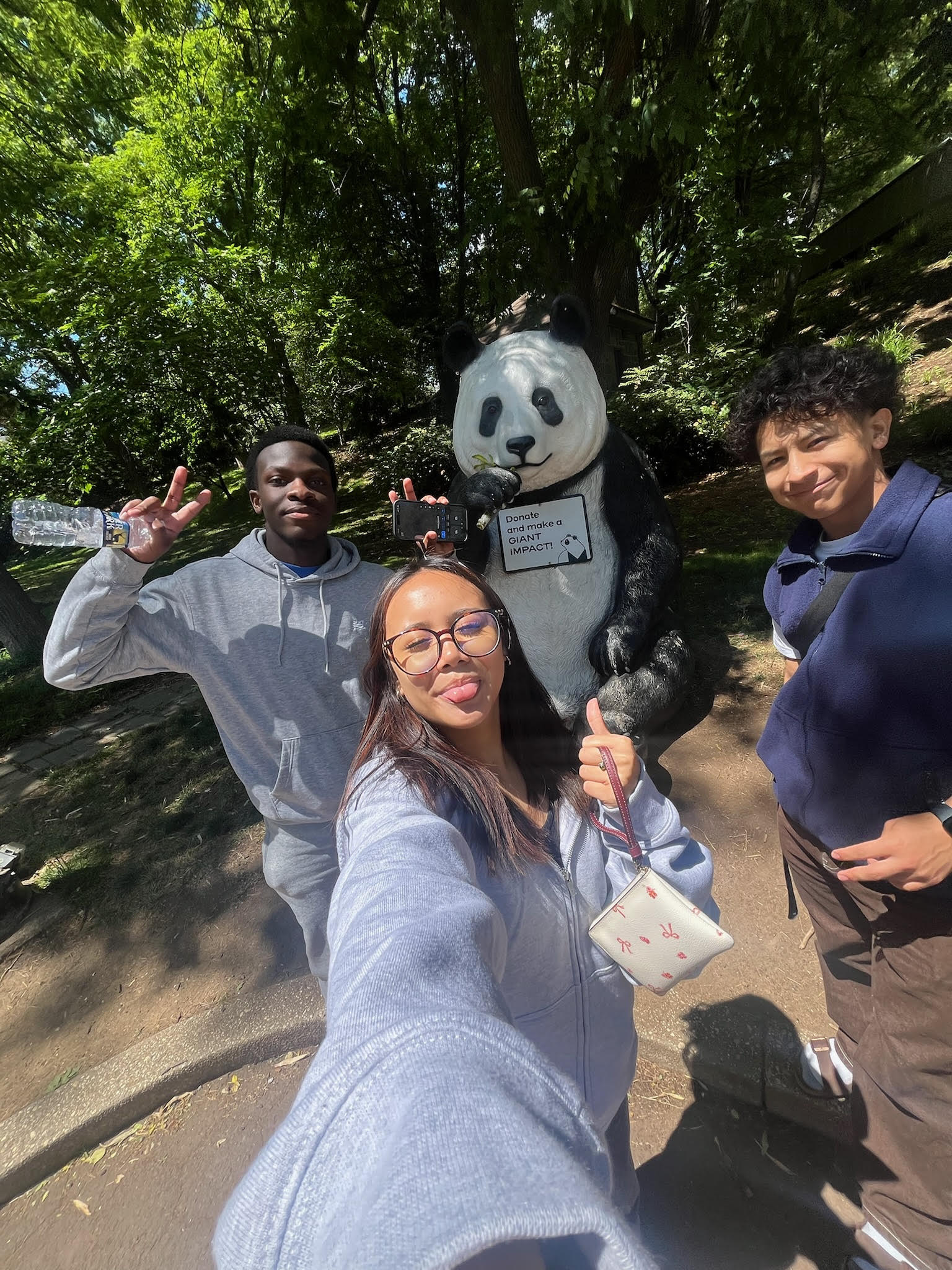
Zoos today serve purposes far beyond entertainment. Modern zoos are designed to educate the public about conservation, biodiversity, ecosystems, and animal welfare while also providing care for animals living in captivity. During this visit to the zoo, I explored three themed animal buildings: Amazonia, the Small Mammal House, and the Reptile Discovery Center. Each building presented information about animals in different ways and demonstrated how zoos balance education with the care and enrichment of the animals they house.
The first building I visited was Amazonia, which focused on species from South America and tropical rainforest ecosystems. The species plaques generally included facts about the animals' habitats, behaviors, geographic ranges, and adaptations. One species on display was the guinea pig. Although guinea pigs are commonly viewed as household pets in North America, the exhibit explained that this is not the case in many South American countries. The display included maps showing where guinea pig species are native throughout South America, as well as an example of a restaurant-style poster advertising guinea pigs as food. Another species on display was Cranwell's horned frog. Its plaque explained that the frog is an ambush predator that spends most of its life buried in the soil waiting for prey to approach. The freshwater angelfish exhibit did not contain much information beyond the species name, making it one of the less informative displays in the building. The Brazilian rainbow boa display explained that the snake gets its name from the iridescent quality of its scales, which reflect light in rainbow-like colors.
Amazonia also included some interactive educational displays. One of the most memorable was a model of an electric eel that demonstrated how the animal generates electricity. The display explained that the eel's head carries a positive charge while the tail carries a negative charge, helping visitors understand how the animal produces electrical currents. Although the building did not contain many interactive features, the ones that were present were informative and engaging. In my opinion, Amazonia seemed to be aimed mainly at late elementary school students and older visitors because the information was fairly detailed and there were fewer child-focused interactive elements. While observing visitors, I noticed that most non-SGC visitors were not closely reading the plaques. The few people who did pay attention were usually parents reading information aloud to younger children.
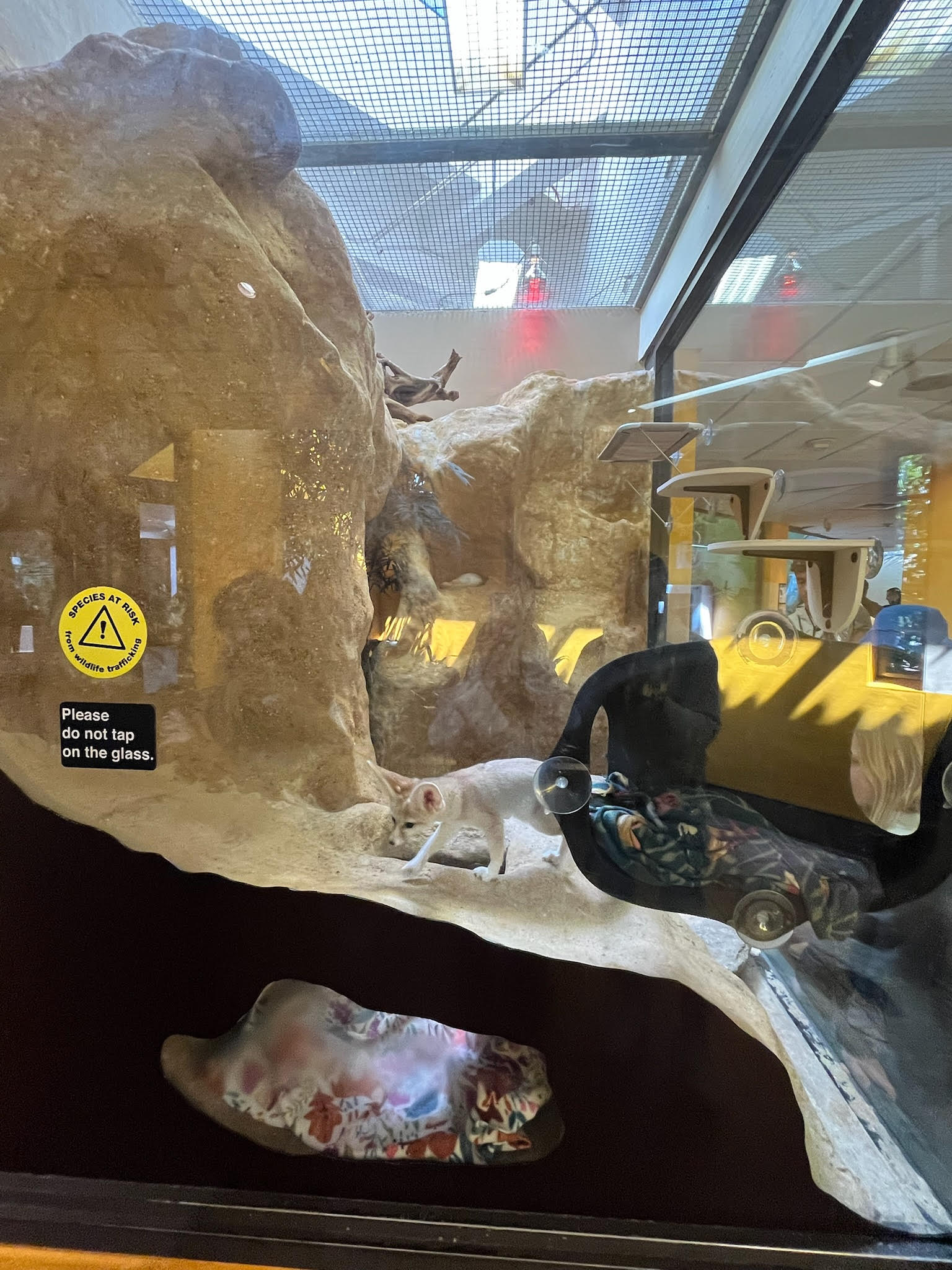
The second building I visited was the Small Mammal House. Similar to Amazonia, the species plaques included information about habitats, diets, native countries, and unique behavioral traits. One exhibit featured the fennec fox. Its plaque explained that the fox lives in desert habitats and uses its large, highly sensitive ears to detect prey underground. Another species was the screaming hairy armadillo. The plaque explained that instead of rolling into a ball for protection like many armadillos, this species releases a loud squealing noise when threatened. The exhibit also included information about its habitat, diet, and geographic range. The golden lion tamarin display stood out because the word "Endangered" was written prominently in large red letters beneath the species name. The plaque explained that both parents cooperate in raising their young, emphasizing the species' social behavior. The meerkat exhibit was also present, although I was unable to locate the informational plaque for that species.
One of the more interesting educational features in the Small Mammal House was a display comparing skull x-rays from different mammals. The skulls were grouped into categories such as toothless, crushing, gnawing, and piercing, allowing visitors to compare how teeth and skull structures relate to diet and survival strategies. I found this display informative because it connected anatomy to animal behavior in a simple visual way. This building appeared to be designed for visitors of all ages since the language on the plaques was straightforward and easy to understand. However, similar to Amazonia, I did not observe many non-SGC visitors paying attention to the informational displays. Most parents seemed more interested in reading facts to their children than exploring the interactive elements themselves.
The third building I visited was the Reptile Discovery Center. The plaques in this building focused on habitats, diets, adaptations, and conservation status. One exhibit featured the Iranian leopard gecko. Its plaque explained that the species is nocturnal, can grow nearly twelve inches long, and feeds on insects and smaller geckos. Another exhibit displayed the tomistoma, a crocodilian species. The plaque explained that tomistomas are opportunistic carnivores capable of hunting both on land and in water. The lemur frog exhibit emphasized conservation by identifying the species as endangered in bold text. The plaque also described how the frogs lay eggs on leaves hanging above streams so that tadpoles fall directly into the water after hatching. Another endangered species on display was the spider tortoise. Its plaque explained that the tortoise gets its name from the spiderweb-like patterns on its shell and noted that hunting for food has brought the species close to extinction.
The Reptile Discovery Center also included a model of a Japanese giant salamander. Although it was visually interesting to look at, it did not provide much interactive engagement beyond being a display model. Like the Small Mammal House, this building appeared suitable for all ages because the information was written in simple language without overly technical vocabulary. This hall was also the busiest of the three buildings. Because of the crowds, it was harder to observe visitor behavior closely, but I noticed that many parents were reading the informational plaques to younger children while moving through the exhibits.
In addition to traditional informational plaques, the zoo also provides educational opportunities through more advanced and interactive methods. One example is the zoo's virtual "Conservation Classroom" programs. These live and recorded online learning experiences allow students to interact with scientists and educators while exploring ecological concepts. For example, one program called "Exploring Ecosystems with Otters" teaches students how river otters and even otter scat can provide information about the health of the Chesapeake Bay ecosystem. Rather than relying only on written facts, these programs combine videos, activities, discussions, and hands-on investigations to create a more engaging learning experience. Another major educational strategy used by the zoo is the creation of immersive habitat-based exhibits. Buildings such as Amazonia recreate natural ecosystems so visitors can better understand how animals interact with plants, climate, and other species in their environments. These realistic environments help visitors understand larger ecological relationships and conservation issues more effectively than simple signs alone.
The zoo also demonstrated concern for the mental and emotional welfare of its animals by incorporating environmental enrichment into several exhibits. One example was in the Northern treeshrew exhibit, where there were numerous hanging fabric hides that the animals could rest or hide inside. These structures likely help reduce stress by giving the animals places to feel secure and behave more naturally. Another example was found in the fennec fox exhibit, where blankets had been placed inside the animals' hiding areas. These additions likely provide warmth and comfort, helping improve the foxes' overall well-being in captivity. These examples show how modern zoos attempt to make enclosures more stimulating and comfortable for animals rather than simply displaying them in bare environments.
Overall, the zoo visit demonstrated how modern zoos combine education, conservation, and animal welfare into a single experience. Each building presented information in slightly different ways, but all three emphasized the importance of understanding animal behavior, habitats, and conservation status. Although many visitors seemed more focused on viewing the animals than reading the educational material, the zoo still provided a wide range of learning opportunities through plaques, interactive displays, immersive habitats, and educational programs. The visit also highlighted the growing importance of animal enrichment and welfare in modern zoo design, showing that zoos today aim not only to display animals but also to care for them responsibly and educate the public about protecting wildlife and ecosystems.