


American Museum of Natural History:
22 November, NYC:
Our first stop at the American Museum of Natural History (AMNH) was their newest exhibit, Impact: The End of the Age of Dinosaurs. We were lucky enough to be one of the first college students to visit the exhibit. It recounts the detrimental effects of the massive asteroid that struck the Earth 66 million years ago. The asteroid caused a number of events, such as tsunamis, wildfires, earthquakes, acid rain, and darkness. The exhibit dives deeper into the event, how dinosaurs weren't the only thing to go extinct, plant and animal species were wiped out from the many after effects of the asteroid, such as tsunamis, earthquakes, acid rain, wildfires, and darkness. It also highlights how Earth was able to rebound and begin a new age.
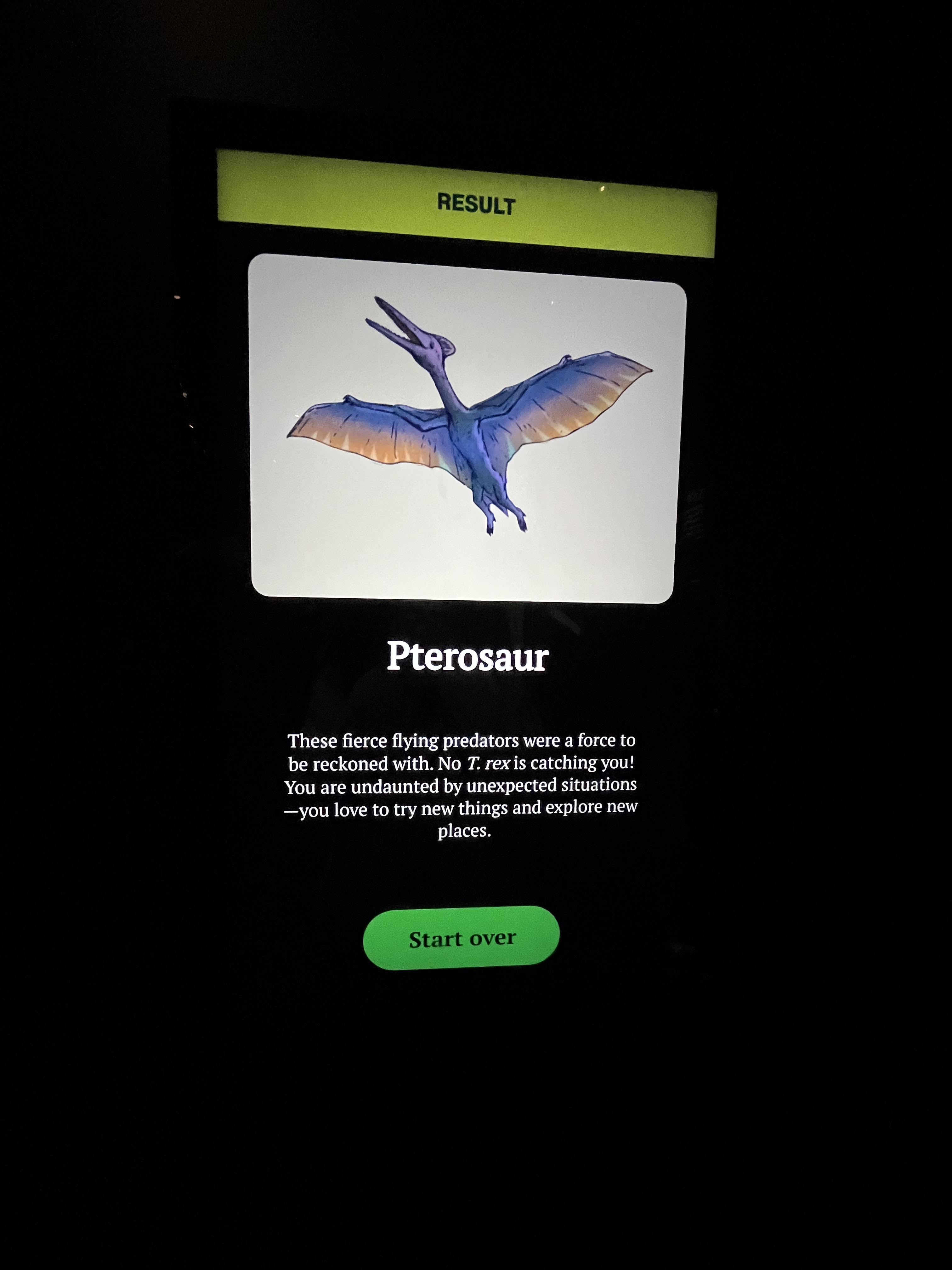
As soon as we walked into the exhibit, there was an interactive screen, where we could take a survey, and it tells us what creature we are most similar to, at least personality-wise. Once you complete the survey, it would show a drawing of the creature and a short description of it. This allowed for the information to be presented in a way that is more approachable and easy to digest, even for an elementary-aged child. Additionally, there were also touchable fossils and casts of fossils and animals, such as animal foot prints and full-scale models of different dinosaurs. This helps to put into perspective the sheer size of different species. Being able to see and touch something from millions of years ago, further proving ancient theories and evidence.
The information displayed at this exhibit still matters today because it demonstrates how catastrophic events can end up entirely changing Earth, and everything living on it. It conveys the Earth's ability, especially its ecosystem's abilities to build itself back. It also reminds visitors how mass extinction is a real risk, and not just ancient history. If our ecosystems continue to be negatively impacted, it could end up happening again.
Within the fossil halls, one of the main points Merck brought up was the thick line on the floor of the hall. It wasn't for decoration purposes, instead, it represented a tree trunk, with lines branching off into different subgroups based on different features of species, and as you progress along the hall, visitors are able to see shared traits on each branch. Throughout the halls, there were a number of different displays, from skeletons to models to graphics. Each one allowed for better understanding and indication of resemblance between different animals. The amount of skeletal models were very interesting. We were able to see different size ranges between individual animals of the same species. On a similar note, they had models of the animals as well, showing us what the animals looked like when they were living.
The hall was arranged in chronological order, changing the visitors' perception of the fossils and their individual subgroups. The order allows the hall to communicate scientific ideas about evolutions, biodiversity, and relationships without stating anything. With the age of the hall, there is bound to be outdated features and information. For example, since the hall is organized by familial subgroups, it can make it difficult to rearrange the space. A reason they may need to do this, is if new discoveries are made about an animal species, and it needs to be moved into a different familial group or section. In other words, the halls may not always be up to date with current science. However, this could end up being more difficult because of the space constraints. Additionally, there weren't many interactive displays. This could be making the space less appealing for younger audiences.
We were able to watch Encounters in the Milky Way, a space show in the planetarium. Its main theme was movement in space, and emphasizes the universe is always changing. It showed a variety of different celestial objects, such as stars, comets, gas and dust clouds, comets, and debris. The show uses data from the Gaia mission, which allowed them to simulate the motion of stars and other objects over time. None of the images felt like special effects, I believe this is because all of the animations were based solely off the raw data of a real mission. Personally, I had no clue about the Sagittarius dwarf galaxy, and how the Milky Way is expected to merge with it.
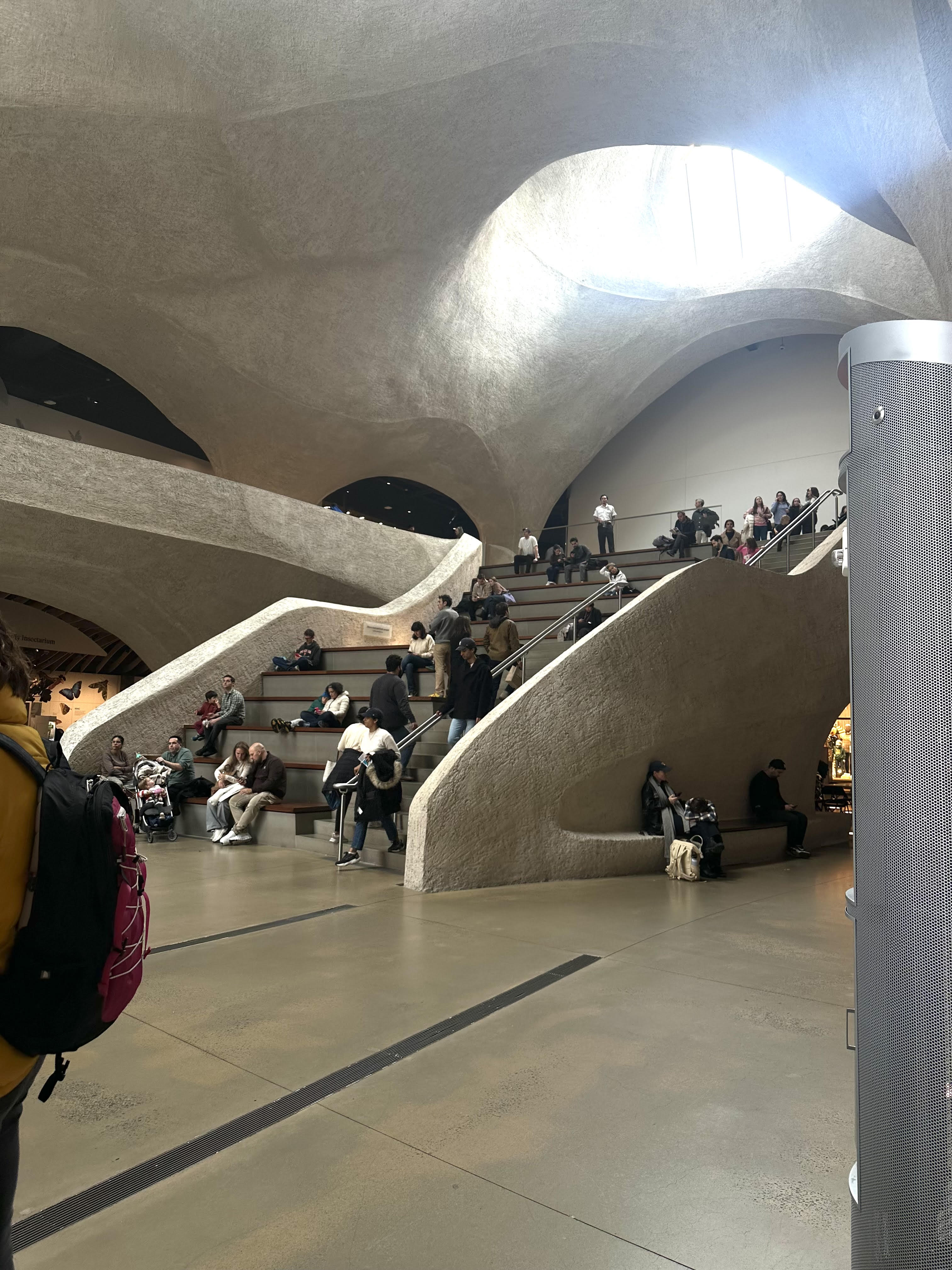
The AMNH seeks to accommodate visitors of all different backgrounds and abilities. For instance, having a number of interactive elements within halls and exhibits, it makes information easier to understand, allowing for visitors with all levels of education to learn the same ideas. Additionally, many panels include labels with explanations with different depths of information, simple explanations and sections with more scientific vocabulary, catering to visitors of different levels of interest. On a different note, the museum is full of benches and seating. This allows for people to rest whenever they need to.