

UMD Geology Helz Lecture: lessons learned from CIDER and GEOSCOPE
Thursday, October 8, 2026, ESJ Teaching and Learning Center:
Presenter: Dr. Barbara Romanowicz
Dr. Romanowicz's talk was very interesting. She started off with a very fascinating overview of the history of seismography and how people accidentally developed this technology when trying to develop tech to record other data. The fact that someone who accidentally recorded the first earthquake then used that tech to continue to measure earthquakes all across the world. She then began describing how the technology has developed since then and how accurately we can measure the movement that corresponds to an earthquake. Dr. Romanowicz then proceeded to explain her research on imaging deeply into the earth and understanding exactly how the earth is physically structured. While explaining some of her research she provided a very interesting view of her research showing how it has built upon centuries of inquiry into how the earth exists as a system. She explained initiatives like GEOSCOPE to spread seismographs and other earth monitoring tech all across the world and to have all the data reported so that anyone can analyze and do studies on the captured data. Additionally she explored conferences and summer programs she developed that have helped to transfer knowledge to the next generation of scientists and geologists through her work on projects like CIDER. The Cooperative Institute for Dynamic Earth. Finally towards the end of her talk she discussed how we can use existing deep ocean development of infrastructure like deep sea fiber optic cables to build a better seismography network that will allow us to monitor data from all over the world. Thankfully during the talk she didn’t get into the very complicated math behind modeling the earth’s behavior but she did provide a simplified picture of how earthquakes happen and how the waves dissipate through the earth that widened my understanding of what an earthquake is and how it has the effects that it has.
I found her main points to be very convincing and her brief historical overview of the entire body of science on the topic to be super enlightening. I was aware of virtually none of the information she shared so I found the talk to be super interesting and definitely expanded my knowledge of how the earth works and even how the earth is structured. I never personally consider earthquakes or really anything about the physical rock part of the earth and I found her talk to be really interesting. I am aware of not much in this field so I have no way of knowing if any of her information was credible but I am relatively certain that it is as she provided a number of citations to papers that she and other figures in the field have written on the topic, stretching back as far as 40 years. For that reason I am very willing to accept everything she said as the unabridged truth on the matter, except for the fact that it may have been dumbed down for a more general audience. She had no fallacies that I could detect present in her work and has very clearly been working very hard on this type of research and also advocating for research conferences like CIDER for a very long time and is indisputably a subject matter expert. I found her points about why we need to better finance and support this research to be very convincing and I really like the ideas that she shared that we can better understand our planet as a whole by supporting further research like this.
I do slightly disagree with her points about how we should be working on getting funding for these types of projects like CIDER and GEOSCOPE. She said that people interested in the field should work on getting companies and governments interested in it but I think that most governments are only interested in working for their economic benefit or for their defense so they should attempt to market this in a discovery way to governments and while it may be a tough pitch this could be advocated for by framing it in less of a science for the sake of science lens. If we could instead find some strategic or otherwise more interesting reason to pursue this research to the government and the world then much more support and help is likely. While all scientists would love to have their research funded out of a love of science and desire to learn more the reality is that cannot always be the case and projects that are motivated by something more material to governments and non scientists who will never really understand the findings or even care to will result in better continued support. Other than that issue I agree with her that these projects should be funded and that we should continue work to better understand the small hunk or rock we all live on. All told, her talk was very interesting and provided a lot of interesting information about the history of seismography and the future of this continued research that I have never really considered. Her talk was fascinating and I am glad I went as my last SGC excursion.
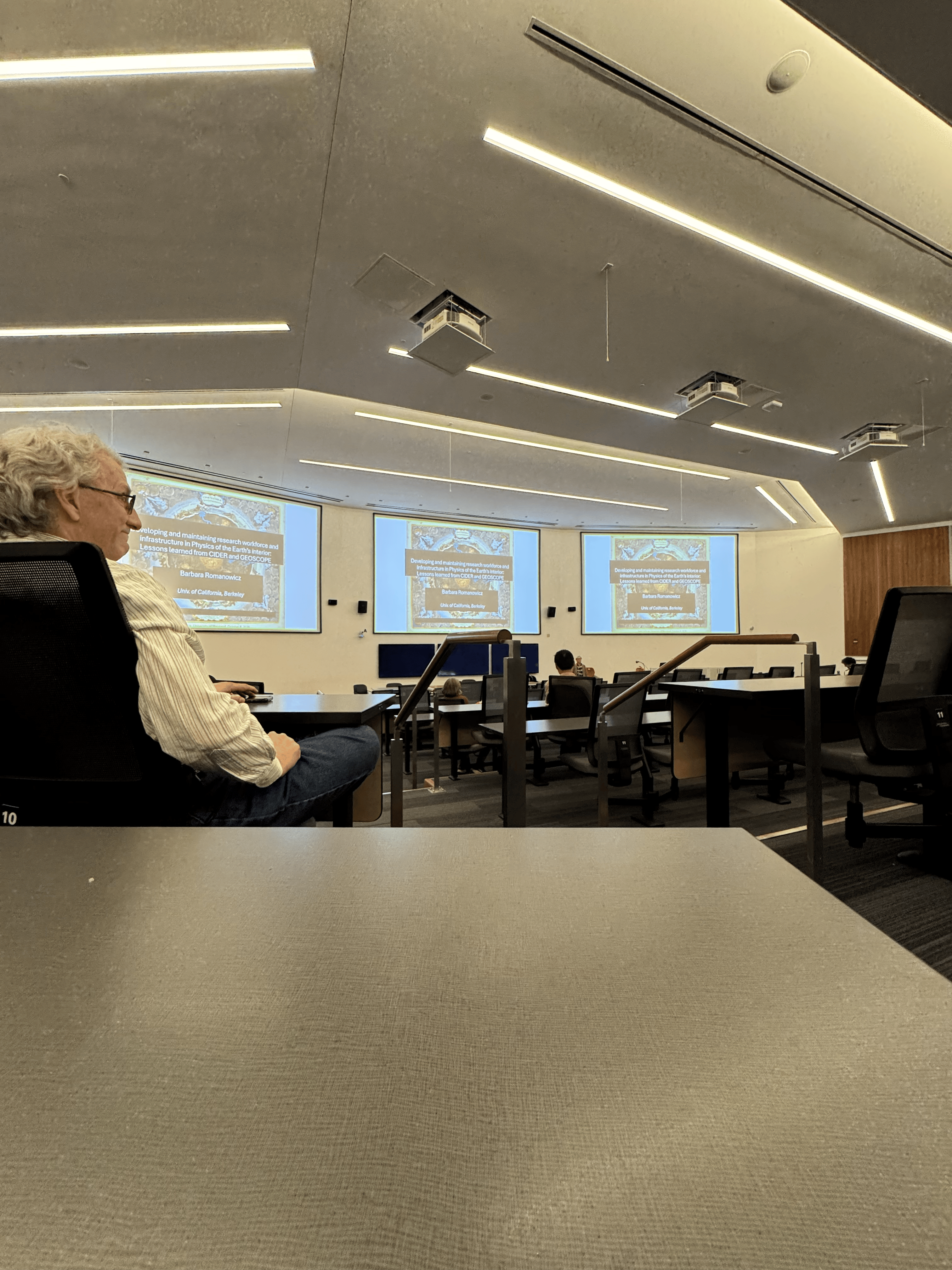
A photo taken towards the beginning of the the presentation. Note the presence of Prof Holtz
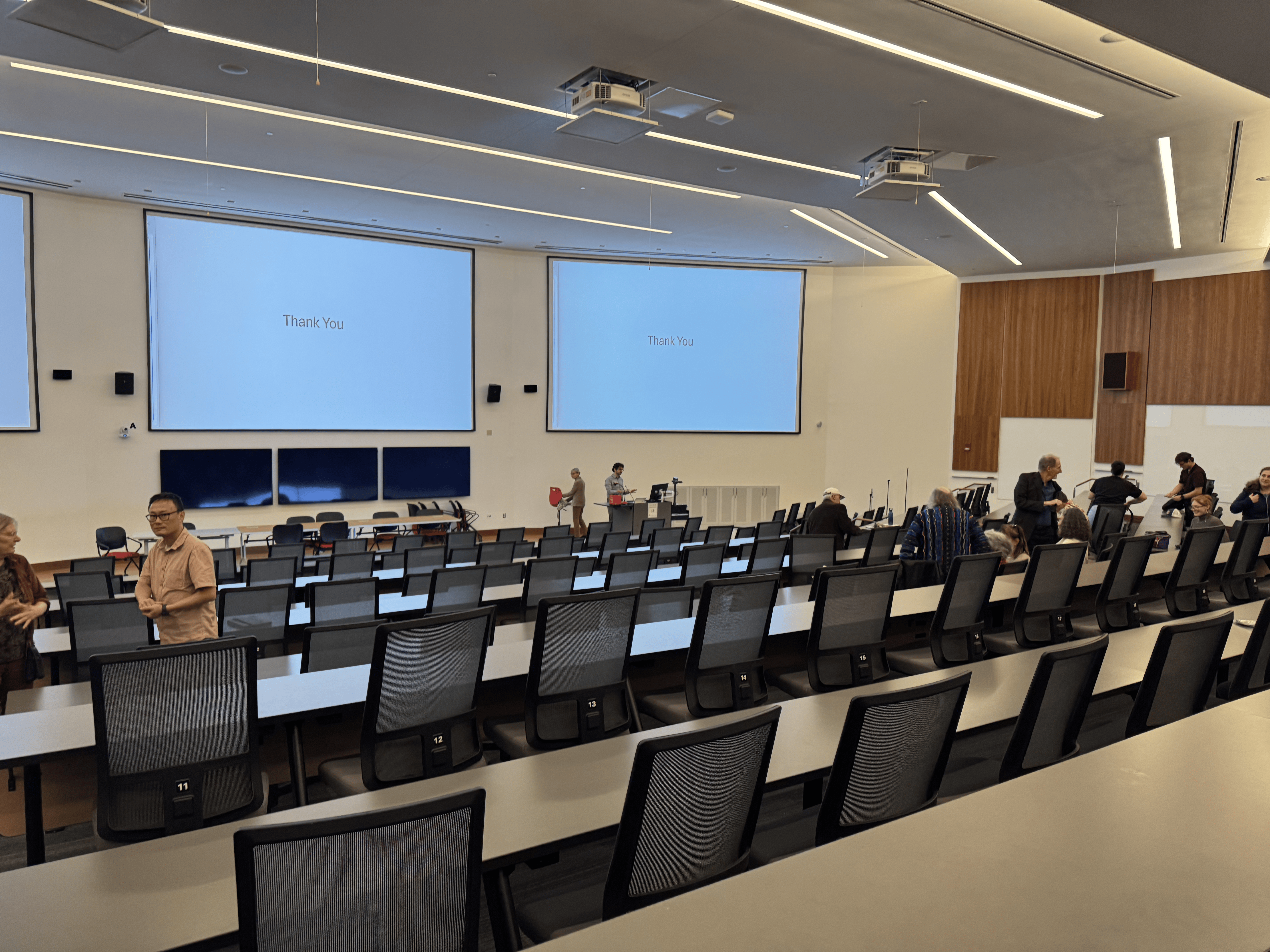
A photo taken after the talk concluded.